Belt compatibility lives in attachment points: engineered ears and loops, or none. Check the hardware before buying any strap or belt option.
This guide is not medical advice. Stop use if significant pain, numbness, swelling, discoloration or circulation concerns occur.
“Can I add a belt to this?” is answered by geometry, not optimism. Belts connect at specific points — molded ears on a ring, a loop on the cage body, a receiver built into the design — and two rings that differ by nothing visible can differ precisely in whether those points exist. The result is the most common accessory mis-purchase in the category.
This guide covers attachment-point identification, what belt options change in a package, and what to ask before adding any belt. Background reading: the types overview and the under-clothes guide for how straps behave in wear.
Does the ring have dedicated attachment points?
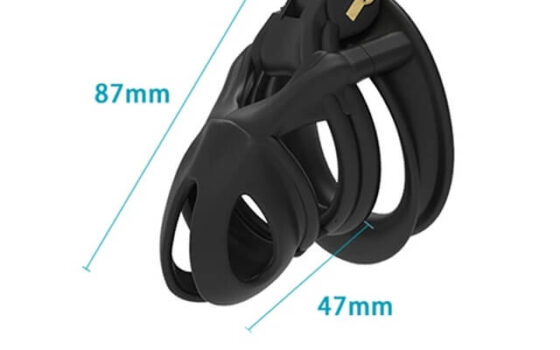
Look for engineered connection features: a molded ear extending from the ring, a welded loop, a hole through a flat tab, or a receiver the listing explicitly names for strap attachment. These are structural — load-bearing extensions of the ring itself. Their absence is not a challenge; a strap with nowhere engineered to connect is a strap that will attach improvised-ly, and improvisation at a load point is exactly what hardware design exists to prevent.
Photos answer this question faster than text: zoom the ring in the listing’s images and look for the ear or loop. If the photos show no attachment hardware and the package list names no belt feature, the honest conclusion is “no belt on this design” — and the next section tells you what to do about it.
What does the belt option change in the package?
When a belt is offered as a variant, selecting it changes what ships: the Butterfly Flat’s with-belt configuration includes the belt and its attachment hardware as part of that order, while the without-belt base product is the cage, one selected ring and a lock with two keys. The option is not a promise of universal later compatibility — it is a different package, decided at checkout.
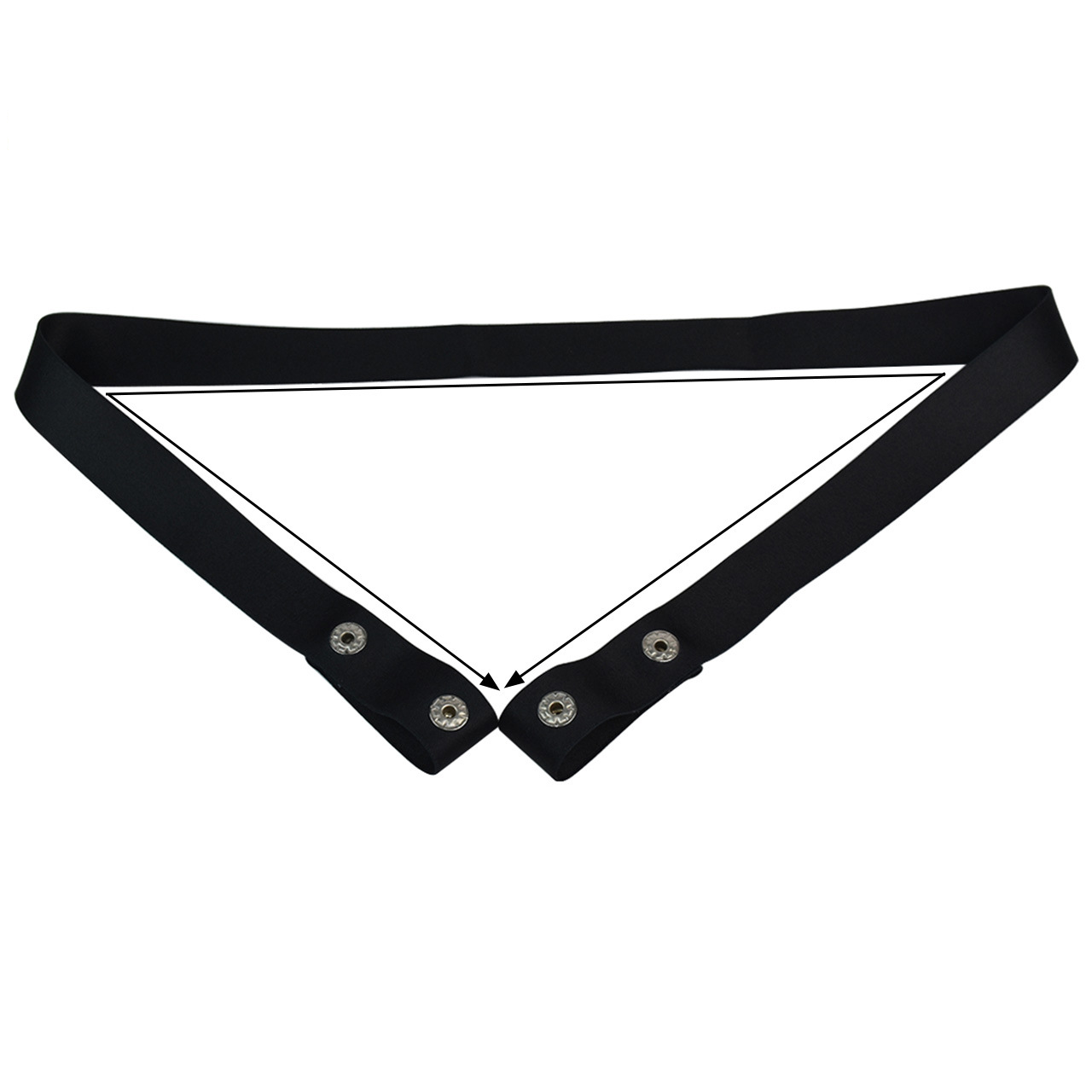
Separate strap products are the other route: the Elasticity Belt is its own listing — an adjustable elastic support strap — whose connection depends on your cage having a point it can use. Two roads to a belted setup, and the wrong turn is buying the strap when your ring has no ear, or buying the without-belt variant when you meant to include one.
Elasticity Belt For Chastity Cage
The separate strap — adjustable elastic, connection point required: The Elasticity Belt is a separate support accessory, not a complete chastity cage. It is available in Black, Pink and White, with an adjustable elastic design. Compare its attachment points with your existing setup before ordering; a support strap does not replace a correctly selected cage and ring.

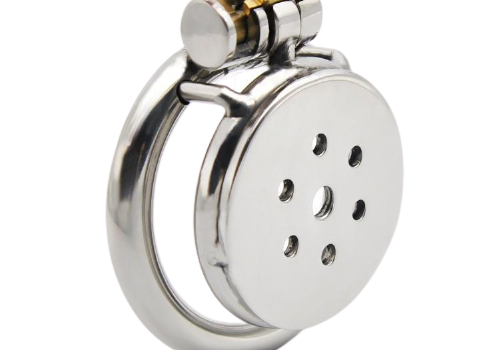
Butterfly Flat Chastity Cage
The built-in option — a steel design whose with-belt variant ships the hardware as part of the order: The Butterfly Flat pairs a distinctive butterfly-shaped front with a stainless-steel construction. The package lists one cage, one selected ring and a lock with two keys; a belt is optional. Choose this design when you prefer its outline, then select your ring and belt configuration.

Are fasteners and straps specified together?
A belt system is strap plus fastener plus attachment point, and listings that specify only one of the three leave you guessing the rest. Check for the fastener type (buckle, clip, hook), its material, and — critically — whether the fastener matches the attachment point’s style. A clip designed for a thick molded ear will not hold a thin welded loop, and vice versa; the junction is engineered as a pair or it is not engineered.
Dimensions complete the specification: strap length range against the wearer’s waist, and fastener width against the ear or loop. The same reading discipline you apply to ring sizes applies here — the belt fits where the numbers say it fits, and “adjustable” covers only the range the listing states.
What should you ask before adding a belt?
One seller message with three lines: your exact cage model and variant; the strap or belt listing you intend to add; and the question “does this strap connect to this cage’s attachment points as sold — and if my cage has no belt point, which belt-compatible options exist for it?” Sellers can answer compatibility questions in one reply; improvised answers in wear take much longer to undo.
If the answer is that your cage has no attachment point, believe it. The correct responses are a different cage variant with belt hardware, a complete belted system, or no belt — never a strap rigged to hardware that was not designed to receive it. Load belongs on engineered points; everything else is decoration at best.
Belts attach where hardware allows, and hardware is either engineered in or absent. Zoom the photos, read the package change, match fastener to point, and ask before assuming. The belted setups that work are the ones that were bought as systems — never the ones that were improvised into existence.
This guide includes promotional links to ChastityCage.co. To compare belt-capable designs, browse chastity cage kits at ChastityCage.co.