Replacement ring, new lock or complete kit? Three checks decide the door: exact part availability, the rest of the kit's health, what the package adds.
This guide is not medical advice. Stop use if significant pain, numbness, swelling, discoloration or circulation concerns occur.
The replacement decision has exactly two doors — one part, one kit — and the honest choice follows three checks: is the exact part available, is the rest of your kit healthy, and does the complete package add anything you need? This guide walks the doors with the three product types that define them.
Identification comes first (the model-identification workflow); this page assumes you know exactly what you own and what failed.
Is the exact matching part available?
Available means verified for your model and version — the maker’s own part, or one whose compatibility the seller confirmed in writing. The replacement arc ring in your measured size is the clean case: a standalone part, stated sizes, no cage pretenses. Where the exact part exists, the part-door usually wins: cheaper, faster, and it keeps a kit whose other components have proven themselves.
Where availability fails — discontinued version, unlisted connector, no written confirmation — the door doesn’t close; it moves. The kit door opens wider, because “almost fits” parts are the category’s most reliable future problem.
Are other components documented and usable?
Inspect the survivors before deciding: ring finish, lock action, body condition, spacers’ state — the storage-and-inspection routine, run on the whole kit. A healthy kit plus one failed part is a parts decision. A kit with two or three tired components is approaching the arithmetic where a complete, documented package costs about the same as its parts would, and arrives consistent.
Usable also means still documented: care instructions findable, spare keys present, the model’s parts pipeline alive. A kit whose support ecosystem has thinned is a kit its replacement decision should notice.
Replacement Arc Ring
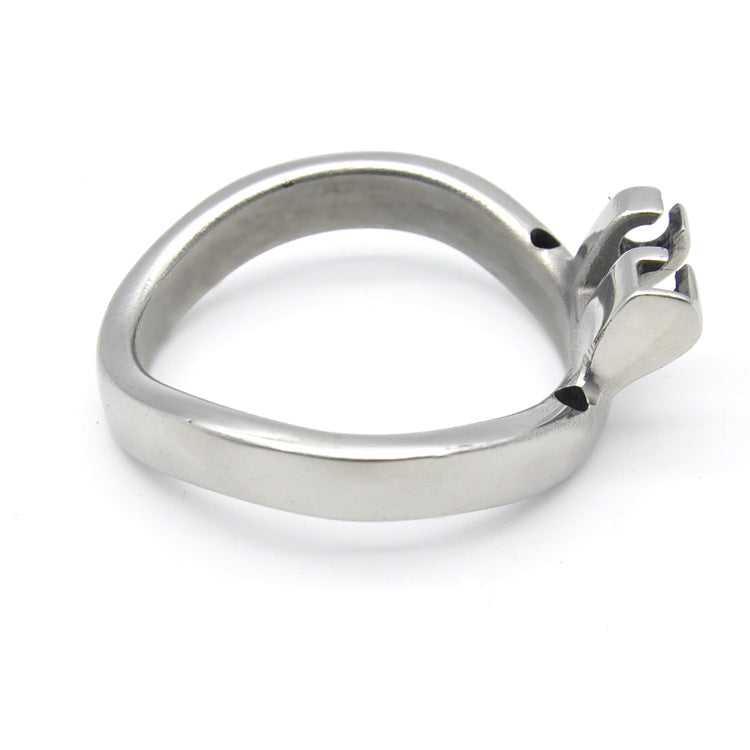
The part door — a standalone ring in stated sizes, no cage included: The Replacement Arc Ring is sold separately in listed 40, 45 and 50 mm options. Choose it when you need a ring rather than another complete cage kit. Match the exact cage connection and size first; an arc shape alone does not establish compatibility with another model.

High Quality Brass Replacement Padlock
And its lock-side sibling — the standalone padlock with two keys: This replacement padlock comes with two matching keys. It is the relevant option to compare when your setup uses a separate padlock rather than an integrated lock cylinder. Check the shackle clearance and locking point before ordering; the overall body size is not enough to establish compatibility.

What does a complete kit add?
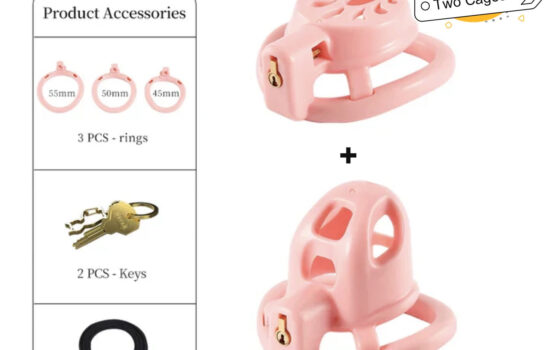
More than the failed part: a fresh fitting range (four rings versus the one you wore), documented package contents, full care text, a new key set with its own spares, and a clean identification record starting at delivery day. The Viper-style kit is the pattern — a complete, documented system that resets every administrative clock. Whether that addition is worth it depends on the third check’s arithmetic: part price plus uncertainty versus kit price plus surplus.
The two-body set answers a specific version of the question: when the failure taught you that the silhouette itself was the issue, the dual-shape package is the replacement that also experiments.
When is uncertainty a reason to ask rather than improvise?
Always, at every door. Uncertain compatibility: the written seller question. Uncertain fit after a body change: the remeasure, not the hopeful size. Uncertain identification: the photographs and records, before the order. Improvisation at any of these points converts a small decision into a drawer of almost-parts — and the asking habit costs one email per occurrence.
The decision table, complete: confirmed part, healthy kit — buy the part. Confirmed part, tired kit — price the kit. Unavailable part — the kit, or the identification workflow again. Uncertainty anywhere — the question, in writing, before the wallet moves. Three doors, no improvisation, one decision that fits.
The Viper Chastity Cage V7.0 EVO
The kit door — a complete documented system that resets every clock: Choose the Viper V7.0 EVO for a nylon-resin kit with four base rings. One selected cage, a lock with two keys and a safety pin are included, giving you a clear starting set without buying each ring separately. Select the cage size on the product page.

Three checks, two doors: confirmed part with a healthy kit, or a complete package when the arithmetic says so — and questions at every uncertainty. Replacement decisions are the category’s most common crossroads; walked with this table, they all lead to hardware that fits on purpose.
This guide includes promotional links to ChastityCage.co. For both doors’ candidates, browse chastity cage kits at ChastityCage.co.