Adjustable chastity rings adjust at the ring, not the cage. Compare adjustable one-piece rings with fixed multi-ring kits before ordering.
This guide is not medical advice. Stop use if significant pain, numbness, swelling, discoloration or circulation concerns occur.
The word “adjustable” does more damage per letter than almost any other in chastity cage listings. Buyers read “adjustable cage” and expect the whole device to resize; what adjusts is almost always the base ring alone, and the cage body stays exactly the length it was made.
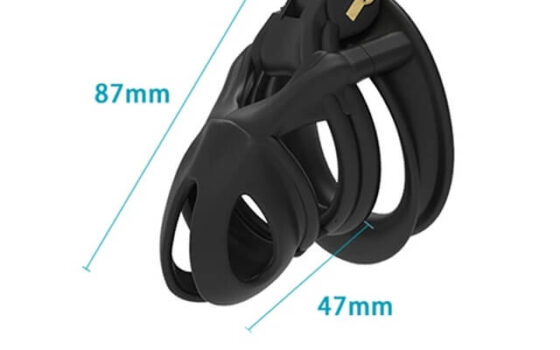
This guide compares the two real ring formats side by side — one ring that adjusts versus a set of fixed rings — using the Adjustable Chainmail cage and the Viper V7.0 EVO kit as the two working examples. For measuring the size a ring needs to reach, see the ring-size guide.
Which part of the device changes size?
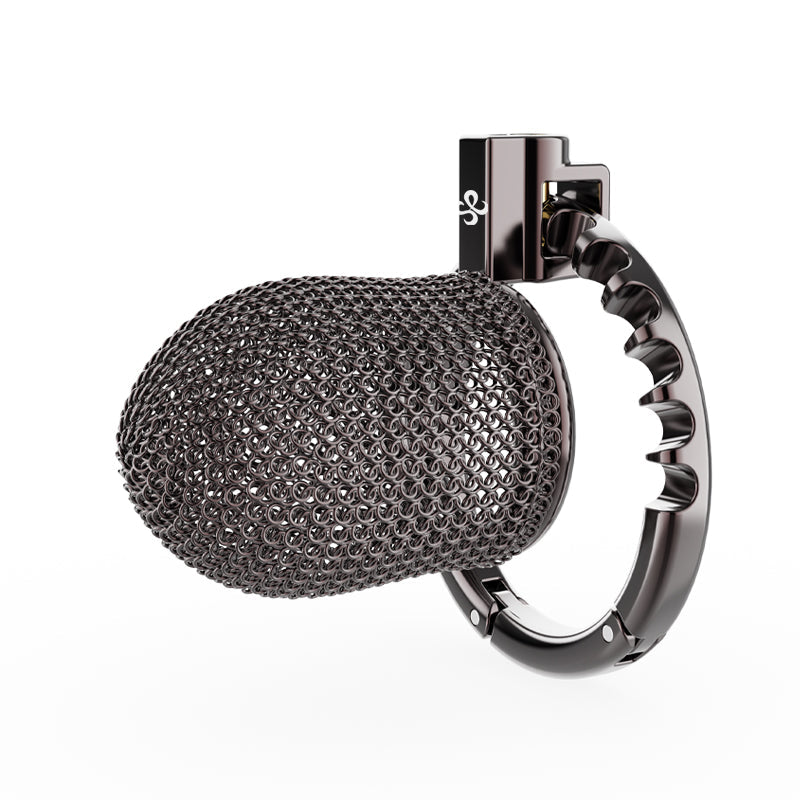
On an adjustable-ring design, the base ring is a single one-piece component with a closure that slides through a stated range — the Adjustable Chainmail cage’s ring adjusts across a stated 38–60 mm span. The cage body attached to it is a fixed shape: on that product you choose Short or Long as separate options, and the choice is permanent for that order. Adjustment happens at the ring, between wear sessions, with the device off.
On a fixed-ring kit, nothing on the device moves. The Viper V7.0 EVO ships four separate fixed rings — 38, 43, 48 and 52 mm — and you change size by swapping components during cleaning, not by turning anything. Same fitting flexibility, completely different mechanics.
What does the adjustment range leave unspecified?
An adjustable range tells you the ring’s limits, not where you will land in it. You still need your own base-ring measurement to know whether 38–60 mm is even the right neighborhood, and you still verify the setting during unlocked fit tests — an adjusted ring sits slightly differently from a machined fixed ring of the same nominal size, because the closure adds a joint and a small amount of asymmetry.
The range also says nothing about the cage. Length class, internal width and gap are separate decisions on an adjustable-ring product, exactly as they are on a fixed-ring kit. If a listing leads with “adjustable” and never states the cage’s own dimensions, that is the number to ask about — the ring’s flexibility does not fill the gap where those figures should be.
Chainmail Chastity Cage Adjustable
The adjustable example: one ring that spans a stated range, cage length fixed at Short or Long: The Adjustable Chainmail Cage is the option to compare when you want an adjustable base ring rather than a kit of separate fixed rings. Its metal, chain-link body gives it a different look from a solid front plate. Ring adjustment does not change the selected cage length.

How does a fixed multi-ring kit differ?
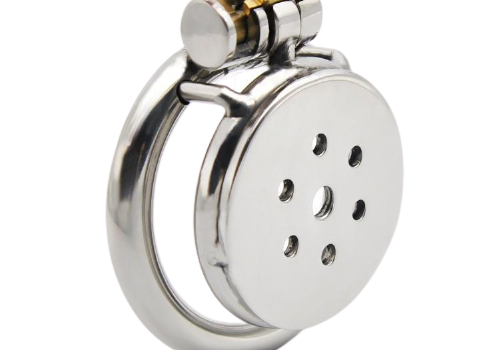
A fixed multi-ring kit buys certainty through plurality: four discrete sizes, each a complete solid ring with no moving closure, each testable in its own right. There is no mechanism to drift out of setting, no adjustment to re-verify after cleaning, and the ring you settle on becomes a known quantity you can reorder or carry into the next device.
The trade-off is granularity. A kit steps in fixed jumps — 38, 43, 48, 52 mm on the example kit — while an adjustable ring passes through the points in between. If your ideal size lands midway between two kit rings, the adjustable format can reach it and the kit format cannot. Choose the format that matches your situation: between sizes favors adjustable; preferring a solid ring with no closure favors the kit.
The Viper Chastity Cage V7.0 EVO
The fixed-ring alternative: four solid rings in one kit, sizes stated at 38/43/48/52 mm: Choose the Viper V7.0 EVO for a nylon-resin kit with four base rings. One selected cage, a lock with two keys and a safety pin are included, giving you a clear starting set without buying each ring separately. Select the cage size on the product page.

What should you confirm about closure and compatibility?
Adjustable rings carry closure-specific questions: does the adjustment hold its setting through a day of movement, and can you re-tighten or verify it during every cleaning break? Fixed rings carry connector questions instead: does the ring’s connection match the cage body you are attaching it to? Both formats share the two questions that actually matter at checkout — what ring range or sizes the package states, and what cage length options exist separately.
Treat any listing that blurs this as a warning sign. “Adjustable cage, one size fits most” conflates the ring’s range with the whole device and hides the decisions the range cannot make for you. The product families in the cage types overview keep these axes separate, and your purchase should too.
Adjustable describes a ring, never a cage. If you want one component that spans sizes between wear sessions, buy the adjustable ring; if you want solid rings with no closure and a known size you can reorder, buy the multi-ring kit. Either way, cage length is its own decision — make it with the chart, not the adjective.
This guide includes promotional links to ChastityCage.co. To compare both ring formats on current listings, browse chastity cage kits at ChastityCage.co.