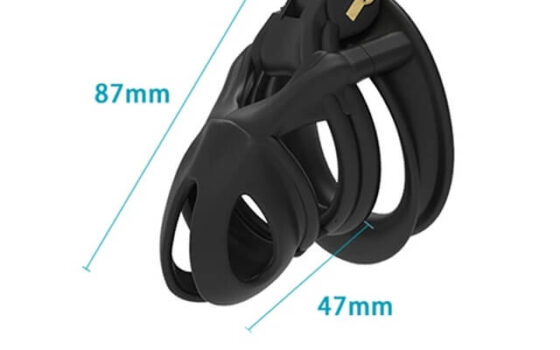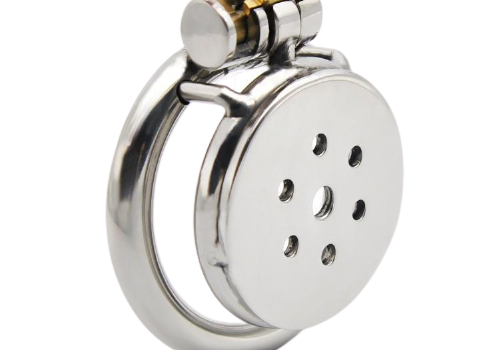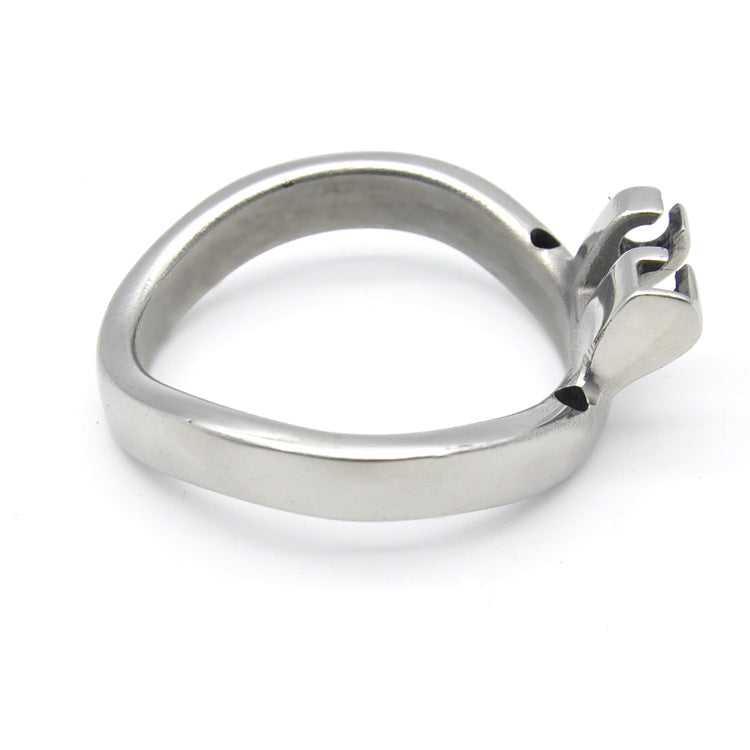
An arc ring's front and side views tell different stories: opening size in front, curvature and standoff from the side, and the assembled orientation seals it.
This guide is not medical advice. Stop use if significant pain, numbness, swelling, discoloration or circulation concerns occur.
Arc rings are the category’s most photographable and most misjudged components, because no single view tells the truth. Front-on, an arc ring shows its opening size and hides its curve. Side-on, it shows the curve and hides the opening. Buyers who judge from one view buy surprises.
This guide reads both views properly and adds the assembled orientation that completes the picture. The shape comparison context is in the round-versus-oval guide; the compatibility rules in the compatibility guide apply throughout.
Find the front opening
The front view — looking straight into the opening — shows what the number refers to: the inner span the size label describes. On an arc ring the front view also reveals the opening’s shape, which is often not a perfect circle even when one size is quoted. Photograph or request this view before comparing sizes across products; it anchors every other judgment you make.
Note what the front view cannot show: the curve. Two arc rings with identical openings can differ completely in how far they stand off the body — the dimension the side view owns.
Read the side curvature
The side view is where arc rings confess: how far the ring curves away from a straight line, where the highest point sits, and how the curve meets the connector. Standoff changes the assembled gap and the way the ring loads when you sit — a deeper arc shifts pressure points that a flatter arc leaves alone. Compare side views between products the way you compare front views: same scale, same orientation, differences named.
Where a listing shows only the front view, the side view is the first thing to request; a seller who documents curvature is documenting the dimension that makes arcs different from every other ring shape.
Compare the assembled orientation
An arc ring only tells its full story attached: which way the curve faces on the assembled device, how the connector sits relative to the highest point, and where the opening addresses the body. The assembled orientation is also where orientation mistakes show — an arc installed rotated sits its curve against the wrong anatomy, and the fit complaint that follows has nothing to do with the size.
When trying or photographing an arc ring, include one assembled shot with the orientation clearly visible. It is the view that proves the ring and the cage were designed to meet the way you installed them.
Replacement Arc Ring
The arc ring both views belong to: The Replacement Arc Ring is the standalone example: stated 40/45/50 mm sizes on an arc geometry whose front opening and side curvature each need their own view before the size means anything. Check: it ships without a cage, so the assembled-orientation view must come from your own cage — photograph it there first.

Choose using both views
Choose an arc ring with both views in hand: front view for the opening size against your measurement, side view for the curvature and standoff against your gap and seated posture, assembled view for the orientation. A listing that provides all three is documenting the product; one that provides a single glamour angle is describing it. Prefer documentation, or create it with a seller request — “front, side and assembled photos, same scale, please.”
Your own comparison photos should follow the same three-view rule, and they will serve every future arc decision the way the chart serves every size decision.
The Viper Chastity Cage V7.0 EVO
And the round-ring baseline for the same comparison: Round rings like the Viper V7.0 EVO’s four (38/43/48/52 mm) need only the front view — one diameter, no curvature, no orientation. Keeping a round-ring baseline beside your arc comparison is what makes the arc’s extra dimensions visible instead of theoretical. Check: compare like with like — round to round, arc to arc, then across.

Front for the opening, side for the curve, assembled for the orientation: three views, and an arc ring finally can be judged. Demand all three from listings and supply all three from your own camera — the arc is the most informative ring shape in the category once it is allowed to show its whole story.
This guide includes promotional links to ChastityCage.co. To compare arc and round rings, browse chastity cage kits at ChastityCage.co.
Related ChastityNow guides
- Round, oval and arc rings compared
- Will a replacement ring fit your cage?