Adjustable Chainmail and Chainmail Steel are different products: one adjusts a one-piece ring 38–60 mm, the other ships fixed rings. Compare, don't merge.
This guide is not medical advice. Stop use if significant pain, numbness, swelling, discoloration or circulation concerns occur.
Chainmail designs attract shoppers for the same reason — open metal mesh, quick-drying, distinctive look — and the category contains two easily-confused products: an adjustable-ring model and a fixed-ring model. Search results place them side by side; buyers who don’t read the ring mechanics end up with the wrong one.
This guide separates the two listings cleanly: which is which, what each box contains, how their connectors and openings differ, and what stays undocumented. The general ring-format background is in the adjustable-versus-fixed comparison.
Which listing is the adjustable model?
Identify them by the ring sentence, not the title. The Adjustable Chainmail Chastity Cage states a one-piece ring adjusting across 38–60 mm — the listing where “adjustable” refers to the base ring and nothing else. The Chainmail Steel Chastity Cage states fixed ring options at 40/45/50/55 mm selected with cage size S or M — every ring a solid, set diameter. Same mesh aesthetic, opposite ring mechanics underneath.
The tell in any listing: adjustable products describe a range (“38–60 mm”); fixed products list discrete options (“40/45/50/55 mm”). A range means one moving component; a list means you choose one and the box ships it. Neither listing borrows the other’s mechanism, and any third-party page that merges their specs has made the exact mistake this guide exists to prevent.
Which parts and rings are included?
Chainmail Steel: one cage, one selected ring, a lock with two keys — a complete single-ring package for a buyer whose ring size is known. Adjustable Chainmail: the mesh cage with its adjustable one-piece ring; the parsed listing does not enumerate every additional accessory, so confirm the complete package list with the seller before assuming keys or extras beyond what is stated.
That package difference mirrors the ring mechanics. A fixed-ring, single-ring package assumes your measurement; an adjustable package replaces included multiples with one moving ring. The buyer the Steel listing serves has a proven number; the buyer the Adjustable serves is still settling one — or wants between-size precision no fixed set reaches.
Chainmail Chastity Cage Adjustable
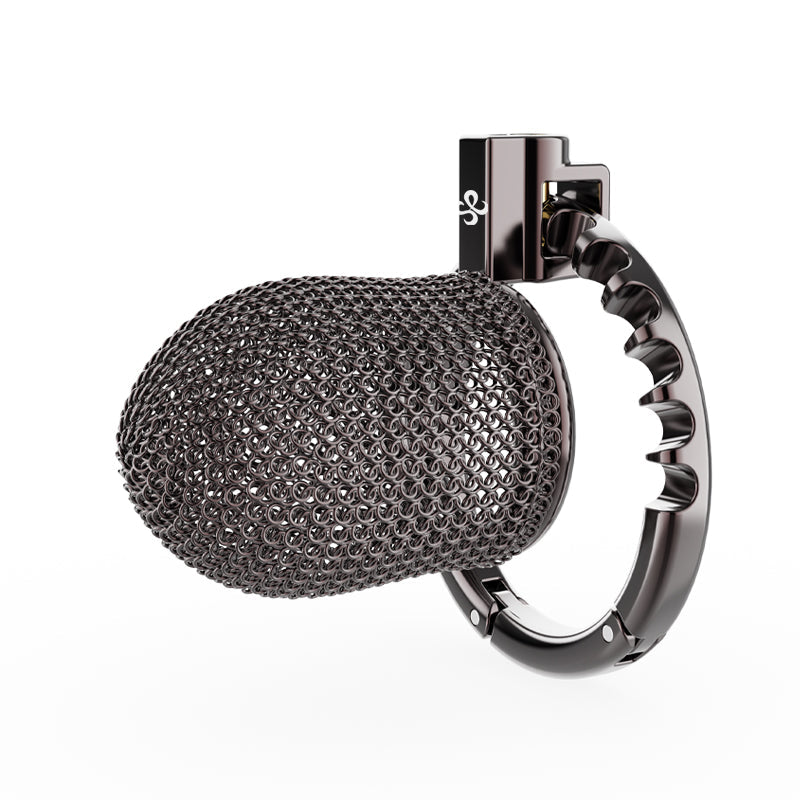
The adjustable listing — one-piece ring, stated 38–60 mm range: The Adjustable Chainmail Cage is the option to compare when you want an adjustable base ring rather than a kit of separate fixed rings. Its metal, chain-link body gives it a different look from a solid front plate. Ring adjustment does not change the selected cage length.

Chainmail Steel Chastity Cage
The fixed listing — S/M cages, 40–55 mm ring options, one ring and lock in the box: Choose the Chainmail Steel Cage for its open chain-link design and a package with one cage, one selected ring and a lock with two keys. It is a different product from the Adjustable Chainmail model, so choose the ring option on this listing rather than assuming the ring adjusts.

How do the connectors and openings differ?
Both are open chain-link structures — airflow and rinse-through cleaning are the family’s shared advantages — but the details divide. The Chainmail Steel listing documents a 15 mm urination opening for direct flow, with the connector built around its fixed-ring joint. The Adjustable listing documents its ring’s adjustment closure; the closure joint is where an adjustable ring’s hardware lives, and where your fit checks concentrate after every resize.
Mesh brings mesh-specific inspection points to both: link junctions for roughness or burrs on arrival, the mesh-to-connector transition for alignment, and — on the adjustable — the closure’s holding behavior through a day of movement. Open structure means every surface is inspectable; use that. What differs between the two products is which joint you inspect first: the fixed connector or the moving closure.
What remains undocumented?
Comparable gaps sit on both listings: neither publishes a complete assembled-weight figure in the readable data, usable internal length needs the chart-reading treatment on each, and the Adjustable’s parsed package list is thinner than the Steel’s. Treat these as questions, not flaws — a seller message asking for assembled weight and the internal length of your chosen size converts both listings to full comparability in one reply.
What this comparison refuses to do is name a winner. The products serve different ring strategies inside one aesthetic; the better product is whichever ring mechanic matches your measurement situation. Choose the format first — adjustable range or fixed precision — and the mesh look comes with it either way.
Two chainmail listings, two ring systems, zero interchangeability. Find the range-versus-list sentence that identifies each, read the package contents as printed, and inspect the joint your chosen mechanic depends on. The mesh is the family; the ring is the decision.
This guide includes promotional links to ChastityCage.co. To compare both chainmail listings, browse metal chastity cages at ChastityCage.co.