Switching from a flexible to a rigid chastity cage: honest shape comparison, the new chart's discipline, separate locks, and why to buy a complete rigid kit.
This guide is not medical advice. Stop use if significant pain, numbness, swelling, discoloration or circulation concerns occur.
Flexible cages forgive; rigid ones report. Moving from a silicone or flexible design to a rigid cage changes how every measurement meets the hardware — there is no more give to absorb a marginal ring or a slightly long body. The switch is a genuine upgrade path, and it deserves a more careful read than a material swap.
This guide covers the shape comparison, the new chart, the locking system differences, and why the transition belongs in a complete kit. The material-family context is in the plastic-versus-silicone comparison.
Compare the shapes without squeezing the old one
Be fair to the flexible device in the comparison: its give absorbed minor misfits and moved with your body, which is a real property, not a flaw. The rigid design removes that give — every dimension now matters exactly as stated, because nothing deforms to compromise. That is the trade: precision and stability in exchange for a fitting margin that shrank to zero.
What the rigid side adds is feedback clarity. Pressure points identify themselves precisely, sizing conclusions arrive faster, and the device stays exactly where assembled. Flexible wearers moving to rigid usually report the first week as “louder” — every small misfit now announces itself. That is information arriving, not a defect.
Use the new model’s actual chart
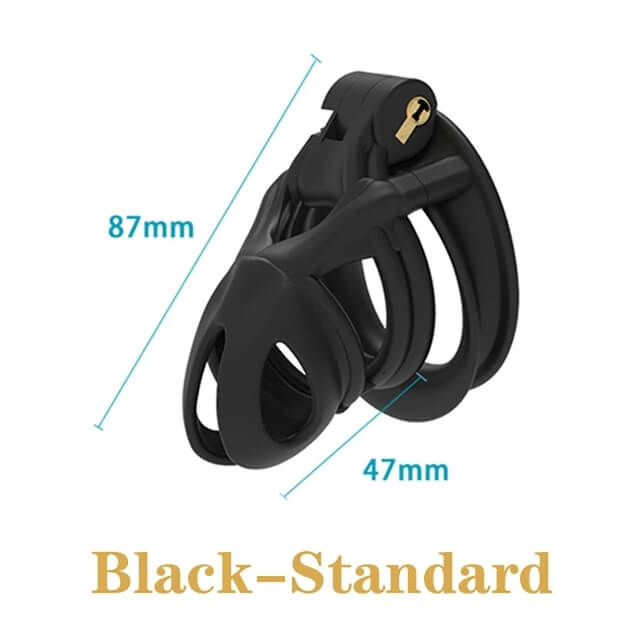
Rigid cages punish chart laziness. Read the candidate’s own numbers: usable internal length, internal width, ring sizes — with the arrows’ reference points, because rigid geometry gives you nowhere to hide a converted or guessed figure. Your flexible-era measurements remain valid as measurements, but apply them against the rigid chart’s stated internal space, which is typically less forgiving of “close enough.”
If the rigid listing’s chart is thin, that is a disqualifying signal rather than a challenge: rigid fitting depends entirely on stated dimensions, and a maker who does not state them is not selling to a rigid buyer.
Check the separate locking system
The lock you know from the flexible kit does not travel. Rigid designs use their own locking arrangement — an integrated cylinder seated in the rigid body, or a post for a padlock — with different keys, different spares and a different feel. Learn it off the body before first wear: cycle it, test both keys, understand how the rigid structure carries the lock differently than the flexible shell did.
Also expect the lock’s position in the profile to change: rigid bodies place hardware more prominently, which matters if discretion drove your original flexible purchase. The complete-assembly profile check applies with extra emphasis on a rigid switch.
The Viper Chastity Cage V7.0 EVO
A rigid-kit example with documented hardware: As a rigid-side example, the Viper V7.0 EVO is a rigid nylon-resin kit: one firm body, four stated ring sizes (38/43/48/52 mm) and an integrated lock with two keys — the dimensions-first experience flexible wearers are moving toward. Check: rigid means the chart is the contract; order the length class your numbers reach.

Choose a complete rigid kit
Buy the transition as a complete kit, not an assembly of parts: rigid body, its own rings (documented sizes), its lock with keys, all matched by the maker. A complete kit gives the rigid experiment clean conditions — documented dimensions, matched hardware, one maker’s care text — instead of a hybrid build whose variables you cannot separate. The four-ring rigid kit or a documented steel option both serve; completeness is the criterion, not the material name.
Then run the rigid switch like a first fitting: short sessions, the fit checklist, honest logs. The rigidity that makes the first week louder makes every conclusion after it sharper.
Flat & Small Chastity Cage Set
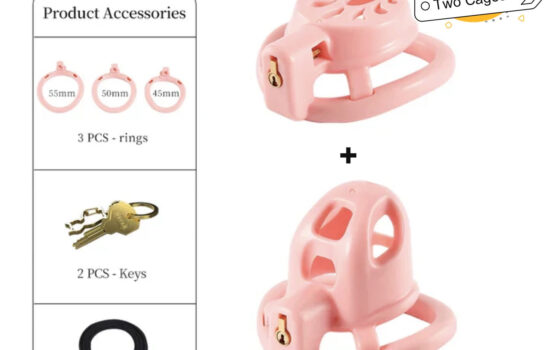
And the complete-set route with a shape bonus: The Flat & Small Set offers the complete-kit transition with a bonus: two rigid ABS bodies on shared rings, so the switch to rigid can also settle the silhouette question in the same purchase. Check: its rings must still bracket your size — completeness never overrides fit.

Flexible forgave; rigid reports. Read the new chart with that in mind, learn the separate locking system off-body, and make the switch inside a complete documented kit. The first rigid week tells you everything the flexible shell was quietly absorbing — and from the second week on, you are fitting with better information than you have ever had.
This guide includes promotional links to ChastityCage.co. To compare rigid kits, browse chastity cage kits at ChastityCage.co.
Related ChastityNow guides
- Choosing a second chastity cage
- Plastic vs silicone chastity cages