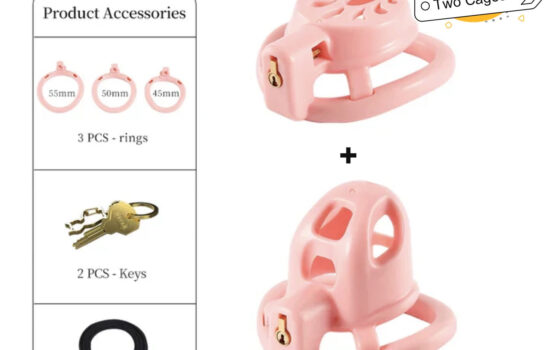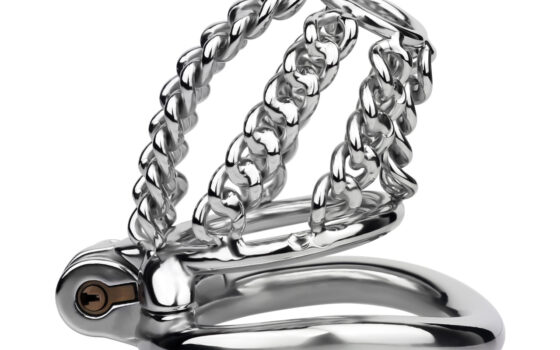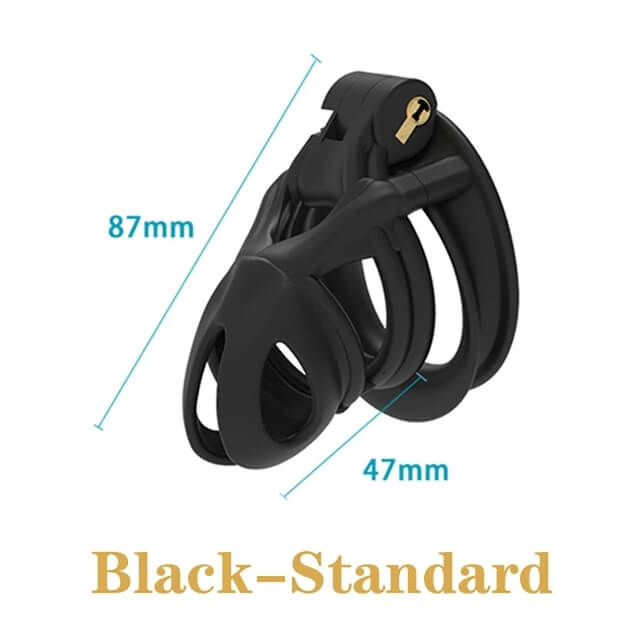
Barrel locks integrate into the cage spine; padlocks hang externally. Compare profile, dimensions, keys and replacement paths before choosing.
This guide is not medical advice. Stop use if significant pain, numbness, swelling, discoloration or circulation concerns occur.
The lock is the part you interact with most and think about least — until it protrudes, rattles, or a key goes missing. Barrel (integrated) locks and padlocks solve closing differently, and the choice affects profile, noise, replacement parts and emergency access in ways worth knowing before your next kit.
This guide compares the two mechanisms on structure, dimensions, keys and spares, using the Viper kit’s integrated lock and a standalone brass replacement padlock as the examples. For how locks fit the wider device picture, see the types overview; for profile concerns, the discretion guide.
Where does each lock sit on the device?
A barrel lock lives inside the assembly: the cage’s locking post passes through the ring’s channel and the cylindrical lock slides over it, flush with the cage’s spine. Nothing hangs; the profile stays as low as the cage itself. Kits like the Viper V7.0 EVO ship this way — lock built into the stack, two flat keys in the box.
A padlock hangs externally: the post ends in a hole, and the padlock’s shackle passes through it, adding a visible, swinging metal object below or beside the cage. That external position is its whole personality — easier to inspect at a glance, impossible to hide under fitted clothing, and capable of the faint clicking that discretion guides warn about. Neither position is better; they optimize for different priorities.
Which dimensions affect replacement choices?
For a replacement padlock, two dimensions govern fit: shackle diameter must pass through the locking post’s hole, and shackle clearance (the inner vertical space) must accommodate the post’s thickness plus any spacer stack. Body size matters for profile and for whether the lock hangs into a contact zone. The brass replacement padlock sold with two matching keys is a standard shackle part — match those two dimensions to your post before ordering, because a padlock that fits the hole but not the stack still won’t close.
For integrated barrels, replacement is usually model-bound: the cylinder’s diameter and length are cut to the cage’s receiver, so a replacement comes from the kit’s maker rather than the generic padlock market. Check your kit’s parts availability when you buy it — spare cylinder availability is a real difference between product lines, and worth one question to the seller before purchase.
The Viper Chastity Cage V7.0 EVO
The integrated-lock kit — cylinder inside the spine, two flat keys included: Choose the Viper V7.0 EVO for a nylon-resin kit with four base rings. One selected cage, a lock with two keys and a safety pin are included, giving you a clear starting set without buying each ring separately. Select the cage size on the product page.

How do keys and spare parts differ?
Barrel locks use flat keys cut to the cylinder — compact, pocket-flat, and specific to that lock. Kits typically ship two; losing both means opening the conversation with the maker, so the spare lives somewhere deliberate from day one. Padlocks use conventional keys, and a quality brass padlock’s two keys can usually be duplicated at any locksmith — a genuine practical advantage for long-term wearers.
Spares strategy differs accordingly. For a padlock device, a second padlock is a complete redundancy: buy one, test it on the post, store it with the spare key. For an integrated lock, redundancy is the spare key plus the maker’s support contact, written down. Both strategies cost almost nothing and both are impossible to improvise at the moment they’re needed.
What should a buyer confirm about the complete locking system?
Four confirmations cover it. First, what ships: lock type, key count — stated on both example listings. Second, closure behavior: the lock must close and open smoothly off the body, tested five times before first wear. Third, emergency plan: where the spare key or redundant lock lives, and who besides you can reach it. Fourth, replacement path: maker’s spare parts for integrated cylinders, or a matched-dimension padlock for external posts.
Confirm all four before the device goes on, not after. A locking system is not the metal — it is the metal plus the keys plus the plan. The hardware takes minutes to verify and the plan takes five minutes to write, and together they eliminate the only lock problem that ever matters: the one discovered while locked.
High Quality Brass Replacement Padlock
And the standalone replacement padlock with its two matching keys: This replacement padlock comes with two matching keys. It is the relevant option to compare when your setup uses a separate padlock rather than an integrated lock cylinder. Check the shackle clearance and locking point before ordering; the overall body size is not enough to establish compatibility.

Barrel hides, padlock shows; barrel is model-bound, padlock is generic. Choose the profile you can live with, verify keys and closure before first wear, and write the emergency plan while the device is still in its box. The lock is a small part with outsized consequences — treat its paperwork as part of the purchase.
This guide includes promotional links to ChastityCage.co. To compare locking systems on current kits, browse chastity cage kits at ChastityCage.co.