Diagnose a rattling chastity lock off-body: shackle play, cylinder draw or stack movement — fix the part, never glue the mechanism.
This guide is not medical advice. Stop use if significant pain, numbness, swelling, discoloration or circulation concerns occur.
A lock that rattles feels like a failure announcement: loud in a quiet room, worse in a quiet office. But rattle is a symptom with a location, and diagnosing it off-body takes ten minutes with the device on a table — versus replacing a whole cage because one component has play in it.
This guide walks the diagnosis: find the sounding part, check whether movement is design or wear, and decide whether a different lock — not a different cage — is the fix. Lock families are covered in the lock comparison.
Which loose part is making the sound?
Three candidates, in order of likelihood. Padlock shackle play: the shackle rattling in its hole in the post — the classic metallic click. Cylinder draw: an integrated lock’s slight rotational play, felt as a soft knock through the cage spine. Stack movement: spacers or the ring-to-cage joint shifting within tolerances, a lower, duller sound. Isolate by holding each assembly point still in turn while moving the device — the location that silences is the location that sounds.
Do the diagnosis off-body, on a table, in a quiet room. On-body acoustics are misleading — clothing dampens some sounds and amplifies others — and you cannot isolate parts you are wearing.
Is movement part of the documented design?
Some play is engineering, not defect: shackles need rotational freedom to seat and lock; integrated cylinders have designed draw; connector stacks assemble with clearances so parts mate without force. The question is whether the movement you found exceeds its design — and the answer lives in comparison: a new lock’s play versus your lock’s play, or the maker’s tolerance statement if the listing carries one.
A sound that existed since unboxing and has not changed is likely designed clearance. A sound that developed or grew is wear — and wear at a load-bearing closure is a replacement signal, not a tuning project.
Would a different lock require a different cage?
Sometimes — and that is the boundary of the part-level fix. Swapping one padlock for another needs matching shackle dimensions, not a new cage. Moving from a padlock to an integrated cylinder (or back) needs a cage built for that closure — the receiver, the spine, the channel are different hardware. Within a padlock device, quieter models with tighter shackle tolerance are drop-in candidates; the brass replacement pattern with its two keys shows the standard path.
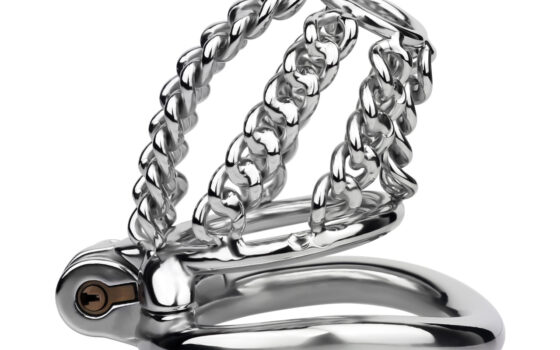
Kit designs often pick the closure to match the body’s profile: a flat plate design with an external post carries its lock visibly, and a rattle there is a padlock question; a body with an internal spine carries a cylinder, and its rattle is a maker-parts question. Identify which family your hardware belongs to and the replacement path identifies itself.
The Viper Chastity Cage V7.0 EVO
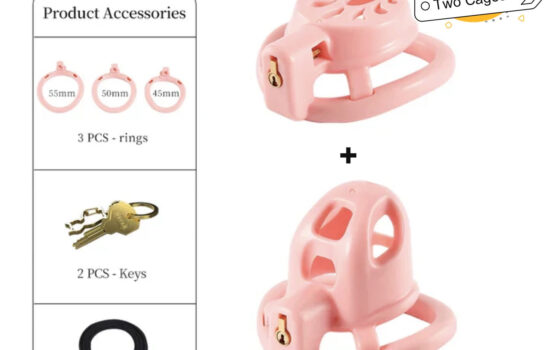
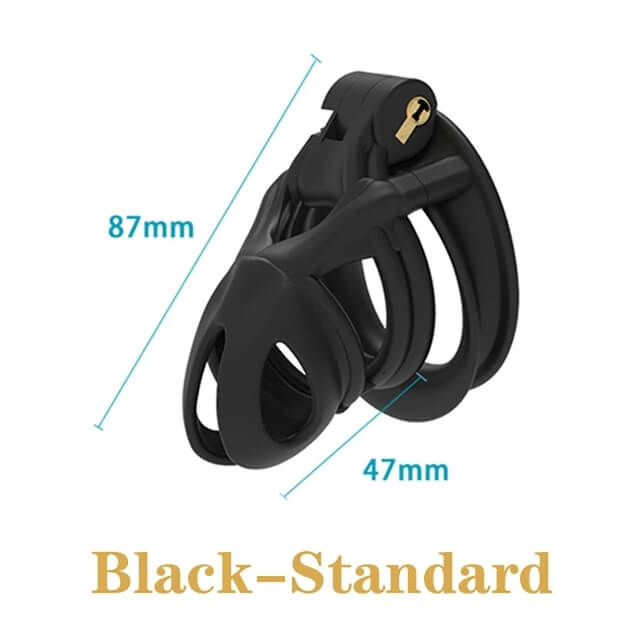
An integrated-closure kit — rattle questions route to the maker’s own parts: Choose the Viper V7.0 EVO for a nylon-resin kit with four base rings. One selected cage, a lock with two keys and a safety pin are included, giving you a clear starting set without buying each ring separately. Select the cage size on the product page.

The Flat Gatling Chastity Cage
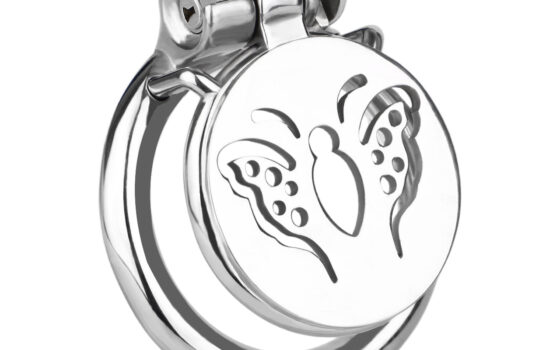
A padlock-post design — quieter replacements are drop-in once dimensions match: The Flat Gatling is a stainless-steel option with a circular front plate and a compact flat profile. Choose it for this particular shape rather than treating every flat cage as the same design. Open the product page to select the cage and ring options.

What should you avoid improvising?
Everything adhesive and everything inserted. Glue on a lock mechanism bonds parts that must move; tape, rubber shims or foam inside a lock or its post change clearances unpredictably — and every improvisation at a closure is an improvisation at the one component your emergency exit passes through. A silenced-by-hack lock is a lock you cannot trust to open on demand.
The honest toolbox for lock noise is small: diagnose, clean per the maker’s instructions, replace the worn part with a matched one, or accept the sound as designed. Anything else is trading a rattle for a risk — and the rattle was the smaller problem.
Rattle has an address. Find the part on a table, check its design story, replace what’s worn with what matches — and keep adhesives away from closures. Most noisy locks are one quiet component away from fixed, and no cage was ever improved by gluing its exit shut.
This guide includes promotional links to ChastityCage.co. To compare closure hardware, browse chastity cage kits at ChastityCage.co.