Micro and short labels specify nothing numeric. Compare usable length, internal width and assembled profile — the numbers carry compact fit.
This guide is not medical advice. Stop use if significant pain, numbness, swelling, discoloration or circulation concerns occur.
Compact cages carry the category’s boldest marketing and its tightest fitting margins. “Micro” promises near-invisibility; what it delivers is a device where every millimeter of internal space is load-bearing and the difference between comfortable and compressive is smaller than on any other class.
This guide covers what compact labels leave unspecified, which figures actually decide fit, and how the assembled profile compares to the photographed one. It complements — not repeats — the size-names guide; the length mechanics are in the length guide and the short-versus-long comparison.
What do compact labels leave unspecified?
Everything numeric. “Micro” and “short” order a maker’s own range — inside the Viper line, Nub and Nano are the compact classes — but they publish no millimeters and transfer nowhere. A compact label tells you the maker aimed small; only the stated usable internal length and internal width tell you how small, and whether “small” includes your anatomy or excludes it.
Compact labels also blur the boundary between short length and compact overall. A short cage with a wide shell is a different device from a genuinely compact one, and both get called “small” in listings. The unspecified dimensions are not footnotes — on this class, they are the entire fitting conversation.
Which length and width figures matter?
Usable internal length first: the space available to you, which must accommodate your measured length without compression. Then internal width at the narrowest point — on compact cages the binding constraint, because short shells concentrate their tolerance in width rather than length. Together they decide whether a compact class is wearable for your measurements at all; the ring range decides the rest.
Kits make the compact experiment affordable: the Viper’s four rings let you settle ring size while testing its shorter classes, and the Flat & Small Set’s small-profile body pairs a compact experience with the flat one on shared rings. The honest compact purchase is always millimeter-first — the label is the marketing summary of numbers you were supposed to read.
The Viper Chastity Cage V7.0 EVO
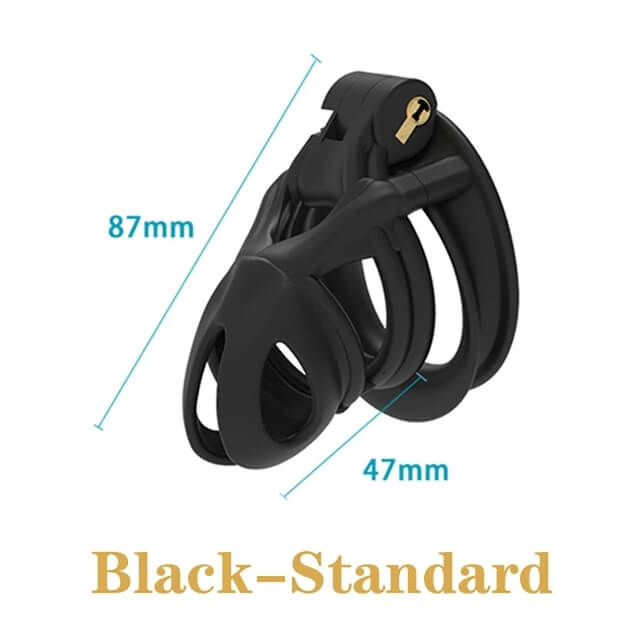
Compact classes inside a documented kit — Nub and Nano with stated ring range: Choose the Viper V7.0 EVO for a nylon-resin kit with four base rings. One selected cage, a lock with two keys and a safety pin are included, giving you a clear starting set without buying each ring separately. Select the cage size on the product page.

How does the full assembly change the profile?
Photographs flatter compact cages by showing bodies without their working hardware. Assembled, the ring adds depth below, the lock adds height above or in front, and connectors add width — the “micro” outline becomes the sum of every component at its widest and tallest points. Two compact cages with identical body lengths can present visibly different outlines once ring style and lock position enter.
The seated test is the truth-teller: compact geometry concentrates pressure where the body meets the cage rear and ring, and a chair changes those angles. Test the assembled device in your actual trousers, seated, before concluding anything about discretion — the outline under clothing is the only outline that exists.
Flat & Small Chastity Cage Set
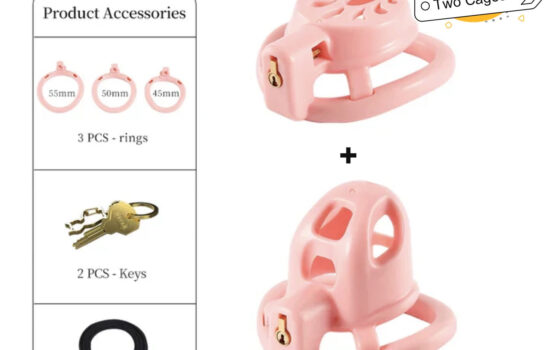
And a set whose small-profile body runs the compact test alongside the flat one: The Flat & Small Set includes two cage shapes, three rings, two keys and an adjustable support belt. Choose it when you would rather compare a flat and a small shape within one package than order two separate kits. Pink and Black are separate color choices.

Which comparison should a reader make next?
Move from class to class with the same discipline: compare your compact candidate’s stated millimeters against the same figures on a standard-profile alternative, then decide which trade — internal room versus forward profile — your measurements support. The flat-versus-standard comparison covers the wider question; the compact question is the same arithmetic with tighter margins and less forgiveness for skipped measurement.
And keep the compact log detailed: on this class, pressure reports matter at ten-minute granularity because margins are thin. The buyers who succeed with compact cages are the ones who respected that the numbers were doing more work — not the ones who trusted the smallest label on the page.
Micro and short are adjectives; fit is arithmetic. Read the usable length and narrowest width, assemble before judging profile, and log the tight margins honestly. Compact cages reward exactly the buyers who ignore their labels and trust their millimeters.
This guide includes promotional links to ChastityCage.co. To compare compact models by their stated dimensions, browse small chastity cages at ChastityCage.co.