Chastity cages anchor on a base ring; belts anchor on a waist frame. Different systems, different measurements, different maintenance — compare honestly.
This guide is not medical advice. Stop use if significant pain, numbness, swelling, discoloration or circulation concerns occur.
“Belt or cage?” sounds like one question but hides two different architectures. A cage is a ring-anchored device measured in millimeters at the groin. A belt is a waist-anchored system that may hold a cage, measured around the waist and hips. Shoppers cross-shop them constantly; the systems answer different constraints.
This guide compares what holds each system in place, which measurements each demands, and what maintenance differences follow. For the accessory-level distinction, the related support-strap versus belt comparison covers the smallest tier of this hierarchy.
What holds each system in place?
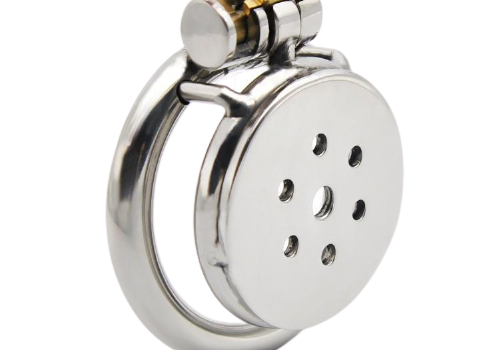
A cage anchors at a single point: the base ring sits behind the penis and scrotum, and everything — enclosure, lock, weight — loads onto that ring and the tissue it contacts. Pull, swing and leverage all transmit to one measured circle. That is why ring size dominates every cage fitting conversation.
A belt distributes the load to the skeleton: a waist band (and sometimes a secondary strap) carries the structure, and a cage or tube attaches into it as a component. Anchoring moves from one ring to a frame, which changes what fails — belts worry about band fit, adjusters and attachment points rather than a single ring’s tolerance. The systems feel different for the same reason: point anchor versus frame anchor.
Which measurements belong to a belt system?
Belts need waist circumference at the height the band will sit, hip measurement where secondary straps run, and the distance between band and attachment point — numbers a cage purchase never asks for. A cage embedded in a belt system still needs its own ring or opening size, so a belt purchase stacks two measurement sets: the frame’s and the cage’s.
That stacking is why belts are usually a second or third purchase rather than a first. The cage-side measurements transfer from a device you already wear; the belt-side measurements are new and less forgiving, because a band that pinches at the waist or rides on the hips is uncomfortable in a way no adjustment ritual fixes. Measure both, honestly, before considering any belt listing.
What parts are included in each package?
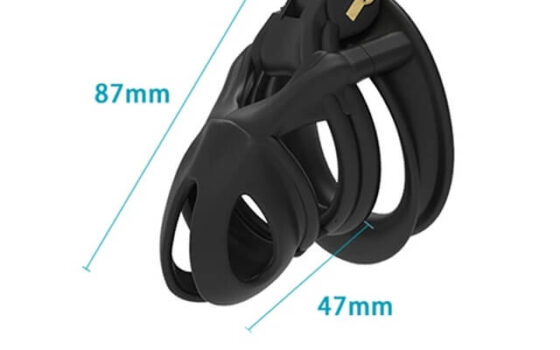
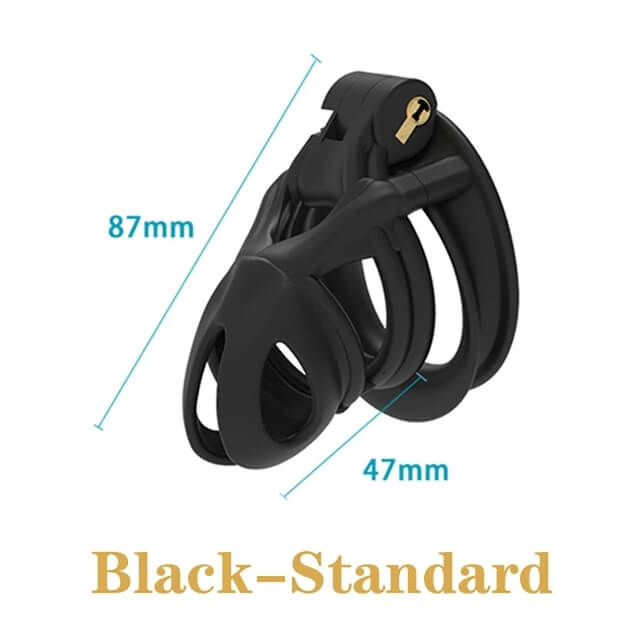
A cage kit’s package list runs: cage body (or bodies), rings, lock with keys, small parts. The Viper V7.0 EVO is the representative list — one selected cage, four base rings, a lock with two keys and a safety pin — a complete point-anchored device in one box.
A belt system’s list is longer and more varied: band, fasteners, adjusters, attachment hardware, and the cage or shield component, each of which can be included or sold separately depending on the design. Read a belt listing’s package list even more carefully than a cage’s, because “belt system” has no standard content set — some listings are the band only, some are complete systems, some are accessories to a specific product family. What a belt listing is never safe to assume: that the pictured cage comes with it.
The Viper Chastity Cage V7.0 EVO
The cage side of the comparison — a complete ring-anchored kit in one package: Choose the Viper V7.0 EVO for a nylon-resin kit with four base rings. One selected cage, a lock with two keys and a safety pin are included, giving you a clear starting set without buying each ring separately. Select the cage size on the product page.

Which maintenance and access details need separate checks?
Cages clean at one anchor: remove, wash ring and body, dry, inspect skin at the ring path. Belts add the frame: band material care (leather, fabric and metal bands differ), buckle or adjuster maintenance, and cleaning at the waist contact line, which is skin that cage wearers never think about. Both systems demand full removal for cleaning — neither architecture makes hygiene optional.
Access planning differs too. A cage’s emergency story is the key; a belt’s is the key plus the frame — how quickly the band opens, whether tools are involved, and what a bathroom routine looks like with the frame on. Ask those questions before buying either system, and treat the answers as part of the purchase decision, not an afterthought. For travel specifically, current official guidance on carrying locks and metal hardware applies to both systems alike.
Cages anchor at a ring, belts anchor at a frame, and the measurements do not overlap. Start with the system your measurements already support, read each package list for what actually ships, and cross over only when the constraint you are solving — profile, security, routine — genuinely belongs to the other architecture.
This guide includes promotional links to ChastityCage.co. To explore the frame-based option, browse chastity belt systems at ChastityCage.co.