Hard case or soft pouch for a chastity kit: impact protection versus space, metals separated from delicate surfaces, maker's storage instructions followed.
This guide is not medical advice. Stop use if significant pain, numbness, swelling, discoloration or circulation concerns occur.
Storage is the kit’s nightly environment, and the container is its first line of defense — against impact, against parts migrating, against moisture. Hard case and soft pouch solve the problem differently, and the right answer depends on what your kit is made of and where it lives.
This guide compares the two on protection, space and care instructions. The labeling system that goes inside either container is in the storage guide.
Compare protection and usable space
A hard case buys impact protection: drops, drawer items pressing in, travel compression — none of it reaches the hardware. The cost is volume: rigid walls and fixed compartments claim drawer space whether the kit is in use or not. A soft pouch buys space and flexibility — it shapes around contents and packs to nothing when empty — at the cost of crush protection: anything pressing on the pouch presses on the parts.
Match the container to the threats your storage actually has: a crowded toolbox drawer argues for hard; a dedicated shelf with nothing above it is pouch territory.
Separate metal parts from delicate surfaces
Inside either container, the layout rule is the same: metal hardware (locks, keys, metal rings) never shares a compartment with finished resin or coated surfaces. Metal marks resin; resin picks up metal debris. Use the internal bags or dividers the labeling method provides — rings bagged and labeled, the lock wrapped, the body free of contact with anything harder than cloth.
For mixed kits (a resin body and a steel accessory in one drawer), the divider is not organization but protection: the softer surface always loses the contact argument.
Check product storage instructions
The maker’s care text includes storage where it matters: complete drying before storage, temperature and sunlight limits for the material, and any ventilation guidance for enclosed surfaces. A hard case that seals a damp cage works against the drying requirement; a pouch in direct sun works against the material’s temperature limits. The storage instructions are part of the care text — same document, same authority.
Read them per kit and let the container choice follow: the storage solution serves the care text, never the reverse.
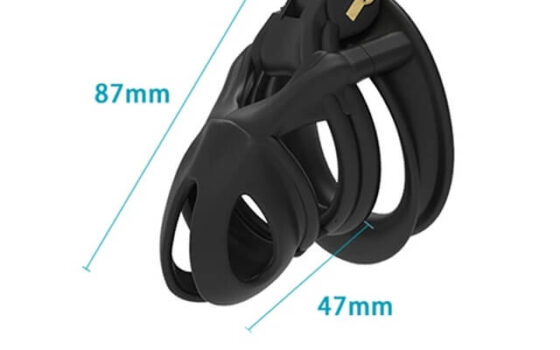
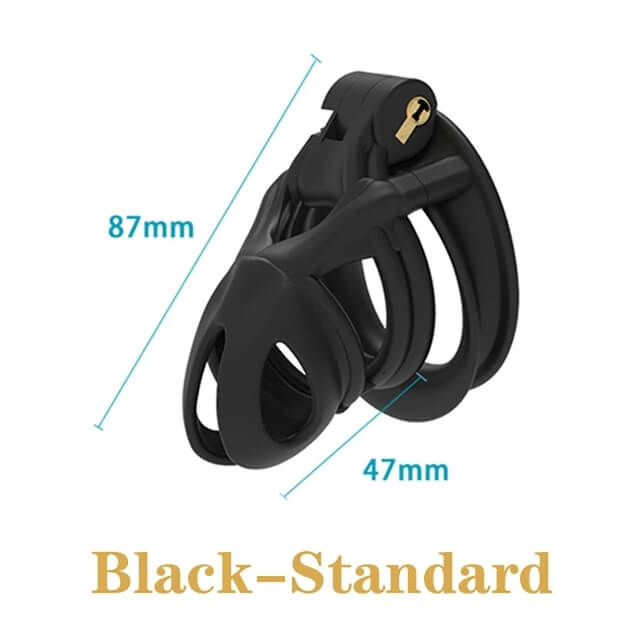
The Viper Chastity Cage V7.0 EVO
A kit that suits either container: The Viper V7.0 EVO stores compactly: one resin body, four rings, integrated lock with two keys and a safety pin — small enough for a pouch, organized enough to benefit from a case’s compartments. Check: dry completely per the care text before any container closes; the storage error that matters happens before the lid, not under it.

Choose for the actual kit
Choose by inventory: a single steel cage with its lock and keys is compact and impact-tolerant — either container works, and the pouch saves space. A multi-part kit (two bodies, ring sets, belt) benefits from a case’s fixed compartments, where each part has an address and the count is visual. The kit you own, in the storage it needs, in the space you have — that sequence decides, and it may legitimately end in one of each.
Then label the container per the records habit and store it in its fixed place. The best container is the one the routine actually uses every time.
Flat & Small Chastity Cage Set
And the multi-part kit that argues for a case: The Flat & Small Set’s two bodies, three rings and belt are the inventory that justifies a compartmented container: each part with an address, the count visual at every opening. Check: whatever container you choose, the ABS bodies still get their own cloth or bag inside it — hard cases protect from impact, not from hardware rubbing finishes.

Hard protects, soft saves space, and the maker’s care text referees: choose the container by your kit’s inventory and your storage’s real threats. Inside either, the rules repeat — dry first, metals separated, labeled, in its place. The drawer that follows those rules is the quiet reason every session starts with a verified kit.
This guide includes promotional links to ChastityCage.co. For kits worth storing well, browse chastity cage kits at ChastityCage.co.
Related ChastityNow guides
- Storing chastity kit parts
- Packing a chastity kit