A four-week readiness plan that builds from measurement and short waking trials to routine checks—without promising continuous wear.
This guide is not medical advice. Stop use if significant pain, numbness, swelling, discoloration or circulation concerns occur.
Preparation is not a countdown to continuous wear. It is a sequence of decisions that may produce a shorter, modified or no-device October. That flexibility is a strength because it keeps the calendar from overruling evidence.
If the event itself is new, read what Locktober means before choosing a format.
Week 4: define the challenge and consent
Choose solo, partnered, modified or no-device participation. Discuss why you want to take part and what would make the month worthwhile. If partnered, define the keyholder role without assuming enthusiasm or availability.
Write stop conditions, normal unlocks, cleaning access, work and travel limits, privacy and what happens if either person changes their mind. Confirm that all participants are adults and consent is ongoing.
Week 4: measure and inspect
Record base-ring circumference, relaxed length, internal width needs and the device’s gap options. Compare them with clear internal product dimensions. Inspect seams, vents, hinges, pins and locks; test every key off the body.
Do not order a cage by an October marketing label alone. If equipment will arrive too late for testing, choose a shorter or no-device plan.
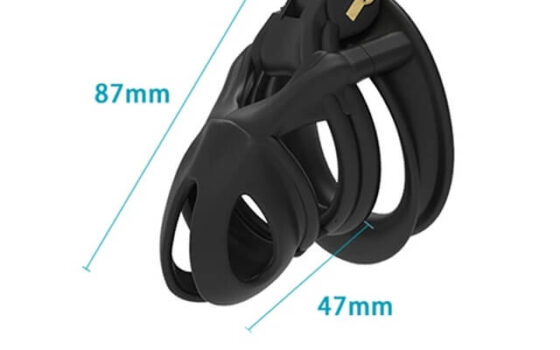
Locktober Chastity Cage (No Urethral)
For an October with cleaning unlocks built in, this ABS-body cage pairs a hollow, breathable shell with four snap-in rings (40–55 mm) and a light aluminum lock — a configuration that supports the daily remove-clean-inspect cycle this plan requires. Choose the No Urethral configuration for general use. Check: order early enough to complete at least two waking test sessions before committing the month to it.

Week 3: repeat short waking sessions
Fit the device unlocked, then run brief locked home sessions only after movement and bathroom tests pass. Remove, clean and inspect every time. Repeat the same configuration before adding duration.
Track pressure, movement, hygiene, emotions and removal. Use chastity safety basics as the non-negotiable gate.
Week 2: build ordinary daytime routine
Test longer home activity, sitting, walking and the clothing you intend to wear. Establish the daily cleaning process and a device-free recovery plan. If workplace wear is proposed, complete a full home rehearsal first.
Do not add sleep merely because daytime tests succeeded once. Repeat until the setup is predictably uneventful.
Week 1: test optional nights and logistics
If several waking sessions have passed, one optional overnight test can assess nighttime pressure—with the key immediately beside the bed. Inspect in the morning and rest. Work, travel and exercise each require separate planning.
Confirm spare-key location, contact availability, cleaning supplies and the ability to end participation without a negotiation.
Final readiness decision
| Gate | Ready means |
|---|---|
| Consent | Everyone actively agrees and can stop |
| Fit | Repeated movement tests are uneventful |
| Hygiene | Full cleaning and drying are practical |
| Sleep/work | Only included if separately tested |
| Emergency | Immediate local removal is available |
| Recovery | Rest and inspection are scheduled |
Any “no” means modify or postpone. Do not treat late preparation as a reason to skip a gate.
Plan October with flexibility
Decide how often to review and whether continuous wear is even a goal. Include planned hygiene unlocks and permission to add device-free days. The first week of October should be conservative, not an automatic escalation beyond September.
A modified month that preserves health and trust is more successful than an unbroken streak that creates injury or resentment.
Plan the end before the beginning
Choose how and when the device will be removed, cleaned and stored. Allow recovery. Discuss emotions outside the roles and decide whether any part of the routine continues. No one owes an extension into November.
Closing the challenge deliberately prevents the finish line from becoming another pressured decision.
What to do if preparation starts late
Do not compress four weeks into four days. Choose selected October sessions, a no-device agreement or a later personal challenge. Ordering quickly and skipping fit tests transfers deadline pressure to the body.
A late start can still include learning, measurement and partner conversation without requiring a lock on October 1. If you are reading this partway through October, the same gates still apply: begin the four-week sequence now and treat a November run — or a shortened, modified October — as the legitimate outcome. People already wearing devices this month should re-run only the gates that changed: a new ring size, new work conditions or a new sleep arrangement each deserve their own repeat test before the routine absorbs them.
Make the plan resilient
Write alternatives for travel, illness, work changes, skin irritation and a keyholder becoming unavailable. A flexible plan reduces the temptation to hide problems to protect the streak.
Preparation is complete when everyone knows how the plan changes—not only how it begins.
The Locktober hub brings together the evergreen definition, preparation and safety planning; for equipment comparisons, the Locktober collection at ChastityCage.co lists currently available seasonal designs.
Four-week readiness snapshot
| Window | Primary question | Evidence before the next week |
|---|---|---|
| Four weeks out | Do consent and the challenge format make sense? | Specific boundaries and an easy exit |
| Three weeks out | Does the measured setup work while awake? | Repeated short, uneventful tests |
| Two weeks out | Can ordinary hygiene, work and bathroom routines continue? | No unresolved fit or privacy problem |
| One week out | Are optional sleep and key logistics genuinely ready? | Independent emergency access and no required milestone |
Starting later, shortening the challenge or skipping it is safer than allowing October 1 to overrule the evidence.
October starts only when readiness does
Four weeks of preparation gives each risk its own test: agreement, measurement, waking wear, cleaning, daily routine and optional sleep. Pass the gates in order, keep October flexible and be willing to postpone. Readiness is the ability to continue safely—and to stop cleanly.
When the Device Has Not Arrived: Change the Plan, Not the Safety Check
Shipping delays are planning events, not safety exceptions. If the kit hasn’t arrived, the gates stay exactly as written — and the plan changes instead: a later start date, a modified month beginning when the device does, or a no-device version of the challenge. What never happens: compressing the fitting gates because a calendar moved, or borrowing hardware that hasn’t passed its own checks. A late box costs days; a skipped gate can cost skin.
Use the waiting week productively: measurements re-taken and recorded, the arrival-day checklist printed, care instructions saved from the listing, the emergency-key location chosen. Preparation done on time survives a late courier — and the month that starts late and safe is categorically better than the one that starts on time and unverified. No delivery date appears in this guide’s promises; no safety check appears in its shortcuts.
Add Equipment Checks Without Inventing a Wear-Time Schedule
Equipment checks and wear-time schedules are different documents, and this section only ships the first. The check: kit counted against its list, lock exercised, keys verified, cleaning supplies stocked, care instructions at hand — run before the month and repeated at whatever interval your existing journal and hygiene routines already use. What this page deliberately does not add: a day-by-day wearing escalation invented for the season. Duration decisions belong to your tested routine and the safety gates — not to a calendar that doesn’t know your measurements.
Pair the check with the records habit: a one-page kit inventory dated before the month, updated after. The season’s equipment readiness is a filled checklist and an honest log — both of which existed before October, wherever they did.
The Viper Chastity Cage V7.0 EVO
Choose the Viper V7.0 EVO for a nylon-resin kit with four base rings. One selected cage, a lock with two keys and a safety pin are included, giving you a clear starting set without buying each ring separately. Select the cage size on the product page.