A daily and deeper-clean workflow that treats full removal, drying and skin inspection as part of normal chastity care.
This guide is not medical advice. Stop use if significant pain, numbness, swelling, discoloration or circulation concerns occur.
Hygiene is not a cosmetic extra. A cage sits close to warm skin and can collect sweat, natural oils, moisture, urine residue and soap around bars, vents, the base ring and lock. Open designs are easier to reach but still need full cleaning.
Pair hygiene with a correct fit; movement and tightness can make moisture-related rubbing worse.
The daily full-clean routine
- Unlock and separate removable parts.
- Rinse skin and device with comfortably warm water.
- Use a small amount of mild unscented cleanser.
- Clean vents, joints, ring edges and lock areas with a soft brush if permitted.
- Rinse until no soap remains.
- Dry skin and every component completely.
- Inspect before reassembly.
If full removal is not possible during a brief rinse, treat that as temporary. It does not replace regular complete access.
Bathroom habits
Check front alignment before relying on the device outside the home. After urination, rinse when practical and dry or blot accessible moisture. If urine repeatedly sprays unpredictably or remains trapped, reassess enclosure position, opening design and fit.
Difficulty urinating is a stop sign, not a technique problem to tolerate.
What to inspect on the skin
Look at the entire ring path, underside, areas near openings and any place that felt warm or rubbed. Mild temporary contact marks should fade. Persistent redness, rash, broken skin, swelling or tenderness requires device-free rest and reassessment.
Do not cover a fitting problem with fragrance, powder or heavy lubricant.
What to inspect on the device
- Residue in vents, welds, seams and lock channels.
- Rust, flaking, cracks or warped components.
- Rough edges or loose inserts.
- Moisture inside hollow or enclosed sections.
- A lock that has become stiff or contaminated.
Replace damaged parts before the next session.
Material-specific caution
| Material family | Care issue to verify |
|---|---|
| Stainless metal | Whether locks/coatings tolerate soaking or heat |
| Plastic/resin | Heat, solvent and dishwasher limits |
| Silicone/flexible | Compatible cleaners, lubricants and complete drying |
| Electronic | Water resistance, charging ports and manufacturer procedure |
Do not boil, dishwash or chemically disinfect a device unless its maker explicitly permits the complete assembly to be treated that way.
Chainmail Steel Chastity Cage
Structure shapes the routine: an open chainmail body lets water and a soft brush reach nearly every surface in one pass, and the mesh air-dries quickly, while a 15 mm urination opening reduces trapped residue at the front. Check: chainmail has many junction points — work the brush through the rings and confirm the maker’s care limits for the lock before soaking.

Build cleaning into the agreement
A keyholder arrangement should include routine hygiene unlocks and immediate access for irritation. Cleaning is maintenance, not a reward or a failure. Both people should know where the key is and how long a normal cleaning window takes.
If work or sleep is part of the routine, connect this plan with workplace wear and sleeping considerations.
When to stop and reset
Persistent odor after cleaning, ongoing irritation, broken skin, swelling or an inability to clean an enclosed area are reasons to pause. Let skin recover, review material care and reassess fit. A different enclosure or schedule may be more appropriate than a more aggressive cleaning product.
Keep cleaning tools dedicated and gentle
A soft brush used for the device should be clean, replaced when worn and stored dry. Abrasive brushes can scratch plastic or coatings, creating harder-to-clean surfaces. More foam is not better; residue from cleanser can irritate skin.
Wash storage containers too. Placing a clean cage back into a damp or dusty pouch reverses the cleaning work.
Hygiene frequency follows conditions
Heat, exercise, enclosed designs and bathroom difficulty can require more frequent removal and cleaning. Do not use a fixed calendar to delay attention to odor, moisture or irritation. The routine should respond before a problem becomes visible.
For the adjacent hygiene and routine questions, use the Daily Wear library.
Sources and cleaning limits
- Planned Parenthood: sex-toy cleaning and care — supports mild soap and water while directing readers to product-specific instructions.
- NHS: contact dermatitis — notes that soaps, detergents and repeated water exposure can irritate skin.
- American Academy of Dermatology: contact-dermatitis care — supports stopping exposure to a suspected irritant and choosing fragrance-free skin care where appropriate.
Clean, dry, inspect, repeat
A practical hygiene routine is remove, wash, rinse, dry, inspect and only then reassemble. Make that cycle ordinary and scheduled. The cleaner device is not the one with the strongest disinfectant; it is the one you can access and maintain without damaging skin or material.
Drying the Parts: Add a Model-Specific Care Step
Drying is where model-specific care earns its keep. Open structures air-dry in minutes; enclosed shells hold rinse water at their lowest points; fabric and elastic components want their own patience; and every maker’s care text draws the lines for its own design — which is why this section adds no universal timetable. The step is structural: disassemble per the maker’s instructions, dry each component until the touch test passes everywhere, and give enclosed interiors and mesh junctions the extra attention their geometry demands.
Where the maker states drying methods or forbids heat drying, that text governs; where it is silent, air-drying at room temperature is the conservative default this site recommends — no hair-dryer experiments on materials whose limits you don’t know. The Chainmail Steel’s open mesh is the fast-drying case; enclosed resin bodies are the patient case. Know which case your kit is, from its own documentation.
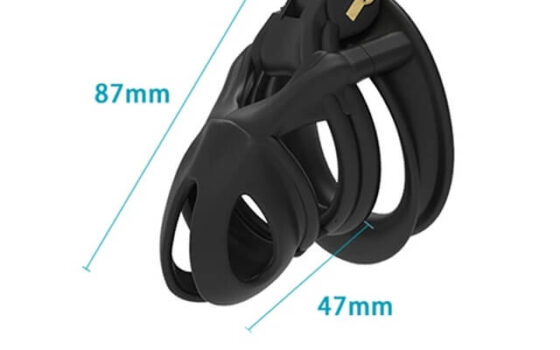
The Viper Chastity Cage V7.0 EVO
Choose the Viper V7.0 EVO for a nylon-resin kit with four base rings. One selected cage, a lock with two keys and a safety pin are included, giving you a clear starting set without buying each ring separately. Select the cage size on the product page.

Use the Maker’s Instructions, Not a Universal Cleaning Schedule
Cleaning schedules that promise universality — “clean every X hours,” “deep-clean weekly” — answer a question no maker can answer for someone else’s product. The maker’s instructions govern: which soap, which water temperature, which components tolerate soaking, what the care text says about frequency hints for the design’s materials. Everything else — wear calendar, climate, skin, routine — belongs to the wearer’s observation, not to a schedule borrowed from a different kit’s page.
The practical habit: read your kit’s care text once fully (per the buying-time check), follow its stated methods exactly, and let condition-based signals — odor, moisture, visible residue, skin feedback — set the intervals the text leaves open. The resin kit’s nylon body and the mesh steel’s junctions live under the same rule and different details: maker’s text first, observation second, borrowed schedules never.