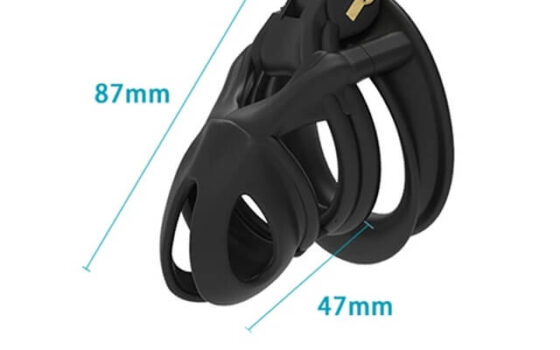
A head-to-toe fit assessment for the ring, cage body, gap and lock through sitting, walking, bathroom use and removal.
This guide is not medical advice. Stop use if significant pain, numbness, swelling, discoloration or circulation concerns occur.
Fit is a pattern you observe through movement, not a still photograph. A device can look centered while standing and pinch when seated. Another can feel loose at first but become stable once the cage length and underwear support are correct.
Begin with measurements from the four-dimension sizing guide. Then evaluate the complete assembly in the order below.
What “snug” should and should not mean
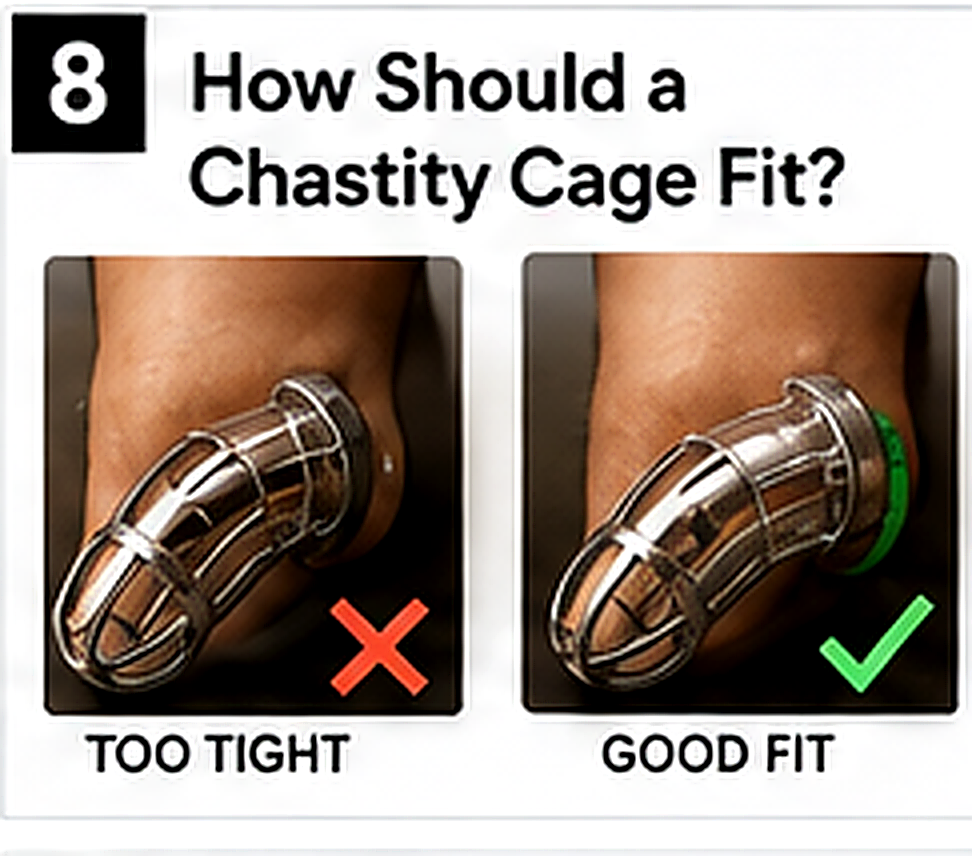
Snug means the device follows the body closely enough to avoid uncontrolled swinging and rubbing. It does not mean constant compression. Mild awareness of a new object can be normal; escalating pressure, a deep groove, coldness, numbness or color change is not.
Do not use the ability to insert a certain number of fingers as the only test. Bodies and finger sizes vary. Combine touch with color, temperature, sensation, movement and the way the ring behaves over time.
Check the base ring
The ring should remain generally in position without riding sharply into tissue. It should not rotate a hinge into the skin, pull one side down or create a concentrated pressure point. A ring that is too loose can allow movement and chafing; one that is too tight can create constriction and swelling.
Test more than standing. Sit in a firm chair, climb a step and bend to tie a shoe. Recheck after the device has warmed to body temperature.
Check cage length and internal space
In a relaxed state, the body should occupy the enclosure without needing to be stretched forward or folded aggressively. Excess empty length can create leverage and movement. Too little usable length can increase pressure at the tip or force tissue into openings.
The cage-length guide distinguishes natural relaxed measurement from marketing labels. Internal width and shape matter alongside length; a narrow oval is not equivalent to a round tube with the same headline size.
Check the gap and connector
Look at the space between ring and cage while standing and seated. Tissue should not be caught by guide pins, hinges or locking surfaces. A gap that is too small often announces itself through a specific pinch; a gap that is too large may let the assembly pull forward or allow slippage.
Confirm that the parts close without force. If you must squeeze tissue away from the connector each time, stop and change the configuration.
Run a movement and routine test
- Wear the device unlocked.
- Stand and walk at a normal pace.
- Sit on a firm and a soft surface.
- Bend, squat gently and climb a few steps.
- Use the bathroom and check alignment.
- Rinse, dry and remove the device.
- Inspect the skin in good light.
This sequence exposes pulling, rotation and hygiene problems before a longer session makes them harder to interpret.
How a good fit behaves over time
A suitable fit becomes less intrusive during ordinary activity. It remains removable, cleanable and stable when body temperature and posture change. Temporary marks from contact should fade; persistent marks, broken skin or worsening irritation require rest and reassessment.
A good fit also supports the intended routine. A device that is acceptable for a short home session may not be suitable for sleep or work. Extend one variable at a time.
Too tight, too loose or wrong elsewhere?
| Pattern | Likely area to review |
|---|---|
| Pressure around the entire base | Ring size or shape |
| Pinch at one connector point | Gap, pin alignment or trapped tissue |
| Forward pull and swinging | Cage length, weight, ring or support |
| Folding or tip pressure | Usable length, width or curvature |
| Messy urination or trapped moisture | Front alignment, enclosure design or hygiene access |
Change one element, repeat the short test and document the result.
When fit is not the only issue
A smooth size can still fail if a weld is rough, the lock rubs, the material causes irritation or the device cannot be cleaned. Examine construction and material compatibility rather than shrinking the ring to make the rest feel stable.
For ring-specific decisions, use the ring-size guide. Pair any fit experiment with the basic warning signs in chastity safety basics.
Fit is a whole-day pattern
A short test should include the positions that dominate the intended routine. For desk work, chair transitions matter. For walking, notice pull and rotation. For home use, bathroom alignment and cleaning may reveal more than standing comfort.
Supportive clothing can stabilize a suitable fit but should not press the cage hard against the body or hide a sharp contact point. Recheck after changing underwear or trousers.
Use recovery as evidence
After removal, normal sensation, color and temperature should return or remain normal. Marks that deepen, tenderness that persists or skin that needs increasing recovery time indicate that the configuration or schedule needs to change. The review continues after the lock opens.
Use the Fit & Comfort library to move between whole-device diagnosis and component-specific checks.
Diagnostic matrix: symptom to component
| What you observe | Component to review first | Other possible contributors | Action |
|---|---|---|---|
| Persistent ring pressure or deep marking | Ring diameter, shape and thickness | Cage leverage; clothing compression | Remove and retest a different configuration |
| Forward pulling while walking | Cage length and weight | Ring support; gap | Shorten the test and isolate one variable |
| Pinch at the lower connector | Ball gap and pin/spacer | Ring angle; trapped tissue | Unlock immediately and inspect |
| Sliding or rotation | Whole assembly stability | Excess length; large ring/gap | Do not simply tighten the ring |
| Difficult urination or cleaning | Front alignment and enclosure | Length; anatomy; clothing | Remove and choose a workable design |
| Numbness, unusual color, coldness or swelling | Not a sizing experiment | Possible circulation or tissue problem | Remove promptly; seek care if severe or persistent |
The matrix is a troubleshooting order, not a diagnosis. Use the ring guide, length guide and gap guide only after the device is off and urgent warning signs are excluded.
Sources and evidence limits
- NHS: contact dermatitis symptoms — supports cautious attention to persistent redness, burning, cracking, blistering and increasing pain.
- Cleveland Clinic: cyanosis — explains that blue, purple, gray or white discoloration can be associated with inadequate oxygenation and may occur with numbness or tingling.
- KINK3D FAQ — manufacturer evidence that ring style and gap interact, so a symptom cannot always be assigned to ring diameter alone.
Scope: This guide helps identify which component to review. It does not diagnose a skin, circulation or urological condition.
A workable fit is uneventful
A well-fitted cage is stable, cleanable and uneventful through normal movement. Judge the ring, enclosure, gap and connector as one system. If comfort depends on ignoring a warning sign, the fit is not correct.