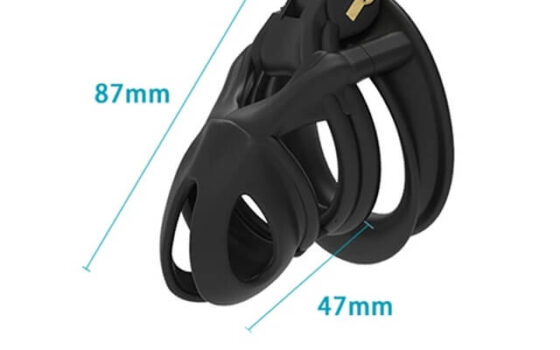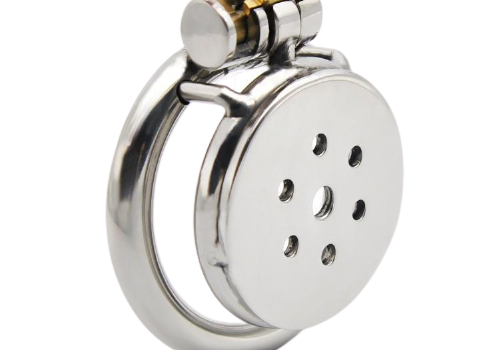
Will a replacement base ring fit your cage? Compatibility depends on model, connector geometry and locking parts — check all four before ordering.
This guide is not medical advice. Stop use if significant pain, numbness, swelling, discoloration or circulation concerns occur.
Replacement rings look like the simplest purchase in the category: one ring, one size, done. In practice they are the most returned part, because ring compatibility is decided by the connection hardware — pin spacing, receiver width, locking-post height — and none of that is visible in a size chart. Two rings at 45 mm can be mechanically incompatible with each other.
This guide is the compatibility check to run before buying any standalone ring, ending with the written confirmation to request from the seller. Size measurement itself is covered in the ring-size guide.
Which model and version do you own?
Start with the exact device, not the brand. Makers revise products — a V6 body and a V7 body from the same line can use different connectors — so record the full product name, version and, if visible, the order listing you originally bought from. A photo of your cage’s rear connection with a ruler beside it turns “I think it’s the metal one” into evidence a seller can actually answer.
Complete kits make this easy: their rings are made for their own cage family, which is why a four-ring kit’s rings all swap freely inside that kit. A standalone replacement ring is built for some specific family too — the question is whether it is yours. If you cannot name your cage’s model and version, that identification is step one of compatibility.
Does the connector geometry match?
The connector is the mechanical joint: the pins or posts rising from the ring, the receiver holes in the cage’s rear plate, and the spacing between them. Match three things — pin count, pin spacing in millimeters, and post diameter — and confirm the receiver on your cage accepts the ring’s posts without force. An arc-shaped ring adds one more variable: its standoff from the body changes the assembled gap even when the pins align.
Never infer compatibility from a shared size number or a similar product photo. Size is the opening; geometry is the joint. The reason kits advertise “four rings included with this cage” rather than “fits all cages” is exactly this: parts are model-specific by design, and the safest replacement ring is the one the maker lists for your model.
Do the locking parts line up as specified?
The lock completes the joint. An integrated barrel lock passes through aligned channels in cage and ring; a padlock passes through a locking post hole. For a replacement ring, check that its channel or hole diameter matches your lock’s barrel or shackle, and that the assembled stack — cage, ring, spacers if any — still closes without forcing. A ring that connects but leaves the lock protruding into a contact zone changes both comfort and emergency removal.
Spacers complicate the stack further, because they set the gap between ring and cage. A replacement ring with slightly different post length alters the effective gap even at the same nominal size, which is why the next section asks the seller for the assembled numbers, not the loose component’s.
What written confirmation should you request?
One message with four facts: your cage’s exact model and version, your measured ring size, the replacement ring listing you intend to buy, and the question “will this ring connect to this cage without modifications — pin spacing, post height and lock channel included?” Save the reply. It is your reference if the part arrives and does not fit, and it transfers the compatibility question to the party who can actually answer it.
If no confirmation is available, the fallback is the complete-kit route: buy the kit made for that ring family rather than gambling on a mixed joint. The types overview explains how kit families group compatible parts — and why “universal” never appears in honest ring listings.
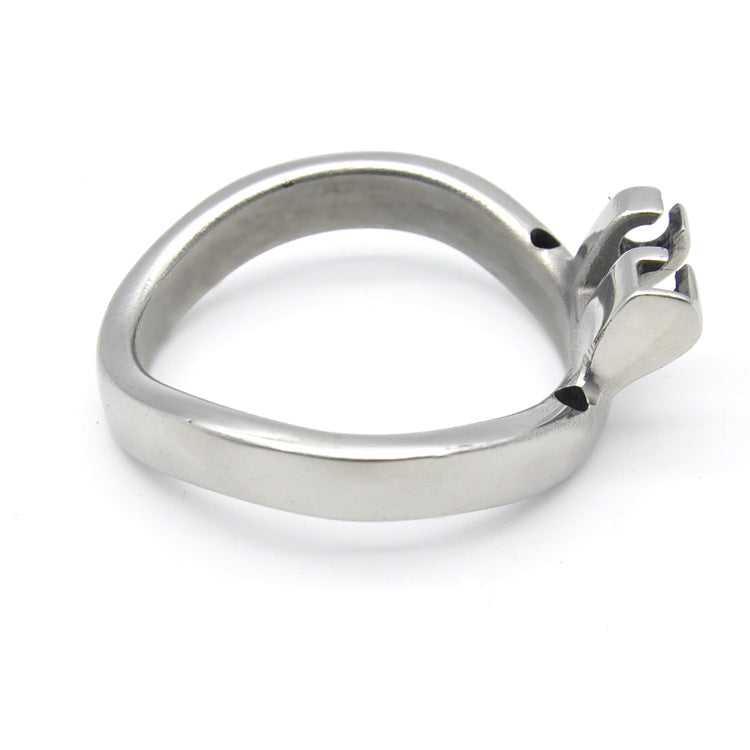
Replacement Arc Ring
A standalone replacement ring sold as itself — stated 40/45/50 mm options, no cage included, connection matching entirely your responsibility: The Replacement Arc Ring is sold separately in listed 40, 45 and 50 mm options. Choose it when you need a ring rather than another complete cage kit. Match the exact cage connection and size first; an arc shape alone does not establish compatibility with another model.

Compatibility lives in the joint, not the size. Identify your model, match the connector geometry, check the locking stack, and get the answer in writing. A replacement ring that fits is the cheapest upgrade in the category — one that does not is a lesson in hardware you did not need.
This guide includes promotional links to ChastityCage.co. To compare current kits and their matching parts, browse chastity cage kits at ChastityCage.co.