Base-ring labels cover three axes — shape, opening mechanism, size adjustment — plus connector compatibility. Read all four before ordering.
This guide is not medical advice. Stop use if significant pain, numbness, swelling, discoloration or circulation concerns occur.
Ring listings stack three separate vocabularies onto one small component. “Oval hinged adjustable” is three facts, not one — shape, mechanism and sizing — and buyers who merge them into a single impression order the wrong ring. The fix is to read every ring as three separate answers.
This guide walks the three axes with concrete examples and ends with the comparison table that keeps them straight. Measuring for size is covered in the ring-size guide; the hinged-versus-solid detail in the dedicated comparison.
Which labels describe shape?
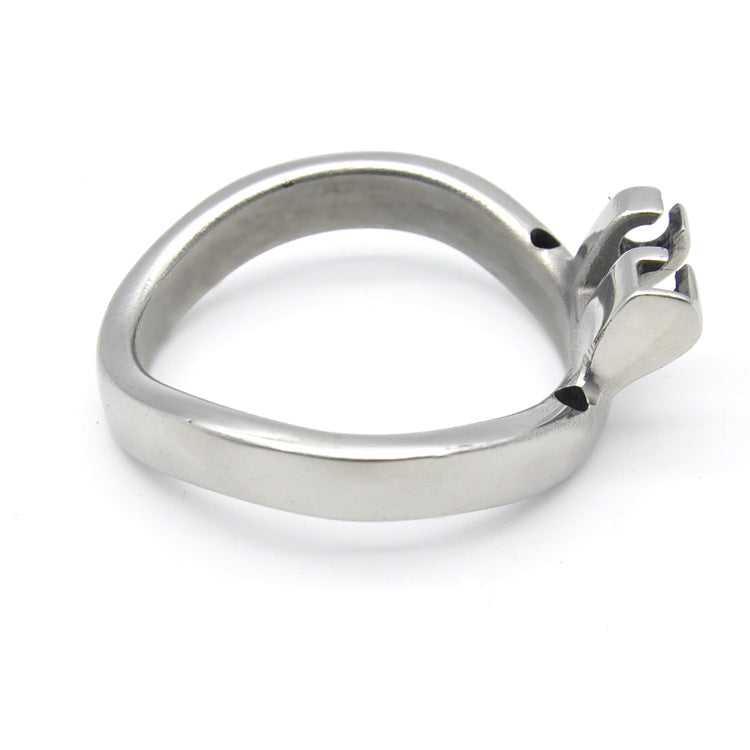
Round, oval and arc describe the opening’s geometry. Round rings are symmetric circles with one diameter. Oval rings stretch one axis, changing where the opening is generous and where it binds — and often carrying two internal figures instead of one. Arc rings curve to follow the body’s contour; the Replacement Arc Ring is the explicit example, sold standalone in stated 40/45/50 mm sizes, with a shape that sits differently from any round ring of the same number.
Shape adjectives migrate into marketing (“ergonomic” for arc, “anatomical” for oval), but the underlying geometry is visible in a straight-on photo of the opening. Trust the shape you can trace over the photograph, and record it beside your size — shape is why the same millimeter behaves differently across rings.
Which labels describe the opening mechanism?
Solid and hinged describe how the ring goes on. A solid ring is a closed loop: no hinge, no pinch point, but the body must pass through the opening — which is why solid rings reward accurate sizing. A hinged ring opens: easier to place, at the cost of a closure joint that must close cleanly and stay closed. The mechanism is independent of shape — solid oval and hinged round both exist — and it changes the wear checklist: hinge rings get a closure inspection, solid rings get a sizing margin.
Mechanism also affects cleaning and inspection routines: a hinge adds a crevice that wants drying attention, a solid ring presents one continuous surface. Neither mechanism is safer by definition; each moves the risk to a different, inspectable location.
Replacement Arc Ring
One corner of the map — a standalone arc ring, fixed sizes, no cage: The Replacement Arc Ring is sold separately in listed 40, 45 and 50 mm options. Choose it when you need a ring rather than another complete cage kit. Match the exact cage connection and size first; an arc shape alone does not establish compatibility with another model.

Which labels describe size adjustment?
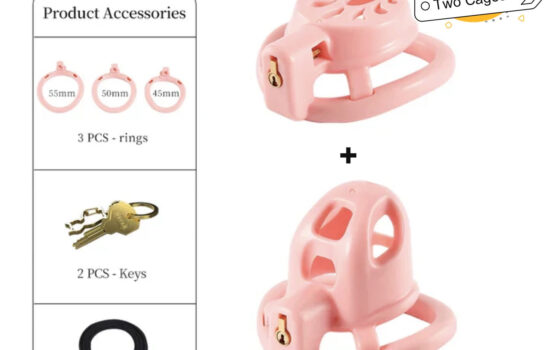
Fixed and adjustable describe the sizing model. Fixed rings ship in discrete sizes — you choose one, it stays that size forever; multi-ring kits ship several at once. Adjustable rings are one-piece components with a closure that moves through a stated range: the Adjustable Chainmail cage’s ring spans a stated 38–60 mm, and its adjustment is a property of the ring, never of the cage length attached to it.
Adjustment trades granularity for mechanism: between-size precision on one side, a moving closure to verify and maintain on the other. Fixed trades mechanism for certainty: solid sizes, no drift, reorder-able numbers. Your measurement situation picks the axis — settling a size favors adjustable; owning a proven size favors fixed.
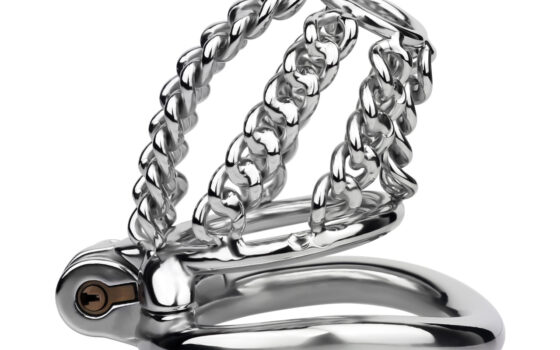
Chainmail Chastity Cage Adjustable
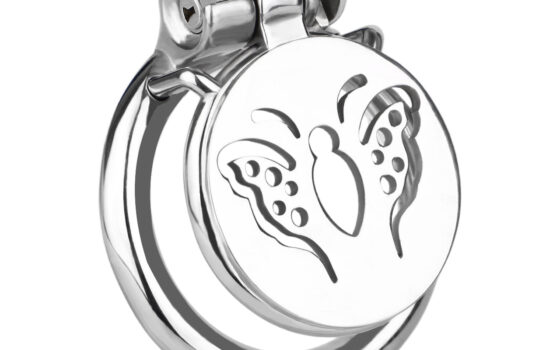
The opposite corner — an adjustable one-piece ring spanning a stated range: The Adjustable Chainmail Cage is the option to compare when you want an adjustable base ring rather than a kit of separate fixed rings. Its metal, chain-link body gives it a different look from a solid front plate. Ring adjustment does not change the selected cage length.

How should the buying comparison be organised?
Three rows, one per axis, per candidate ring: shape (with the actual opening dimensions), mechanism (solid or hinged, with closure notes), and sizing (fixed size or adjustable range). Then a fourth row nothing replaces: connector compatibility with your cage — pin spacing, post height, lock channel — because a ring that fits your body but not your cage is a paperweight. Fill the rows from listings and photos, mark unknowns, and buy the ring whose whole column matches.
The discipline pays at reorder time. “45 mm arc, solid, fixed, fits model X” is a sentence that finds the right product again in a year; “the silver one” is not. Rings are the category’s smallest components and its most-misordered — the three-axis table is how they stop being either.
Shape, mechanism, sizing: three axes, three answers, one table. Read every ring as three facts plus a connector check, and the category’s most misordered component becomes its most predictable. The ring is where fit lives — give it the structured reading fit deserves.
This guide includes promotional links to ChastityCage.co. To compare rings across all three axes, browse chastity cage kits at ChastityCage.co.