This guide is not medical advice. Stop use if significant pain, numbness, swelling, discoloration or circulation concerns occur.
“Lock” is the most overloaded word in chastity hardware. Listings use it for padlocks, cylinders, seals and apps, and buyers who sort none of them order hardware that cannot do the job they imagined. The fix is a four-label map — and the knowledge of which label your routine actually needs.
This guide covers all four labels with documented examples, and closes with the boundary where electronic systems deserve their own planning. The mechanical detail continues in the barrel-versus-padlock comparison.
Which designs use a separate padlock?
Designs whose locking post ends in a hole: the padlock hangs through it, visible and replaceable. The post’s hole diameter and clearance decide which padlocks fit — the brass replacement padlock with two matching keys is the standard-pattern candidate, matched to those two dimensions. Padlock designs buy you a generic replacement market and pay for it in profile: the lock is the device’s most visible part.
Padlock routines also inherit locksmith reality: conventional keys that any shop can duplicate, and a spare-padlock strategy that is one order away. For wearers who value serviceable over invisible, the separate padlock is the honest favorite.
Which use a fitted lock cylinder?
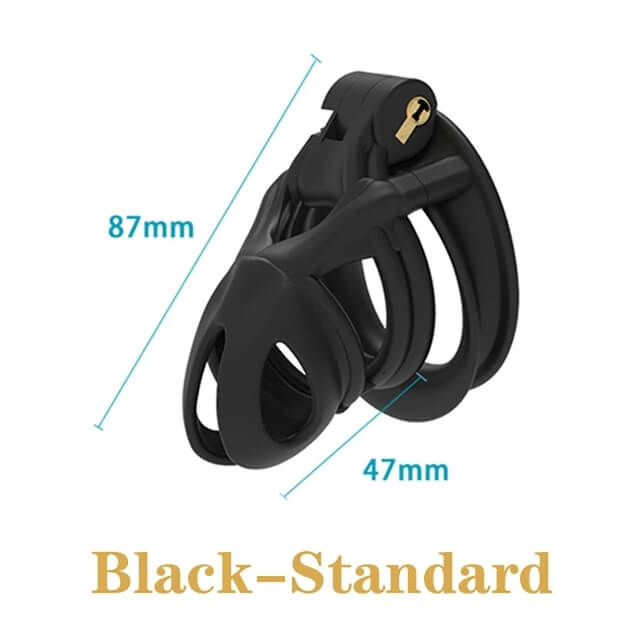
Designs with the lock built into the assembly: a cylinder slides over the cage’s locking post or through its spine channel, flush with the body. The Viper V7.0 EVO ships this way — integrated cylinder, two flat keys, no hanging hardware. Cylinders buy the lowest profile and the quietest wear, and pay for it in model-binding: replacements come from the kit’s maker, cut to that receiver.
Cylinder routines center on the keys: flat, model-specific, impossible to duplicate at a corner locksmith. Two keys ship with the example kit; where they live is the whole spare strategy, and it is written down or it doesn’t exist.
The Viper Chastity Cage V7.0 EVO
The fitted-cylinder family — integrated lock, two flat keys, lowest profile: Choose the Viper V7.0 EVO for a nylon-resin kit with four base rings. One selected cage, a lock with two keys and a safety pin are included, giving you a clear starting set without buying each ring separately. Select the cage size on the product page.

High Quality Brass Replacement Padlock
The separate-padlock family — standard shackle hardware, generic replacement market: This replacement padlock comes with two matching keys. It is the relevant option to compare when your setup uses a separate padlock rather than an integrated lock cylinder. Check the shackle clearance and locking point before ordering; the overall body size is not enough to establish compatibility.

Which labels refer to seals rather than locks?
“Numbered lock,” “plastic lock” and “seal” describe evidence hardware: a numbered plastic strap that records opening by breaking, controlling nothing. The Sado Chamber silicone kit’s five numbered seals are the pattern — closure ceremony and tamper evidence in one cheap, cut-to-remove part. They complement a keyed lock; they never replace one, and no seal belongs in any conversation about access control.
The label test: if opening it requires scissors rather than a key, it is a seal. Sort those listings out of your lock comparison and into your evidence layer, where they belong.
When does an electronic system need its own guide?
Whenever “lock” means app, timer or remote permission. Electronic access systems — key boxes and smart devices — are planning problems, not hardware swaps: accounts, connectivity, offline behavior, battery states and the standing rule that independent physical access stays outside any smart layer. Those questions need the dedicated smart-device guides, not a padlock paragraph.
The boundary is clean: if the closure’s answer can depend on a battery or a server, stop reading lock comparisons and start reading access planning. Mechanical and electronic closures are different purchases wearing the same word.
Four labels, four jobs: padlock for serviceability, cylinder for profile, seal for evidence, electronics for a different conversation entirely. Know which label your routine needs before the listing’s vocabulary chooses for you — and let the mechanical labels fight it out on dimensions, not adjectives.
This guide includes promotional links to ChastityCage.co. To compare closure hardware across families, browse chastity cage kits at ChastityCage.co.