Same listed chastity cage length, different internal space: taper, wall thickness and variants hide inside the number. Compare usable dimensions to choose.
This guide is not medical advice. Stop use if significant pain, numbness, swelling, discoloration or circulation concerns occur.
“Same length” is the most misleading coincidence in cage shopping. Two listings both read 70 mm and describe enclosures that hold different amounts of the body — because the number on the outside says nothing about taper, wall thickness or where the space actually sits. Buyers who order on the shared number are surprised; buyers who read internal space are not.
This guide explains where identical listed lengths diverge and how to choose on usable dimensions. The worksheet for the comparison is in the comparison worksheet; the fit interpretation is in the fit guide.
Compare internal and external references
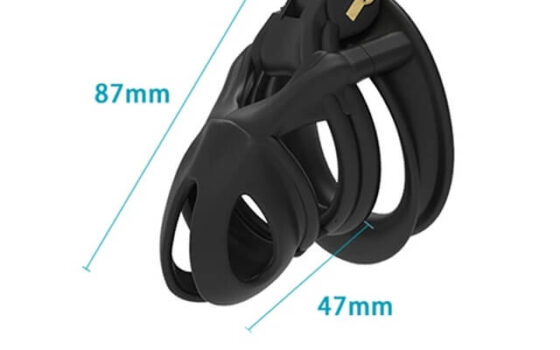
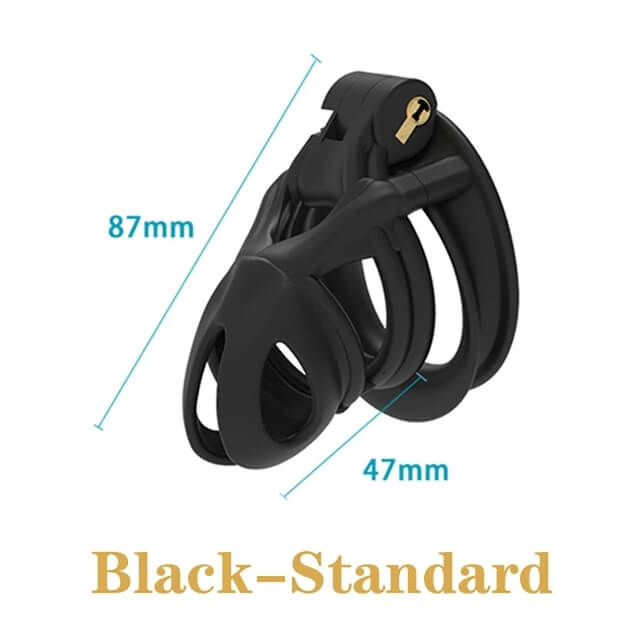
First establish that the two 70 mm figures are even the same kind of number: one listing may mean usable internal length, the other total external length including connector and tip. Check each chart’s arrow labels before comparing values — an internal-versus-external mix-up manufactures a difference that does not exist, or hides one that does.
Once both are confirmed internal, the real comparison begins: internal length is the space your body occupies, and it is the only length row that decides fit. Everything else on the chart is context.
Look for taper and front-wall thickness
Two straight-walled cages of equal internal length hold equal space. Add taper — an internal diameter that narrows toward the tip — and the effective space shrinks from the front inward. Add a thick front wall and the usable length drops behind it. Contoured and anatomical shapes distribute their space unevenly along the curve. None of this appears in the length number; all of it appears in a side-section diagram or a stated width at the narrowest point.
Where a listing provides neither, the taper question is a seller question: “does the internal width change along the length, and what is the narrowest internal width for the selected variant?”
Check the selected variant
Internal space is a per-variant property. Kits that offer multiple length classes — Nub through Standard, for example — publish a different internal length per class, and width can shift between them too. Confirm the chart row belongs to the variant in your cart before comparing it to anything: a shared product photo across four length classes is not a shared specification.
The discipline costs one screenshot per variant and prevents the classic error of comparing your measurement to the hero variant’s numbers while ordering a different class.
The Viper Chastity Cage V7.0 EVO
A listing that separates the classes for you: The Viper V7.0 EVO shows the per-variant pattern done right: four length classes (Nub to Standard) as separate selectable rows with their own chart values, so the internal space you compare is the internal space you order. Check: read the row of your selected class — the four included rings (38/43/48/52 mm) are a separate, documented row of their own.

Choose using usable dimensions rather than labels
Choose the cage whose usable internal length and narrowest width accommodate your measured range — full stop. The listed length, the size name and the product family all describe the cage; only the usable dimensions fit you. Where two candidates match on usable space, let package contents and documentation break the tie; where they differ, the space decides and the labels can say whatever they like.
Fill the worksheet with each candidate’s internal rows and the difference between same-length cages becomes visible on paper — which is exactly where a first purchase should be decided.
Flat & Small Chastity Cage Set
And the set that makes internal comparison practical: The Flat & Small Set puts two different internal geometries in one order — a flat body and a small body on shared rings — so the same-length-different-space lesson can be verified on your own table instead of across two purchases. Check: measure both bodies’ internal lengths yourself; the set invites exactly that comparison.

Same listed length, different internal space: the number on the label is the beginning of the question. Compare internal references, look for taper and wall thickness, confirm the variant, and choose on usable dimensions. The cage that fits is the one whose inside matches your inside — a fact no shared label has ever guaranteed.
This guide includes promotional links to ChastityCage.co. For kits that publish per-variant rows, browse chastity cage kits at ChastityCage.co.
Related ChastityNow guides
- Chastity cage comparison worksheet
- How should a chastity cage fit