Compare base-ring connectors before ordering parts: identify the connector shape, check locking alignment, compare model versions, get a supported match in writing.
This guide is not medical advice. Stop use if significant pain, numbness, swelling, discoloration or circulation concerns occur.
Base-ring connectors are the quiet heroes of every chastity assembly — and the quiet cause of every “the part arrived and doesn’t fit” ticket. Two rings that look alike can join their cages differently: pin count, pin spacing, receiver shape and locking alignment are all model-specific engineering.
This guide reads connectors before parts orders. The ring-size side is in the shape comparison and the compatibility guide; the measurement starting point is the ring-size guide.
Identify the connector shape
Look at where ring meets cage on your assembly and name what you see: posts rising from the ring, receiver holes in the cage plate, a slot-and-tab arrangement, a one-piece ring integrated into the body. Count the posts and note their spacing in millimeters — that pair of facts is the connector’s fingerprint, and it is what any compatible part must reproduce exactly.
Photograph the joint from two angles with a ruler in frame while you are at it: the photos carry the fingerprint to any seller conversation without a single measurement being retyped.
Check locking alignment
The connector does not just join — it aligns the lock. Check where the locking post or channel sits relative to the connector: which part carries it, what diameter the pin or shackle passes through, and whether the assembled stack closes flush. A replacement part that connects but leaves the lock misaligned changes removal, comfort and safety at once, which is why alignment is checked before purchase and re-checked at every assembly.
Integrated-cylinder systems carry the alignment inside the body; padlock systems carry it in the post hole. Either way, the alignment row belongs in your parts record beside the connector fingerprint.
Compare documented model versions
Version changes move connectors. A maker’s V6 and V7 can share a name and a silhouette while differing in pin spacing or receiver depth, so compare the documented version — the listing’s stated model, your order record, the photos — before assuming any continuity. The absence of a version statement is itself information: parts listings that do not name their compatible version are asking you to gamble.
Where versions differ, the honest parts language is “fits [exact model, exact version],” and anything less specific deserves a seller question before it deserves an order.
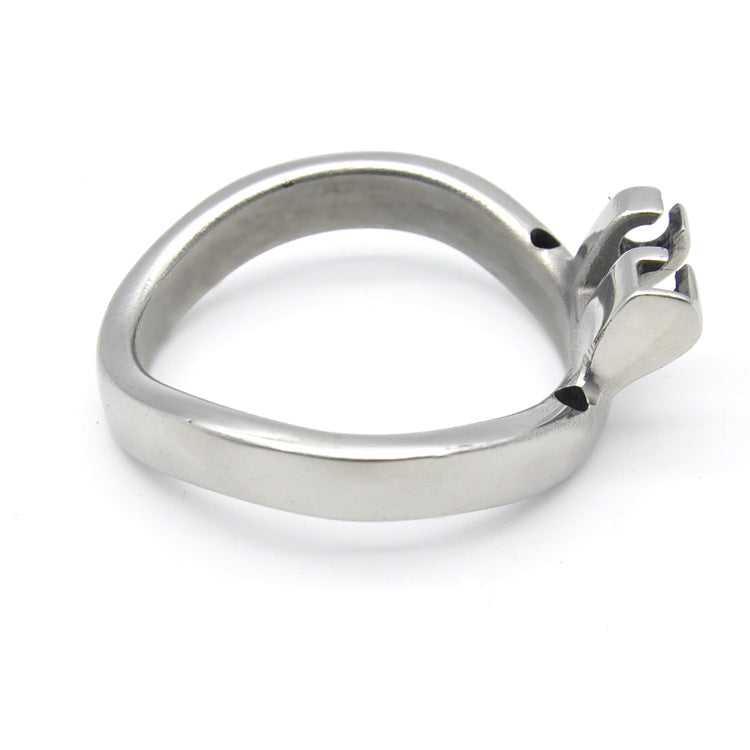
Replacement Arc Ring
A standalone ring that states its own terms: The Replacement Arc Ring is the parts-order pattern done plainly: a standalone ring in stated 40/45/50 mm sizes, no cage included, with the connection match left explicitly to the buyer’s verification. Check: its arc geometry changes the assembled profile as well as the joint — confirm both against your cage’s receiver before ordering.

Ask for a supported match
Close with one written message: your cage’s model and version, the connector photographs, and the request — “please confirm this part is a supported match for this assembly, including lock alignment.” A supported match is the seller putting their knowledge behind the compatibility, in writing, where it does your future self some good if it is wrong.
Then test the part off the body on arrival: connect, align, lock, unlock, five cycles. Supported on paper, proven on the table — that is the standard a joint has to meet before it holds anything you care about.
The Viper Chastity Cage V7.0 EVO
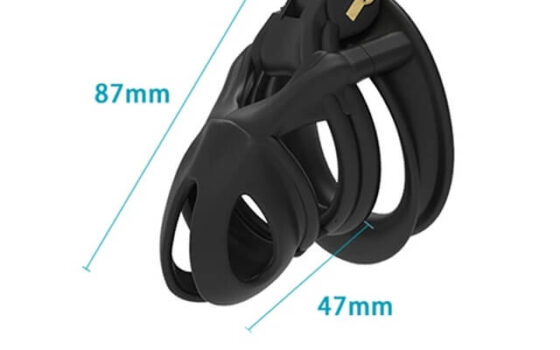
And the kit whose connector family is documented: Complete kits like the Viper V7.0 EVO sidestep the matching problem by shipping the matched set: four rings (38/43/48/52 mm) made for the same body, lock and alignment. Check: when a parts question gets complicated, the kit’s own spare-parts route is the supported match the guide is describing.

Fingerprint the connector, check the lock’s alignment, compare documented versions, and get the supported match in writing. Connectors decide whether chastity parts are a system or a drawer of near-misses — and four habits keep every future part on the right side of that line.
This guide includes promotional links to ChastityCage.co. For kits with documented connector families, browse chastity cage kits at ChastityCage.co.
Related ChastityNow guides
- Round, oval and arc rings compared
- Will a replacement ring fit your cage?