A short chastity cage does not require a narrow opening: treat length and width independently, read entrance and internal rows, and test the fit on the body.
This guide is not medical advice. Stop use if significant pain, numbness, swelling, discoloration or circulation concerns occur.
Short cages carry an assumed companion: a narrower opening. Nothing in the geometry requires it. Length and width are independent axes, and some of the most wearable compact designs pair a short body with a generous entrance. Buyers who uncouple the two axes open up the compact category instead of bouncing off it.
This guide walks the independent-axis method on two real configurations. The worksheet that holds the comparison is in the comparison worksheet; the fit interpretation is in the fit guide.
Treat length and width independently
Internal length is the front-to-back space; internal width is the side-to-side room. A cage can be short and wide, short and narrow, long and wide — each combination wears differently, and each exists in listings. The assumed link between “short” and “narrow” is a marketing habit, not a mechanical rule, and treating the axes independently is what lets a compact seeker find a wearable entrance instead of assuming the category is closed to them.
Write the two requirements as two separate lines — the length your measurement reaches, the width your anatomy needs — and shortlist candidates against both lines independently.
Read the entrance and internal measurements
Entrance measurements are the ring’s inner opening and the cage’s front aperture; internal measurements are the cage’s usable length and narrowest width. A compact cage with a generous ring and a wide front entrance can accept the body more easily than a longer cage with a tight front, which is why the entrance rows deserve their own read before the internal rows are judged. Charts that publish both sets make this a five-minute exercise; charts that publish neither make it a seller question.
The order of reading: entrance first (can the body get in comfortably), then internal (can it stay in comfortably), then ring (does the base hold the assembly without constriction).
Compare two real configurations
The cleanest way to see the independence is two documented configurations side by side: the Flat & Small Set’s flat body against its small body — different lengths, different widths, one ring system. Fill the worksheet rows for each: usable length, narrowest width, entrance aperture. The numbers show exactly where the configurations part ways, and which one matches the two lines you wrote.
A comparison on real configurations also surfaces the trade you may not have expected: the shorter body is not automatically the narrower one, and in documented sets it frequently is not.
The Viper Chastity Cage V7.0 EVO
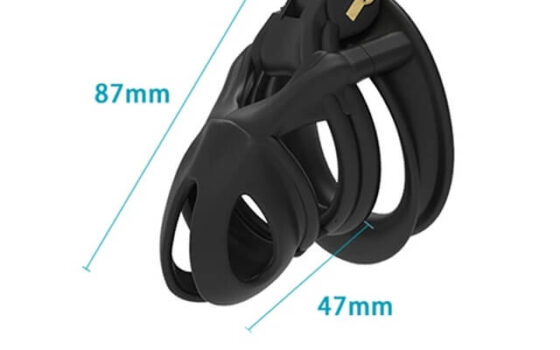
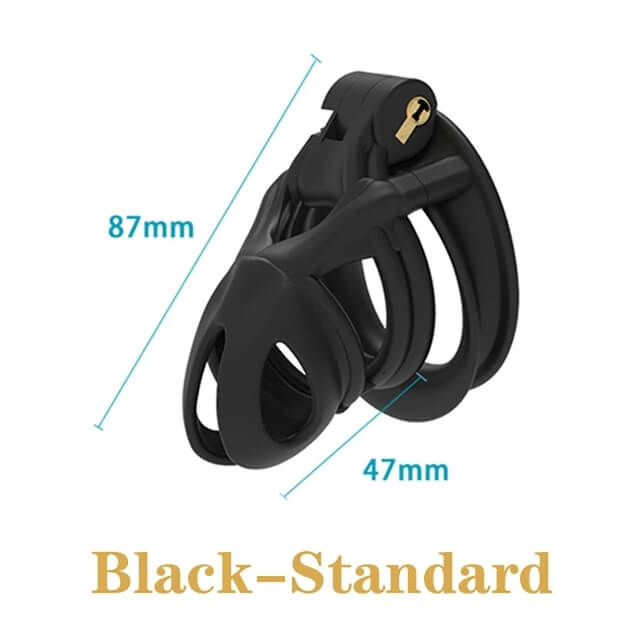
Compact classes with independent rows: The Viper V7.0 EVO’s compact classes (Nub, Nano) sit alongside Standard as separate selectable rows with their own chart values — the structure that lets you choose short without inheriting a width assumption. Four included rings (38/43/48/52 mm) keep the base-ring axis just as independent. Check: read the compact class’s own width row, not the Standard’s.

Keep the final body-fit decision separate
Charts narrow the field; the body makes the decision. A short-listed compact cage passes only after the unlocked fit test — seated, moving, skin inspected — because compact geometry concentrates pressure in ways paper cannot predict. Keep that test as its own step with its own log, separate from the shopping work, and let no chart’s confidence borrow authority from the body’s verdict.
When the fit test passes, the short cage is simply your cage: chosen on independent axes, verified in wear, recorded for the next decision.
Flat & Small Chastity Cage Set
And the two-configuration comparison in one box: The Flat & Small Set is the side-by-side experiment: a flat body and a small body, both short-profiled, on one ring system — the cleanest way to learn which independent axis actually needed changing. Check: test each body against your two written requirement lines separately; the set answers the comparison, not a single cage.

Short is a length statement; narrow is a width statement; the two lines are written separately and matched separately. Read entrances and internals on their own rows, compare real configurations, and hand the final verdict to the unlocked fit test. The compact category is open to whoever uncouples the axes — which now includes you.
This guide includes promotional links to ChastityCage.co. For compact classes with independent rows, browse chastity cage kits at ChastityCage.co.
Related ChastityNow guides
- Chastity cage comparison worksheet
- How should a chastity cage fit