Sort chastity cage accessories into included, selectable and separate. See how the Locktober kit's included belt and Butterfly Flat's optional belt differ.
This guide is not medical advice. Stop use if significant pain, numbness, swelling, discoloration or circulation concerns occur.
Most confusion around chastity cage accessories comes from listings that blur the line between what ships with the device and what the seller merely offers. A support belt photographed beside a cage may be included, selectable or sold separately — and the difference is only visible in the variant menu and package list.
This guide sorts accessory decisions into a checklist you can run against any listing, with the two CC products that illustrate the pattern best. New to the hardware itself? The beginner-friendly features guide covers the basics.
Which accessories are actually optional?
Genuine options show up in three places: a variant menu at checkout, a package list marked “included” or “optional,” and separate listings in an accessories collection. Anything that only appears in a product photo is not an option — it is marketing context. Belts are the classic case: one kit includes a belt in the box, another offers “with belt” as a paid variant, a third shows a belt that belongs to a different product entirely.
Invasive attachments sit in their own category. Some listings offer configurations with urethral inserts; those change hygiene, comfort and risk profile substantially, and this guide deliberately covers them only as checkout options to notice — not as upgrades to pursue. If a configuration name like “No Urethral” appears, that plain configuration is the sensible default for general wear.
How do you identify the basic configuration?
The basic configuration is the version that works as a complete device with no variant selected beyond size and color: one cage body, its ring (or ring set), a lock with keys, and nothing attached that requires a separate decision. Write it down from the package list before you look at options — “1 cage, 4 rings, lock with 2 keys, belt” is a basic configuration; “1 cage, 1 selected ring, lock with 2 keys” is a different basic configuration.
Knowing the base version keeps add-ons in perspective. A belt variant is worth considering only if the base kit already fits your ring size and length needs. An accessory never repairs a wrong size — it adds support or convenience to a device that already fits.
What changes when a support belt is selected?
A support belt adds an anchor point higher on the body, which changes how weight and movement load the base ring. For heavier cages or long daytime wear, that can reduce swing and pressure at the ring. The trade-offs are practical: another layer under clothing, another cleaning item, and another adjustment point during bathroom breaks.
Two CC products show both belt patterns. The Locktober kit includes a support belt in the package as standard — the “basic configuration” already has it. The Butterfly Flat lists a belt as an optional variant: without-belt is the base product, and “with belt” is a deliberate configuration choice made at checkout. Same accessory, opposite defaults.
Locktober Chastity Cage
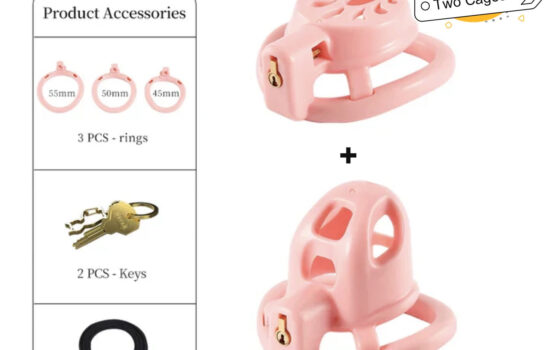
The kit whose basic configuration already includes a support belt: The Locktober Chastity Cage brings an ABS-resin cage, four aluminum-alloy rings and a support belt into one kit. Choose the No Urethral option for the basic configuration, then select the cage size. It is a straightforward choice when those included parts match the setup you are looking for.

Butterfly Flat Chastity Cage
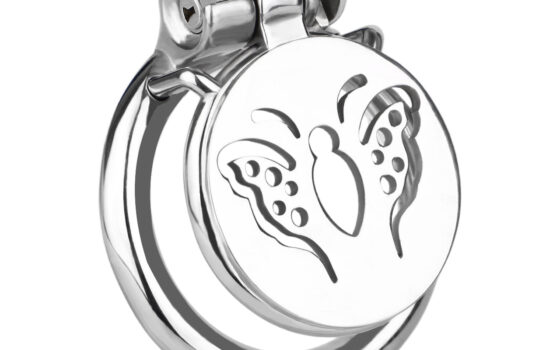
And the steel design where the belt is an explicit checkout option: The Butterfly Flat pairs a distinctive butterfly-shaped front with a stainless-steel construction. The package lists one cage, one selected ring and a lock with two keys; a belt is optional. Choose this design when you prefer its outline, then select your ring and belt configuration.

When is it better to leave an add-on unselected?
Leave accessories unselected when they answer a problem you do not have. A belt adds nothing to a light cage worn for short home sessions. A second colorway is aesthetic. An insert-style configuration changes the device’s character and is never a default. Every unselected option is money kept for the parts that actually matter — usually a better ring fit or a spare lock.
One more rule of thumb: never buy an accessory to fix a fit problem. Belts support a correctly sized device; they do not compensate for a ring that is too large or a cage that is too long. Solve fit first with the first-cage guide, then choose accessories for the routine you actually run.
Options are only optional when you can see the base product clearly. Establish the basic configuration from the package list, add what your routine needs, and skip the rest. A simpler, correctly fitted setup will always outperform a box of unselected upgrades.
This guide includes promotional links to ChastityCage.co. To compare configurations across current kits, browse chastity cage kits at ChastityCage.co.