Compare chastity cage prices by package contents, not price tags. A blank cost sheet plus two kit structures make the comparison honest.
This guide is not medical advice. Stop use if significant pain, numbness, swelling, discoloration or circulation concerns occur.
Chastity cage price comparison usually fails at the same step: shoppers compare two numbers before establishing what each number buys. A price for one cage body with no ring is not comparable to a price for two cage bodies, three rings and a belt — yet listings can photograph both to look almost identical.
This guide builds the comparison on package contents rather than price tags, gives you a blank cost sheet to fill with the figures you verify yourself, and names the two kit structures that most often get compared against each other. For the broader decision framework, see how to choose a chastity cage.
What is included in the displayed price?
The displayed price covers exactly what the package list names — nothing more. Ring count is the biggest swing factor: a four-ring kit and a one-ring listing can carry similar prices while containing very different amounts of hardware. Lock and key counts matter too; a lock with two keys is standard on complete kits, while replacement locks are bought separately elsewhere.
Check whether the variant you select changes the contents or only the fit. Choosing a cage length should not change what is included. Choosing “with belt” versus “without belt” changes it deliberately. Color variants change appearance only — a Pink and a Black version of the same set contain the same parts.
Which documented features justify a comparison?
Compare kits on documented rows, not impressions: number of cage bodies, number of included rings and their stated sizes, lock and key count, included extras such as belts or plastic seals, material family, and stated weight where published. These rows come straight from the package list, which makes the comparison honest even between very different products.
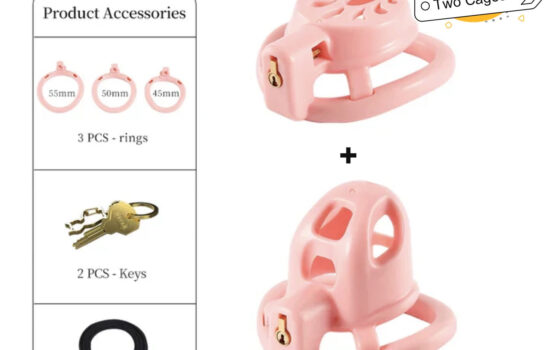
Two structures dominate the kit end of the market and make the cleanest comparison pair. The four-ring single-cage kit (one cage body, four base rings, lock with two keys) prices a fitting-range strategy. The dual-shape set (two cage bodies, three rings, belt) prices a comparison strategy. Whichever matches your goal is the one whose price is “worth it” for you — the other is not overpriced, just aimed at a different buyer.
The Viper Chastity Cage V7.0 EVO
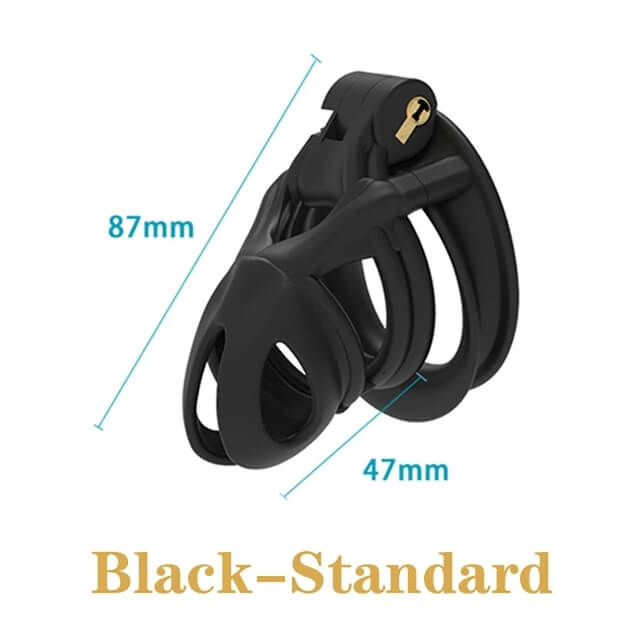
The four-ring kit structure that anchors most price comparisons: Choose the Viper V7.0 EVO for a nylon-resin kit with four base rings. One selected cage, a lock with two keys and a safety pin are included, giving you a clear starting set without buying each ring separately. Select the cage size on the product page.

What extra costs should you check yourself?
Shipping, taxes and any currency conversion sit outside the displayed price and change the real total; verify them at checkout for your own address rather than from a review. Replacement parts are the quieter long-term cost: a spare lock, an extra ring outside the included range, or a replacement belt all cost money later, and a kit whose included range brackets your size avoids the most common one.
Fill in the numbers yourself when you compare. Use a sheet like the one below — one column per kit, one row per cost factor — and mark anything you have not verified as unknown. Two minutes of honest blanks beats a confident guess.
| Cost factor | Kit A (fill in) | Kit B (fill in) |
|---|---|---|
| Displayed price of your exact variant | ___ | ___ |
| Cage bodies included | ___ | ___ |
| Rings included (count + sizes) | ___ | ___ |
| Lock and keys included | ___ | ___ |
| Belt or extras included | ___ | ___ |
| Shipping to your address | ___ | ___ |
| Tax at checkout | ___ | ___ |
| Parts you may add later | ___ | ___ |
Flat & Small Chastity Cage Set
The dual-shape set to price against it when comparing two shapes is the goal: The Flat & Small Set includes two cage shapes, three rings, two keys and an adjustable support belt. Choose it when you would rather compare a flat and a small shape within one package than order two separate kits. Pink and Black are separate color choices.

How do you compare value without guessing quality?
Value is contents-per-goal, not price-per-impression. Ask what the kit replaces: if it would replace buying two separate devices, its price competes with the sum of those two plus their shipping. If its four rings replace three separate ring orders, factor that in. Quality signals you can verify — stated material, published dimensions, smooth finish visible in photos — support the comparison; anything you cannot verify belongs in the unknown column, not in a verdict.
Then make the call on fit with your own measurements. A cheaper kit whose included rings do not bracket your size is a more expensive purchase than a costlier kit that does. The beginner features guide lists the dimension checks worth running before any price comparison ends.
Price only means something next to a package list. Count the bodies, count the rings, note the lock and keys, add your own shipping and tax, and let the totals argue it out. The kit that fits your measurements and your goal will win that comparison on contents — which is the only comparison that survives delivery day.
This guide includes promotional links to ChastityCage.co. To run the comparison on current kits, browse chastity cage kits and prices at ChastityCage.co.