Coated or bare metal? Identify the finish from stated facts, not color, and follow the maker's care limits — stainless is not an allergy promise.
This guide is not medical advice. Stop use if significant pain, numbness, swelling, discoloration or circulation concerns occur.
Metal finish is where metal-cage buyers guess most confidently and verify least. A colored surface reads as “coated,” a silver surface reads as “bare steel,” and both readings are sometimes wrong — with care and skin consequences that follow the actual finish, not the visual impression.
This guide covers identifying coating versus base material, what finish information listings actually provide, and what to do when it is undocumented. The metal-family background is in the metal guide and the metal-versus-plastic comparison.
Is the surface a coating or the base material?
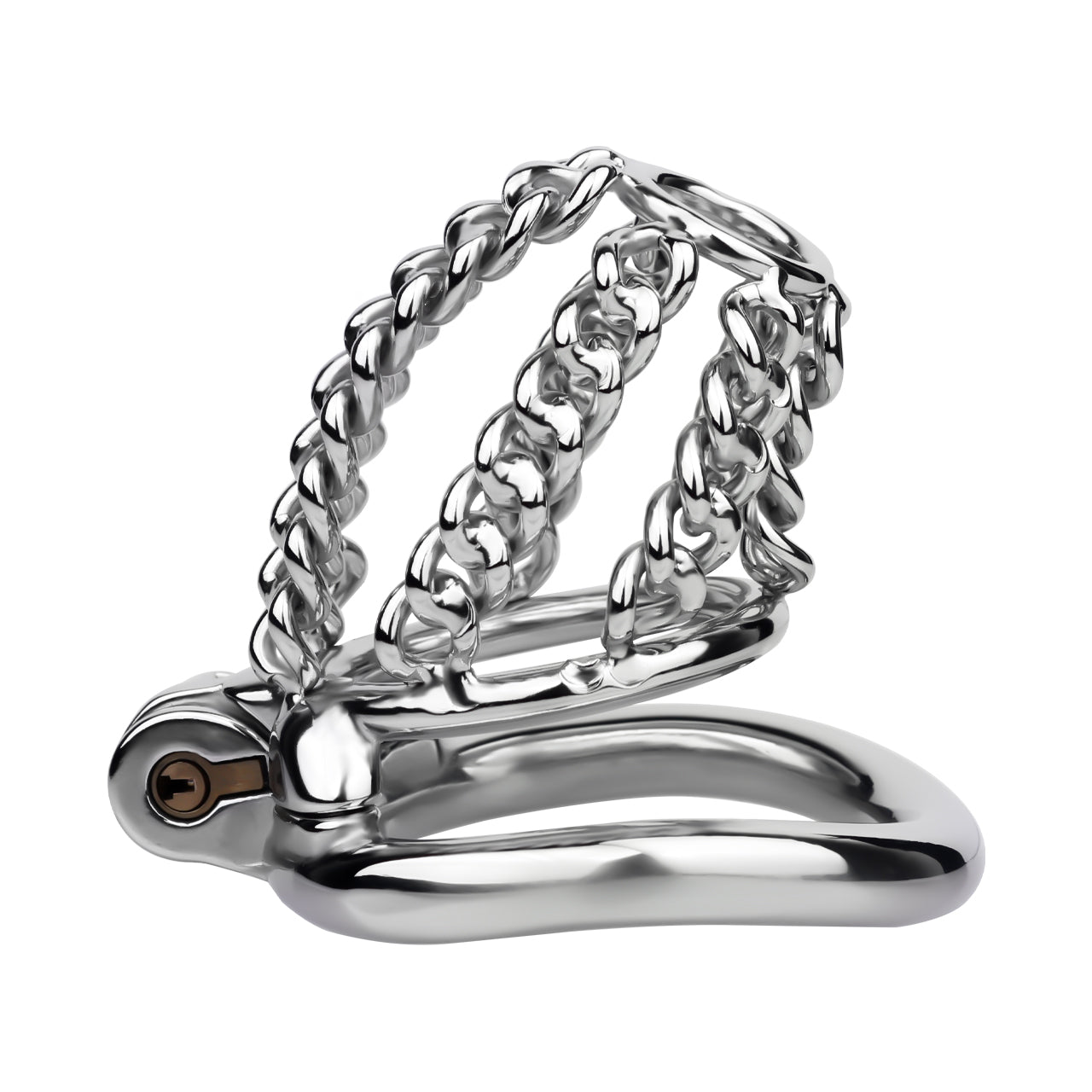
The base material is what the part is made of; a coating is a layer applied over it (plating, paint, anodizing, PVD-style films). Polished stainless steel — the Chainmail Steel cage’s listed finish — is base material brought to a shine: the surface you touch is the steel itself. A black or gold surface on a metal part may be coating over steel, or it may be a through-colored alternative alloy or process; color alone cannot tell you which.
Why the distinction matters practically: coatings can chip, wear at contact points and expose edges; base material wears by polishing, not by flaking. Care products and abrasion tolerance differ too. The finish type is a maintenance fact disguised as an aesthetic one.
What finish information is actually provided?
On the honest listings: the material (“304 stainless steel”), the surface treatment (“mirror-polished”), or both. The Chainmail Steel page states solid steel with a polished finish — base material plus surface process, the complete answer. Anything less — “metal finish,” “premium coating” unnamed — is a gap to fill with a seller question, not a suggestion to assume.
Read finish statements per component as well: a cage body’s finish need not match its rings’ or lock’s. The component-table habit from the mixed-material guide applies verbatim — material column, finish column, per part.
Chainmail Steel Chastity Cage
The documented example — solid steel, mirror-polished base material stated on the listing: Choose the Chainmail Steel Cage for its open chain-link design and a package with one cage, one selected ring and a lock with two keys. It is a different product from the Adjustable Chainmail model, so choose the ring option on this listing rather than assuming the ring adjusts.

Which care limits does the maker specify?
The maker’s care text governs: which cleaners, which water temperatures, whether soaking suits the lock, and — for coated surfaces — which abrasion the layer tolerates. Polished bare steel generally forgives more cleaning chemistry than coatings; but the specific answer belongs to the specific product, and listings that specify their finish usually specify its care in the same paragraph. Follow that paragraph over any general guide, including this one.
Inspect per finish type during cleaning: coated parts get chip-and-edge checks at contact points; bare polished parts get scratch and polish checks. The inspection is where finish knowledge pays — you look for what your surface can actually develop.
What should you do when the finish is undocumented?
Ask one question before ordering: “Is the [color] surface a coating over the base metal, and what care limits apply to it?” If the answer is unclear, choose the documented alternative — the listing that states its material and finish has earned the order on maintenance grounds alone. And for skin-sensitive wearers, undocumented finishes are a hard stop: “stainless steel” is not a hypoallergenic certification for anyone, and an unnamed coating is worse than none.
Documented finishes also age predictably — you know what wear looks like and when it is cosmetic versus consequential. Buy the finish you can read, and you will still know your hardware in year three.
Base material or coating: one question, one answer, one care routine. Do not infer from color, do not inflate “stainless” into promises, and prefer the listing that names its finish. Metal hardware rewards documentation — give your skin the documented kind.
This guide includes promotional links to ChastityCage.co. To compare documented metal finishes, browse metal chastity cages at ChastityCage.co.