Check a cage's cleaning instructions before buying: model-specific text, per-component treatment, stated temperature and chemical limits — or ask in writing.
This guide is not medical advice. Stop use if significant pain, numbness, swelling, discoloration or circulation concerns occur.
Care instructions are the least glamorous part of a listing and the first document you’ll live with. A cage whose maker states its limits wears predictably for years; a cage whose care is folklore ages by accident. Before buying — not after the first wash — is when the documentation gets checked.
This guide builds that check for real listings: what model-specific instructions look like, which components need their own treatment, and what to ask when the page is silent. The daily routine that follows good instructions lives in the hygiene guide.
Do the instructions name the exact model?
Generic care text (“wash with mild soap”) applies to everything and therefore informs you about nothing model-specific. Model-named instructions — care text that appears on the product’s own page or manual, naming the device — carry the maker’s actual material and hardware knowledge. The Viper kit’s care line and the Chainmail Steel kit’s are two examples of listings whose care speaks for their own build.
Check the source too: care text on the maker’s own listing or manual outranks care text on a reseller’s rewritten page. When versions differ between sources, the maker’s is the document.
Which parts need separate treatment?
Every component with its own material: shell, rings, lock, keys, belt, seals. The mixed-material habit applies to cleaning exactly — the wash-tolerant mesh of a steel cage and its lock’s mechanism follow different rules, and a resin body’s heat limits differ from its aluminum rings’. A care document that treats the kit as one object is incomplete; read (or request) the per-component version.
Note the small parts especially: pins, seals and keys rarely get care lines, and they are exactly where unstated limits (heat, solvents) cause quiet damage. Their care defaults to the gentlest option unless documented otherwise.
The Viper Chastity Cage V7.0 EVO
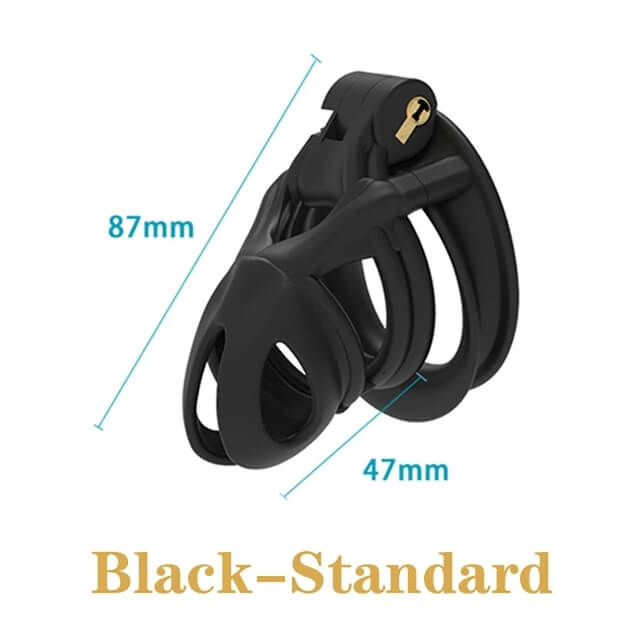
A resin kit whose listing carries its own care line: Choose the Viper V7.0 EVO for a nylon-resin kit with four base rings. One selected cage, a lock with two keys and a safety pin are included, giving you a clear starting set without buying each ring separately. Select the cage size on the product page.

Are temperature and chemical limits stated?
These are the two rows that prevent real damage: how hot (boiling, dishwashers, hot water) and which chemistry (alcohol, bleach, harsh soaps) the materials tolerate. Rigid polymers warp and cloud with heat and some solvents; coatings can lift; metal tolerates more but its lock may not. A document stating both limits lets you clean confidently within them — a document without them leaves every method a guess.
Where limits are unstated, the cautious default — lukewarm water, mild unscented soap, complete drying — is the baseline this site recommends, upgraded only when the maker’s text permits. No cleaning hack found online outranks the absent documentation it would violate.
Chainmail Steel Chastity Cage
And a steel kit whose wash-tolerant body still documents its lock’s rules: Choose the Chainmail Steel Cage for its open chain-link design and a package with one cage, one selected ring and a lock with two keys. It is a different product from the Adjustable Chainmail model, so choose the ring option on this listing rather than assuming the ring adjusts.

What should you ask when care guidance is missing?
One written message, three lines: the exact model you’re ordering, the components in its package, and the request — “what are the cleaning instructions and temperature/chemical limits for each component?” Save the reply with your kit records; it is now the care document, and it also tells you something about the support you can expect after purchase.
If no answer comes, treat the silence as data: a seller who cannot state care limits is selling hardware whose maintenance you’d be guessing at. The documented alternative — the listing whose care speaks — is usually one click away.
Model-named instructions, per-component treatment, stated limits, written answers when documentation is missing — four checks that make care a buying criterion. The best cage to clean is the one whose maker told you how; buy that one, and the hygiene routine runs itself.
This guide includes promotional links to ChastityCage.co. For kits that document their care, browse chastity cage kits at ChastityCage.co.