Two cages, two part systems: identify each kit at a glance, never share parts, keep one inventory page per kit — updated on replacement day.
This guide is not medical advice. Stop use if significant pain, numbness, swelling, discoloration or circulation concerns occur.
The second cage doubles the hardware and quadruples the confusion: similar rings, similar spacers, two locks with two key sets, and a parts drawer where compatibility quietly dissolves. The antidote is administrative, not heroic — identification, separation, one page per kit, updated on arrival day.
This guide builds the two-kit system using two documented designs as its example. Single-kit storage lives in the storage guide; the parts-level compatibility rules in the compatibility check.
How can each kit be identified at a glance?
Color-code the administration, not just the hardware: a bag color, tag color or label initial per kit — “V” pouch for the Viper-style kit, “F” pouch for the Flat & Small Set — plus the one-photo rule: each kit photographed complete, disassembled, with a ruler, on delivery day. The photo is the kit’s ID card; the pouch is its home; the tag is what your memory reads at drawer speed.
Identification also means model-version honesty in the records: “the resin one” stops working the day a third kit arrives. Names from the listings, written once, prevent every later conversation with sellers and with your own forgetfulness.
Which parts must not be assumed interchangeable?
All of them, between kits. Rings carry connector geometry specific to their design; spacers and pins are cut to their own stack; locks are keyed to their own keys; and even similar-looking components differ in tolerances their photos cannot show. The rule is absolute because the failures are silent — a near-fit spacer works for a week and changes the gap the day you forget it’s from the other kit.
When a part genuinely needs replacing, the compatibility check runs before the drawer does: the replacement comes from the maker for that kit or is verified in writing for it. The drawer is where spare parts sleep, not where compatibility is decided.
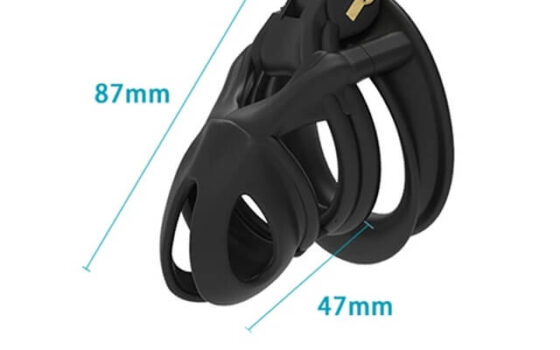
The Viper Chastity Cage V7.0 EVO
Kit one of the example system — documented package, four-ring set: Choose the Viper V7.0 EVO for a nylon-resin kit with four base rings. One selected cage, a lock with two keys and a safety pin are included, giving you a clear starting set without buying each ring separately. Select the cage size on the product page.

Flat & Small Chastity Cage Set
Kit two — two bodies, three rings, its own inventory page: The Flat & Small Set includes two cage shapes, three rings, two keys and an adjustable support belt. Choose it when you would rather compare a flat and a small shape within one package than order two separate kits. Pink and Black are separate color choices.

What should the inventory record?
One page per kit, five lines each: model and version; package list as shipped (bodies, rings with sizes, locks, keys, extras); the bag or tag color; key and spare locations; and the date-photo reference. The page lives with the kit or in the kit folder, and it is the document that makes insurance claims, seller questions and reorders one-paragraph tasks instead of archaeology.
Add the wear log line while you’re there: which kit wore last, how it went. The inventory page becomes the kit’s biography — and biographies make the next purchase easy.
How can you update it after buying a replacement?
On arrival day, before the packaging reaches the bin: new part photographed, checked against its listing’s package basis, added to the kit’s page with size and date, old part retired in writing (sold, kept as labeled spare, discarded). The five-minute update is what keeps the inventory true — and an inventory that lags reality is worse than none, because it certifies a drawer that no longer exists.
Replacement day is also cross-kit audit day, briefly: confirm nothing from the new package has drifted into the other pouch. Fresh parts are the most migratory parts in the household; five minutes of counting keeps both biographies accurate.
Two cages run cleanly on one system: identified kits, never-shared parts, a page each, updated the day anything changes. The administration is thirty minutes across a year, and it purchases the only thing multi-kit ownership actually needs — certainty about which part belongs to which body, at drawer speed, forever.
This guide includes promotional links to ChastityCage.co. For kits with documented packages, browse chastity cage kits at ChastityCage.co.