Between two chastity cage sizes on a first order? Separate measurement uncertainty from label uncertainty and let a multi-ring kit decide the answer in wear.
This guide is not medical advice. Stop use if significant pain, numbness, swelling, discoloration or circulation concerns occur.
Sitting between two listed sizes is the normal condition of a first-time buyer, not a measurement failure. Size labels are classes, your measurement is a range, and the honest response is a decision rule — not another week of re-measuring in different moods.
This guide gives that rule: separate what is uncertain in your numbers from what is only uncertain on the label, compare the actual options, and place the order when the missing detail is named. The measurement method behind your numbers is in the first-cage guide.
Separate an uncertain measurement from an uncertain label
Take your measured range — say a base-ring path of 140–148 mm and a relaxed length you would trust within a few millimeters. That is an honest measurement with natural variation. The uncertainty you feel usually comes from the label layer on top: “Small” on one listing covers different millimeters than “Small” on another, and a chart that never states its reference points makes two true numbers look contradictory.
Before deciding anything between two sizes, convert both options to millimeters and write them beside your range. Half the time the dilemma dissolves — one option sits clearly inside your numbers and the other was never really in contention.
Compare the actual options
With millimeters on paper, compare what each candidate actually includes. A kit whose four included rings (38, 43, 48 and 52 mm on the documented example) bracket both of your plausible sizes turns the between-sizes problem into a non-problem: both answers ship in one box. A single-ring order forces the choice before the body has voted.
For length classes, the comparison is the chart: which class’s usable internal length sits at or just above your measured length? If two classes both could work, the between-sizes rule applies on the ring axis, where kits give you room — and on length, pick the class your measurement reaches, not the one the size name flatters.
What a multi-ring set does not resolve
A multi-ring set resolves ring uncertainty; it does nothing for length uncertainty or width doubts. Do not let the four rings in the box seduce you into ordering a length class your chart comparison does not support — the rings will fit and the cage will still be wrong. Each axis takes its own decision, and only one axis gets deferred to wear testing.
Be equally honest about what between-sizes means for comfort: the larger ring is the default first wear, because a slightly loose ring announces itself politely (movement, adjustment) while a too-small ring announces itself through circulation. The asymmetry of the two mistakes is the whole rule.
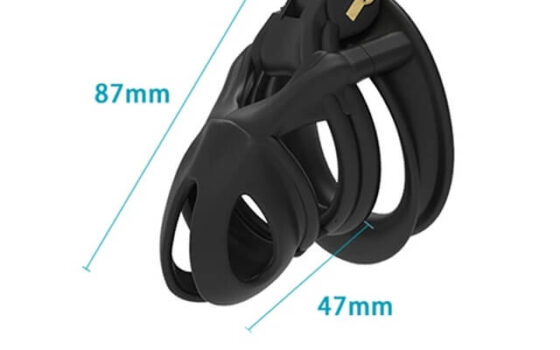
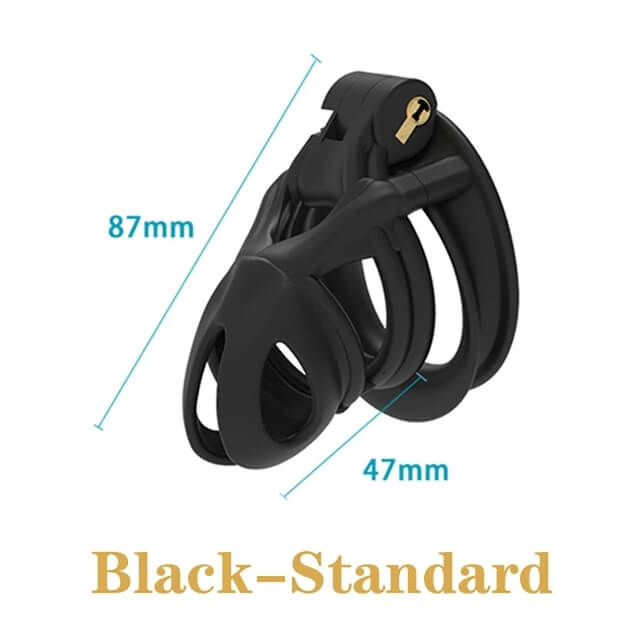
The Viper Chastity Cage V7.0 EVO
The kit structure that absorbs between-sizes uncertainty on the ring axis: For a first order placed between sizes, the Viper V7.0 EVO’s four included rings (38/43/48/52 mm) mean both of your plausible ring sizes arrive together — test the larger, drop to the smaller, and keep the setting the evidence supports. Check: the included range must actually bracket your measurement before you rely on it.

Place the order after the missing detail is clear
Place the order when three facts are written down: your measured range, the millimeter values of both candidate options, and which axis the kit lets you test in wear. If a listing’s chart cannot give you those values — two options, no stated dimensions — that is a seller question, and the answer either completes the decision or sends you to a better-documented listing.
Then let the kit do what kits are for. Wear the larger ring first, drop to the smaller on a calm afternoon, and log both. The between-sizes question that looked unanswerable on the product page resolves itself in two sessions of evidence.
Flat & Small Chastity Cage Set
And the alternative that trades ring range for shape range: The Flat & Small Set answers a different between-sizes question — comparing silhouettes — with two bodies on three shared rings and a belt included. Check: its three-ring range has to cover your measurement too; a shape comparison on an ill-fitting ring teaches you nothing either body could have.

Between two sizes, convert to millimeters, prefer the forgiving option on the ring axis, and let a multi-ring kit move the decision from the checkout page to your own body. The order gets placed today, and the final answer arrives in wear — which is where every size answer was always going to come from.
This guide includes promotional links to ChastityCage.co. To compare kits that cover your range, browse chastity cage kits at ChastityCage.co.
Related ChastityNow guides
- Chastity cage kits: what is included and which set to choose
- Choosing your first chastity cage