An anatomy-free explainer of the main chastity cage parts, their purpose, common designs and the practical responsibilities that come with using one.
This guide is not medical advice. Stop use if significant pain, numbness, swelling, discoloration or circulation concerns occur.
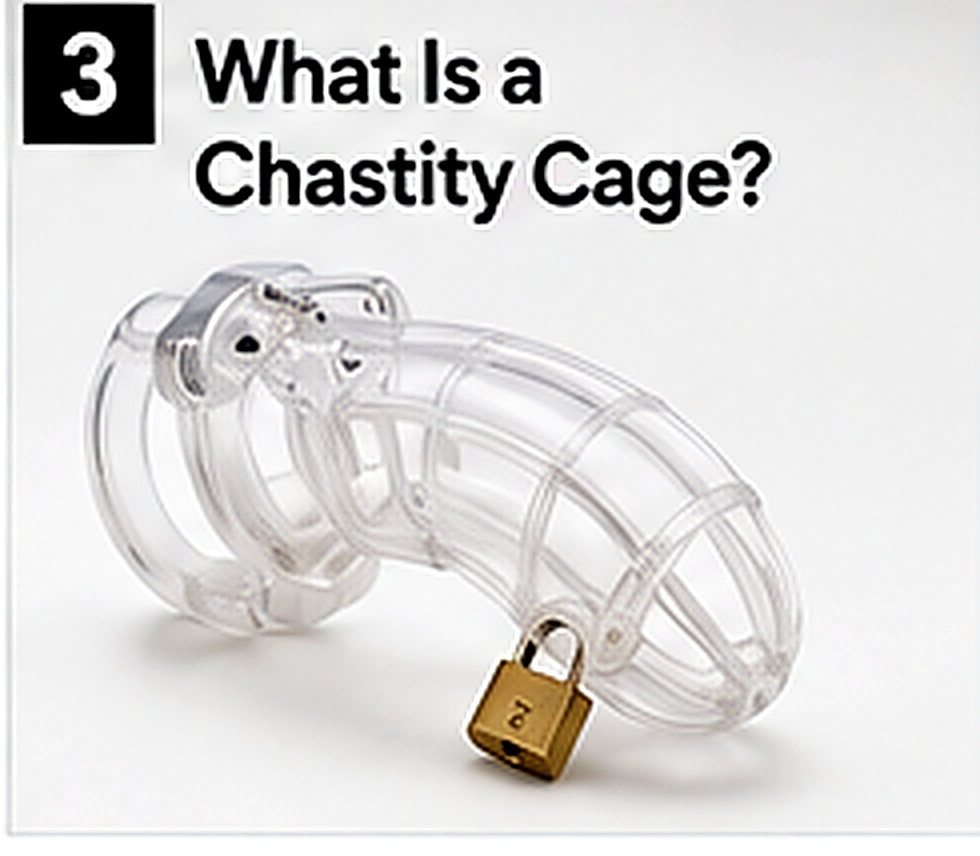
Device at a glance: A chastity cage is a wearable adult device that encloses the penis and limits direct access and a full erection. Most models combine a base ring, a cage or tube, and a lock or connector. It is used in consensual chastity play, either solo or with a partner.
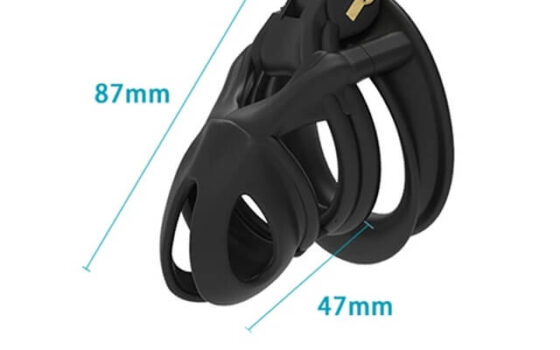
A product photo can make a chastity cage look self-explanatory, but the small details decide how it behaves. Ring shape affects support, the cage body controls space and airflow, the gap affects how the two pieces sit together, and the lock determines how quickly the device can be removed.
Understanding those roles is more useful than memorizing brand names. It also makes the next guide—how chastity cages work—much easier to follow.
The basic purpose
The cage acts as a physical boundary around the penis. Depending on its size and shape, it limits growth during arousal and reduces direct access for stimulation. The lock makes removal intentional rather than automatic. That physical reminder can support a solo rule or a consensual agreement with a keyholder.
It is not a medical device and does not guarantee a particular emotional effect. The same hardware may feel playful to one person, distracting to another and uninteresting to someone else. The purpose comes from the agreement around it.
The base ring
The base ring is the anchor. On common ring-based designs it sits behind the genitals and supports the front section. Rings may be circular, oval, curved, solid or hinged. A hinge can simplify fitting but introduces a place that must be checked carefully for pinching.
The listed size usually refers to internal diameter, but sellers are not perfectly consistent. Confirm the measurement method rather than assuming two labels mean the same thing. A ring should be secure without creating persistent pressure, numbness or circulation concerns.
The cage or tube
The forward section contains the penis in a relaxed position. Open-bar designs provide airflow and cleaning access. Enclosed designs create a smoother outer surface but may hold more moisture and make inspection harder. Length, internal width, curvature and the location of the front opening all affect comfort.
A cage is not better because it is shorter. Less internal room increases the importance of accurate fit. Beginners benefit from learning their measurements before choosing a highly compact design.
Gap, pins and connectors
The gap is the space between the base ring and the rear of the cage. It must accommodate soft tissue without allowing excessive movement. Some devices use spacers or pins to change that distance; others have a fixed gap. This small measurement can explain pinching even when the ring and cage seem correct.
Guide pins align the parts. They should meet without forcing tissue between them. Before wear, assemble the device several times and check that the connector cannot trap skin.
Locks and emergency access
External padlocks are visible and easy to understand. Integrated barrel locks sit closer to the device and can reduce bulk. Plastic numbered locks provide tamper evidence but are not a substitute for an emergency release plan. Electronic or timed systems add failure modes such as batteries, software and connectivity.
Whatever the lock, confirm removal before use. Keep a working key or specified tool accessible. If a partner holds the main key, agree where the emergency method is kept and when it can be used without permission.
Common material and shape families
Metal is rigid and durable but adds weight. Plastic and resin can be light and molded into close contours, though finish quality and material care vary. Silicone is flexible, which changes both support and cleaning. Standard, micro, flat and inverted labels describe profile rather than one universal geometry.
The broader device-choice guide compares these trade-offs. The right family depends on verified dimensions, intended wear time, hygiene access and daily clothing.
Basic use in six actions
- Read the device instructions and inspect every contact surface.
- Measure and select a cautious starting configuration.
- Wash and dry the device and body.
- Fit it without forcing any part and test it unlocked.
- Lock only after movement, bathroom use and removal have been checked.
- Remove, clean and reassess after a short first session.
If you are new to the wider practice, the guide to male chastity puts the hardware inside a consent-led context.
Fit boundary: A cage should never make pain, numbness, swelling, unusual discoloration, cold skin, broken skin or difficulty urinating part of the experience. Remove it promptly if these appear. Seek professional medical help for severe or persistent symptoms. Educational information only.
How to read a product diagram
Find the internal ring dimensions, usable cage length, internal width or height, gap and total assembled weight. Note which measurements include the lock or connector. If a diagram shows only the exterior, it cannot tell you how much room the body has.
Then look for replacement parts. Rings, spacers and locks sometimes appear interchangeable while using different pin lengths or tolerances. A compatible-looking component can change the gap or leave a sharp step.
A cage is a maintenance object
Before it is worn, decide how each part will be washed, dried, inspected and stored. Locks, electronics, coatings and adhesives may have different care limits from the cage body. This practical ownership is part of basic use, not a concern reserved for extended wear.
For definitions, equipment basics and first-session planning, use the Getting Started hub as the wider reading path.
The bottom line
A chastity cage is a small system, not a single tube: ring, enclosure, gap, connector and lock all influence fit. Learn what each part does, then choose and test a configuration that can be cleaned and removed reliably. The lock is the last step, not the first.