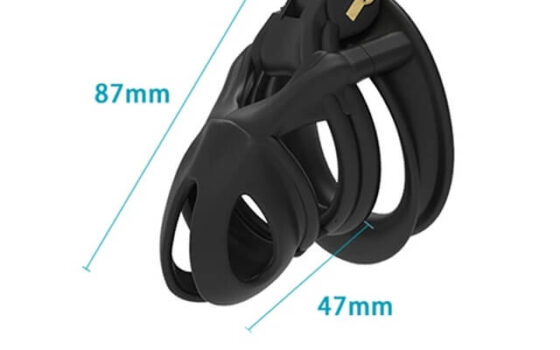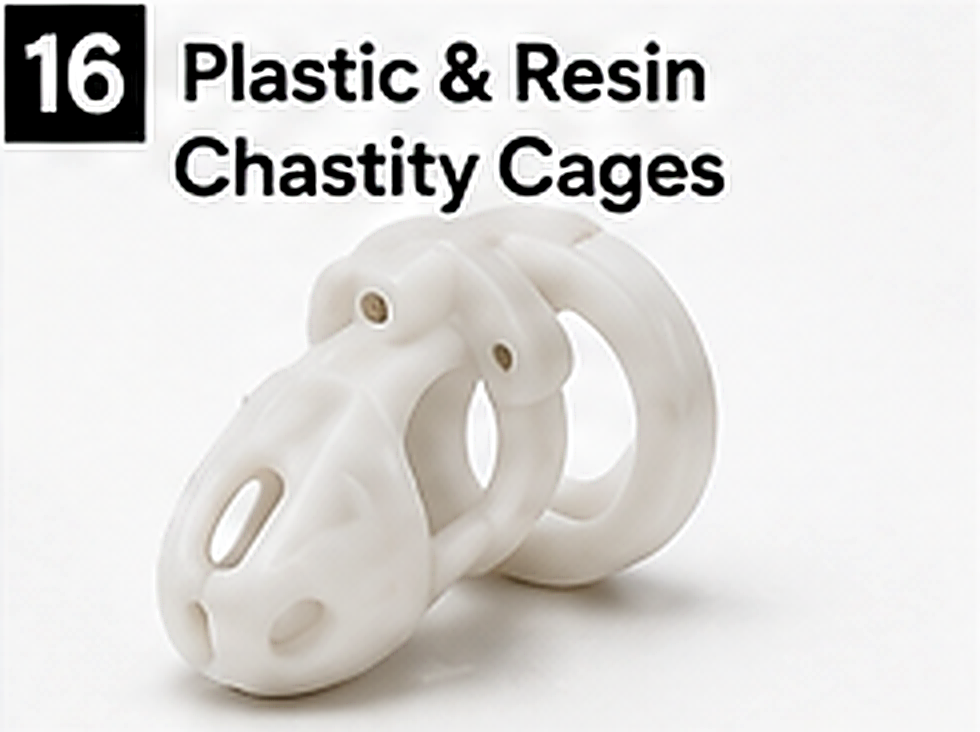
A practical look at lightweight rigid cages, including molded and printed finishes, care limits, enclosed profiles and fit considerations.
This guide is not medical advice. Stop use if significant pain, numbness, swelling, discoloration or circulation concerns occur.
“Plastic,” “resin,” “polycarbonate” and “3D printed” are sometimes used as if they describe one material. They do not. A molded polycarbonate kit, an injection-molded proprietary shell and a printed resin cage can behave differently.
Compare their practical profile with metal cages and silicone cages, not with material stereotypes.
Why people consider rigid lightweight cages
Lower weight can reduce downward pull and noise. Molded contours may sit close under clothing, and integrated barrel locks can create a smooth profile. Multi-ring kits are also common, which helps during early sizing.
These advantages depend on dimensions and finish. A light cage that is too long can still lever the ring forward; a contoured shell that is too narrow can create concentrated pressure.
Molded plastic versus printed resin
Molded parts may show seams or flashing where pieces meet. Printed parts may show layer lines, support marks or post-processing variation. Neither method is automatically smooth or rough. Inspect every internal surface and opening.
Ask for the actual material and care guidance. Generic “resin” does not explain temperature tolerance, brittleness, coating or chemical compatibility.
Ventilation and enclosed profiles
Many rigid lightweight cages use enclosed shells with holes or slots. The outside can be smooth under clothing, while the interior retains more moisture than an open bar cage. Ventilation openings must be large and positioned well enough for rinsing, drying and bathroom alignment.
A few holes do not replace regular full removal, cleaning and inspection.
Fit checks for rigid contours
A rigid curve should match the relaxed body without stretching it into position. Confirm usable internal length and width, not exterior measurements. Inspect the rear edge where the cage meets the gap; molded surfaces can create a narrow pinch line.
Use the complete fit guide while sitting, walking and using the bathroom.
Cleaning without damaging the material
Warm water and mild unscented soap are a cautious baseline when permitted by the maker. Harsh solvents, very hot water, boiling and dishwashers may cloud, warp, weaken or crack some plastics and resins. Locks and bonded parts may have separate limits.
Rinse thoroughly and allow vents, lock channels and seams to dry before storage or wear.
Signs of wear
- Hairline cracks around pins or locks.
- Sharp chips at vents.
- Warping that changes alignment.
- A coating that flakes or becomes tacky.
- Persistent odor that cleaning does not remove.
- Loose inserts or a lock that no longer seats predictably.
Retire damaged components rather than treating them as cosmetic issues.
Decision snapshot
| Potential advantage | Question to verify |
|---|---|
| Light weight | What is the complete assembled weight? |
| Close contour | Are usable internal dimensions published? |
| Smooth exterior | Are internal seams equally smooth? |
| Lower price | Can rings or broken parts be replaced? |
| Easy travel profile | Is the lock and local law/logistics plan appropriate? |
Care caution: Remove the device for pain, numbness, swelling, unusual discoloration or temperature, broken skin, trapped tissue or difficulty urinating. Stop using cracked, warped or rough components. Seek medical care for severe or persistent symptoms. Educational information only.
Precision matters at the lock and connector
Lightweight cages often integrate metal locks or pins into molded or printed bodies. Inspect the transition between materials for gaps, steps and stress cracks. A lock that sits at an angle can change both fit and emergency removal.
After cleaning, check whether the material has warped enough to alter pin alignment. Never force a connector that once closed smoothly.
Storage can affect service life
Store clean, dry parts away from excessive heat, direct sun and chemicals. Do not leave a cage under heavy objects where a subtle deformation can develop. Reinspect after long storage before the next wear.
For the wider device landscape, continue through the Chastity Cages library.
Sources and material limits
- Formlabs: resin-processing safety — explains that cured photopolymer performance varies with material, process and end use, and that the manufacturer does not claim every printed part is safe for a specific application.
- Formlabs: material data sheets — demonstrates why resin chemistry and post-processing instructions are material-specific.
- Planned Parenthood: sex-toy care — recommends using purpose-made products and following their exact care directions.
Match care to the actual material
Plastic and resin can deliver a light, close and adjustable cage, but the broad label hides important differences. Require a named material, inspect the inside, respect care limits and let a full movement test decide whether the contour fits.
Cracks and Rough Edges: Keep the Advice Specific
Polymer surfaces develop opinions; the advice needs to stay specific. Hairline cracks at stress points (pins, lock receivers): retire the component — cracks in rigid polymer propagate, and a crack at a load path is not a cosmetic event. Molded seam lines: normal, inspect for sharpness rather than existence. Rough edges at vents: feel test on arrival; a burr is a return, not a sanding project. Surface clouding after cleaning: review the care text — heat or solvent damage is cumulative, and the next wash follows the maker’s limits, not the internet’s.
Two refusals this section keeps: no grinding, filling or coating repairs on body-contact hardware — workshop repairs at contact surfaces are how unknown chemistries meet skin; and no wear-through-it advice — a component that failed its inspection has failed it, wherever in the month you are.