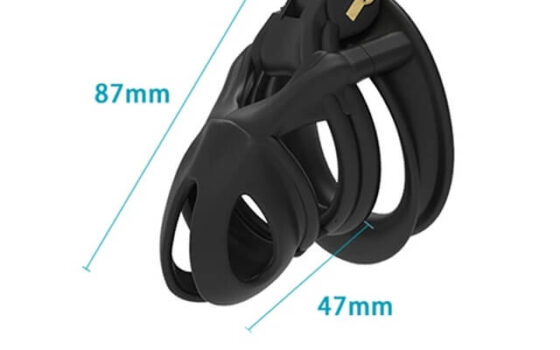
A balanced guide to flexible cage designs, covering softer contact, reduced structure, moisture management, cleaning and compatible lubrication.
This guide is not medical advice. Stop use if significant pain, numbness, swelling, discoloration or circulation concerns occur.
Many listings call a device “silicone” when only part of the cage is flexible or when the exact material is not stated. Begin by identifying which pieces are silicone, which are rigid, and how the manufacturer expects them to be cleaned.
Compare this category with rigid metal and plastic or resin before assuming soft equals comfortable.
Flexibility changes the fit test
A flexible body can bend with clothing and movement, but it may also compress tissue or allow the cage to shift independently from the ring. Check support while walking and sitting, and inspect whether the front collapses or twists.
The base ring may still be rigid. Judge every contact surface rather than attributing the full feel to the cage material.
Confirm the actual material
Look for a specific material statement and care instructions. “Soft,” “rubber” and “skin safe” are not equivalent to documented silicone. Odor, tackiness, dye transfer or rapid surface change are reasons to stop and ask the seller for information.
People with known sensitivities should avoid assumptions and seek appropriate professional advice when uncertain.
Movement, support and security
Flexibility can make a cage feel forgiving during a position change while offering less structural control. A smaller ring should not be used to compensate for movement created by the enclosure. Review length, gap and underwear support.
Use the whole-device fit test and record whether the device twists, collapses or rubs over time.
Cleaning and drying
Wash according to the maker’s instructions, commonly with warm water and mild unscented soap. Flex and inspect folds or channels where residue can remain. Rinse completely. Dry all surfaces, including the underside of sleeves and around embedded rigid parts.
A flexible enclosed cage can hold moisture even when the outside feels dry. Regular full removal is important for complete cleaning and skin inspection.
Lubricant compatibility
Do not assume every lubricant is compatible with every silicone formulation. Some silicone-based lubricants can affect some silicone products. Follow the device maker’s guidance and patch-test away from the body when instructions permit.
More lubricant is not a solution for an unstable fit; excess product can increase movement and trap residue.
Who may value silicone—and who may not
A wearer sensitive to rigid contact or metal weight may appreciate flexibility. Someone who needs precise structural support, an open easy-rinse design or a very stable low-profile shape may prefer another material. Beginners should still prioritize clear dimensions and simple removal.
Material is one filter in the full selection framework.
Inspection checklist
- No tears, splits, tacky areas or exposed inserts.
- Lock and connector remain aligned when the cage flexes.
- Interior can be reached, rinsed and dried.
- Material and lubricant guidance is available.
- The device remains stable without a constricting ring.
- Emergency removal works when the material is under normal tension.
Material and fit caution: Remove for pain, numbness, swelling, unusual discoloration or coldness, broken skin, trapped tissue or difficulty urinating. Soft material can still create compression and friction. Stop using torn or degrading parts and seek care for severe or persistent symptoms.
Flexible does not mean dimensionless
Silicone cages still have an unstretched internal geometry. A listing should state those dimensions and explain any rigid frame. Stretching the material to accommodate a mismatch can create continuous compression when it tries to return to shape.
Check how the enclosure behaves when wet. A device that becomes unstable during washing may need full removal rather than in-place cleaning.
Drying is part of the fit
Moisture changes friction and can encourage rubbing in folds. Separate removable sleeves or components as instructed and allow hidden areas to air-dry. Reassembling while damp changes the next session before any size variable has changed.
The Chastity Cages hub keeps material, profile, taxonomy and selection questions in separate guides.
Sources and compatibility notes
- Planned Parenthood: sex toys and lubricant compatibility — notes that silicone lubricant can damage some silicone products and that maker instructions should control cleaning and care.
- American Academy of Dermatology: contact dermatitis symptoms — supports stopping a product that triggers redness, itching or swelling.
Silicone blends, surface treatments and internal frames vary. The article therefore avoids treating “silicone” as one guaranteed behavior.
Flexible still requires a measured fit
Silicone is neither automatically safer nor less secure; it is a different mechanical choice. Verify the material, observe how it flexes in the complete assembly, keep it fully clean and dry, and choose it only when those behaviors match the routine.