A practical guide to underwear support, clothing cuts, movement checks and realistic discretion when wearing a chastity cage under everyday clothes.
This guide is not medical advice. Stop use if significant pain, numbness, swelling, discoloration or circulation concerns occur.
The useful test is not a still mirror check. A cage that looks unobtrusive while standing may shift on stairs, press differently in a chair or make noise when a lock touches the cage body. Treat dressing as part of a short real-life fit test. The goal is a calm setup that does not need constant adjustment—not tighter clothing that hides warning signs or makes removal difficult.
Can a Chastity Cage Be Worn Discreetly Under Clothes?
Often, yes, especially when the cage already fits well and the clothing supports rather than squeezes it. Discretion is a combination of outline, movement, hardware position and sound. Body shape, posture and the cut of the garment also change what another person might notice. A product label such as “flat” or “discreet” is only one input.
Check the complete dressed silhouette from the front and side, then sit, bend and walk. If the only way to conceal the device is painful compression, repeated repositioning or clothing that blocks immediate access, the setup is not ready for public wear.
Start With Fit Before Trying to Hide the Device
A stable base ring and appropriate gap help the cage move with the body instead of swinging independently. Too much unused length can create forward projection and leverage; too little usable room can create pressure. An unstable lock or connector can also change the outline every time the wearer changes position.
Clothing cannot correct a ring that slips, a gap that allows escape or pinching, or a cage body that produces persistent pressure. Return to the complete fit check first. Run a short waking test without relying on tight garments, confirm normal skin colour and sensation, and make sure removal remains straightforward.
Underwear Support Matters More Than Tightness
Briefs and fitted boxer briefs often provide steady support because their front panel can hold the assembly close to the body. Loose boxers offer more airflow but may allow more movement, swinging or contact with trouser seams. The useful choice is the one that supports the device through normal activity without compressing sensitive areas.
“Tighter” is not automatically “more discreet.” Excess compression can push hardware into one spot, make swelling harder to notice and turn sitting into a pressure test. Check the waistband, leg openings and front seam as well as the central panel. Underwear should remain comfortable after walking and sitting, not only for the first minute.
Fabrics and Clothing Cuts That Change the Outline
Thin, clingy fabric tends to reveal changes in shape more readily than structured fabric. A tailored front can either smooth the area or place a seam directly over the device. Darker colours may make shadows less obvious, while lighter colours can show folds more clearly, but neither colour guarantees concealment.
Roomier trousers can reduce outlining, yet excessive looseness may let the device move and create sound. Jeans, work trousers, joggers and athletic shorts all distribute pressure differently. Test the exact garment with the exact underwear rather than assuming that a category of clothing will work the same across brands and cuts.
Movement, Sitting and Lock Noise
Walk across a room, use stairs, sit in the chair you actually use and stand again without discreetly “correcting” the device. Notice whether the assembly shifts, catches a seam or taps against a hard button or zip. Desk work deserves its own test because hip angle and prolonged sitting can concentrate pressure that is absent while standing.
Noise usually comes from moving hardware, a padlock contacting the cage or an unstable assembly. Softer clothing may dampen sound but should not be used to conceal a mechanical problem. If a device repeatedly rotates, pulls or pinches during ordinary movement, solve the fit or construction issue before treating clothing as the answer.
When the Problem Is the Cage, Not the Clothing
Repeated outline, bulk or noise across several sensible outfits points back to the device. The complete profile includes the cage body, ring, connector and lock, not only the advertised length. A design can be short yet project because of its angle or hardware. It can also look compact but feel unstable because the ring and gap do not suit the wearer.
Do not keep adding compression to compensate. Persistent pinching, pressure, rubbing or circulation-related warning signs mean remove the device. Recheck measurements and the full assembly, then use a short private test. A different cage profile may be appropriate, but the decision should follow fit evidence rather than embarrassment about visibility.
A Practical Clothing Check Before Leaving Home
Use the checklist as a pass-or-adjust gate. It is not a challenge to make every outfit work.
- Confirm the device is clean, dry, correctly assembled and easy to unlock.
- Check the front and side outline while standing, sitting and bending.
- Walk, climb stairs and listen for moving hardware.
- Use the bathroom and confirm cleanup is practical in the chosen outfit.
- Make sure keys or another reliable removal method are immediately available.
- Choose a shorter private test if anything needs repeated adjustment.
If clothing tests show that forward projection—not fit—is the remaining constraint, a flat-profile design is the hardware-level fix. The flat chastity cage collection at ChastityCage.co gathers low-profile shapes in one place; compare listed ring options and complete hardware before considering any design.
The Flat Gatling Chastity Cage
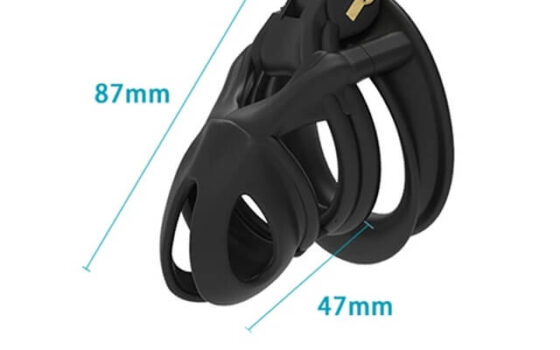
When the outline under fitted trousers is the deciding factor, the Flat Gatling keeps the cage body against the torso and offers two cage sizes with a choice of ring diameters at checkout. Check: the product page mixes metric and inch labels for its measurements, so confirm ring size in your own unit with the seller before ordering.

Related ChastityNow guides
- Daily Wear library
- the complete chastity cage fit guide
- the daily hygiene routine
- wearing a cage at work
- the device-level discretion guide
Choose a Repeatable Outfit, Not a Perfect Disguise
A useful outfit keeps the device supported, quiet enough for the setting and accessible without creating pressure. Build one reliable combination first, then test other clothes separately. Discretion is successful when the wearer can move through an ordinary routine without pain, constant checking or a promise that nobody could ever notice.
A Support Strap Does Not Replace Correct Sizing
One correction belongs inside every clothing-and-support conversation: a strap manages where hardware sits, never whether the hardware fits. A ring that pinches or a cage that presses will keep doing both under the best-anchored strap in the store — support redistributes load on a correctly fitted assembly, and that is its whole job description. If the fit is wrong, the sequence is measure, resize, resolve — then, and only then, consider whether the day needs a strap.
The Elasticity Belt states its own role honestly: an adjustable elastic support accessory, explicitly not a cage and not a sizing fix. Readers shopping a strap to solve a fit problem should redirect the budget to the fitting guides; readers whose fit is proven will find the strap a genuinely useful layer — and the compatibility and sizing guides nearby cover its other requirements.
Elasticity Belt For Chastity Cage
The Elasticity Belt is a separate support accessory, not a complete chastity cage. It is available in Black, Pink and White, with an adjustable elastic design. Compare its attachment points with your existing setup before ordering; a support strap does not replace a correctly selected cage and ring.

Jeans: Add a Seated Check to the Clothing Guide
Denim is the stress test: thick seams, structured waistbands, little give. The jeans-specific additions to the clothing routine are three. Seam mapping: run a finger inside the inseam and crotch seam before the first wear — heavy seams that cross the cage’s line will print; lighter-weight denim or a front panel without a center seam reads cleaner. Waistband stack: jeans’ belts sit exactly where straps and cage hardware live, so check the layered height seated. The seated hour: denim barely stretches, so the chair test in the actual jeans is non-negotiable — standing fit proves nothing in rigid cotton.
Break the jeans in separately too: new denim’s stiffness changes everything for a week. A cage routine and a denim break-in period are better not introduced simultaneously.
Dress Trousers: Compare Drape and Seams
Dress trousers trade denim’s stiffness for drape — and drape is honest about hardware in its own way. The checks: lining (a smooth lining layer over the front reads far cleaner than face fabric alone), drape weight (fluid fabrics skim a low-profile assembly; crisp tropical wools print everything), and where the trouser’s own front seam falls relative to the cage line. Pleated fronts forgive; flat fronts tell the truth.
The seated geometry matters double here: office chairs push thigh fabric against the outline for hours. Test the actual trousers with the actual chair before a presentation day, and prefer the darker, heavier, lined pairs for hardware days. The garment doesn’t need to be loose — it needs to drape across, not cling to, the profile it’s given.
Shorts and Light Fabrics: A Practical Clothing Check
Light fabrics remove the padding between outline and world, which makes them the honest season. The checks: fabric opacity and cling (thin cotton jersey announces; heavier jersey or lined athletic shorts skim), inseam length (shorter inseams give the assembly more independent swing — support underwear matters more as inseams shrink), and the sweat equation (heat means moisture, moisture means friction, friction means the cleaning routine leans forward too — the hot-weather guide owns that side).
Athletic shorts with built-in liners are the season’s ally: the liner is a support layer that doesn’t read as one. Test the combination seated and moving; light fabric forgives less and notices more, which is exactly why the check list stays short.
Fitted Clothing: Keep the Advice in One Place
Fitted clothing is the honesty test every other garment postpones: stretch fabric transfers every profile decision to the world without comment. The one-place advice: fit first (a low-profile, correctly sized assembly is the only thing stretch fabric forgives), seam strategy second (flat-seam underwear, no center seam crossing the hardware), fabric weight third (structured stretch skims; thin stretch cling announces), and color and pattern last (dark reads quieter; busy patterns forgive more than any of the above).
This section deliberately stays one section — the advice doesn’t change per garment, per brand or per anybody’s catalog categories. The device-side criteria that decide fitted-clothing success live in the discretion guide; the drawer-side checklist lives earlier on this page. Between the two, fitted days are solved once, in one place.