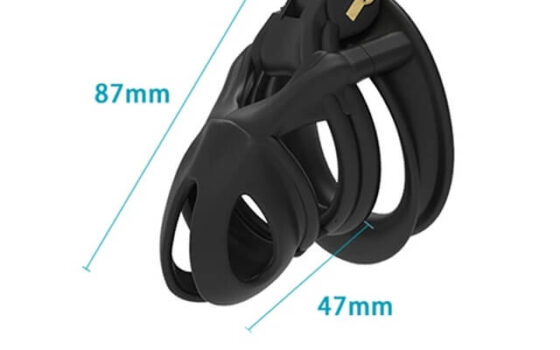
Why cage length must follow measurement and how shorter and longer designs change movement, pressure and everyday use.
This guide is not medical advice. Stop use if significant pain, numbness, swelling, discoloration or circulation concerns occur.
Product words such as micro, short, standard and long are not standards. Compare verified internal length and the complete geometry of the exact variant. A few millimetres can interact with angle, width, ring and gap differently, so labels alone cannot predict comfort.
Short vs Long Cages at a Glance
| Factor | Shorter body | Longer body |
|---|---|---|
| Unused space | Usually less when measured correctly | Can increase if longer than relaxed need |
| Movement | May reduce leverage or concentrate pressure | May allow more internal movement |
| Clothing | Often less projection | May require more support |
| Fit risk | Compression if too short | Rubbing and leverage if too long |
Length Must Begin With Measurement, Not Preference
Measure while relaxed and compare internal usable length, not exterior size. Repeat rather than relying on one reading.
A desired look or level of restriction cannot make an incompatible dimension safe. Ring and gap remain separate fit variables.
Stability and Movement
A measured shorter cage may reduce empty space, but a poor ring or gap can still rotate and pull. A longer cage can remain stable when the whole assembly fits.
Test walking and sitting. Note which component moves instead of blaming length for every issue.
Pressure and Internal Contact
Too little usable length can create persistent front pressure; too much can allow repeated sliding and friction. Neither should be treated as an acclimation target.
Remove for pain, numbness, swelling or colour change. Reassess after the problem resolves and change one variable only.
Clothing, Sitting and Daily Routine
Shorter designs may project less but place hardware closer to seams. Longer designs may create leverage at a desk or under fitted trousers.
Test the exact underwear, chair and movement at home. A standing mirror check is not enough.
Hygiene and Bathroom Access
Length changes opening position and internal reach, but construction determines cleaning access. Confirm urination alignment, drainage, full removal and drying.
Do not choose a shorter cage if it makes ordinary bathroom use painful or unreliable.
When a Shorter Cage May Make Sense
It may suit verified relaxed measurements and a routine that benefits from less unused space or projection. Evidence should come from a reversible test.
Shorter is not a progression requirement and need not follow experience.
When More Length May Be More Practical
More room may suit a longer relaxed measurement or reduce front contact in one geometry. It can also add movement, so the result must be tested.
Choose the smallest set of dimensions that matches the body—not the longest or shortest category name.
Related ChastityNow guides
- Comparisons library
- the complete fit guide
- the length measurement guide
- cage types explained
- features for longer-wear routines
Let Internal Space Answer the Question
Measure first, compare the exact assembly and test movement, sitting, bathroom use and removal. The better length is the one that fits current anatomy and routine without forced compression or excess movement.