Inverted cages redirect space backward — a different structure from flat or standard. Read the geometry, the package list and the diagram before buying.
This guide is not medical advice. Stop use if significant pain, numbness, swelling, discoloration or circulation concerns occur.
Inverted designs get described as “flat cages taken further,” which undersells the engineering: redirection is a different structure, with its own geometry, its own ring angles and its own fitting questions. A buyer who treats inverted as merely “smaller” buys the wrong expectations along with the device.
This guide explains what the label actually describes, what ships in the box, what the diagram must make clear, and when a category comparison serves you better than a single product. Related reading: the flat-cage guide and the structural contrast with ringless designs.
What does the shape label actually describe?
Inversion describes the direction of the internal space. A standard cage extends forward; a flat cage compresses forward space; an inverted cage points the enclosure backward, so the device’s volume sits behind the line a standard cage occupies. The body is redirected rather than enclosed in front — which changes the ring’s angle, the connector’s position, and where pressure lands when seated.
The label implies nothing about intensity or security — those are marketing additions, not geometry. What inversion genuinely offers is a minimal front presence achieved by relocation, with the fitting cost that any redirected geometry asks more precise measurement to wear comfortably.
Which attachments are optional?
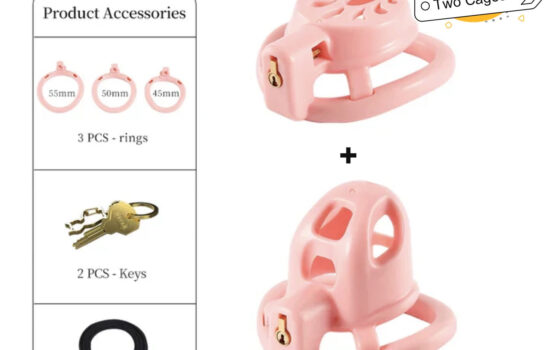
The Inverted Chastity Cage’s package is explicit: one ABS-resin cage body, four base rings, a lock with two keys, and five numbered plastic locks, in Pink or Black. The belt is the optional configuration — selected at checkout when wanted, absent from the basic package when not. That is the clean pattern this site wants every listing to follow: base package stated, options labeled as options.
The five plastic seals deserve a note: they are included hardware, usable where a temporary, cut-to-remove closure fits the routine. They complement rather than replace the keyed lock, and their presence in the box is a package fact, not a wear instruction — how and whether to use them belongs to the owner’s routine decisions.
Inverted Chastity Cage
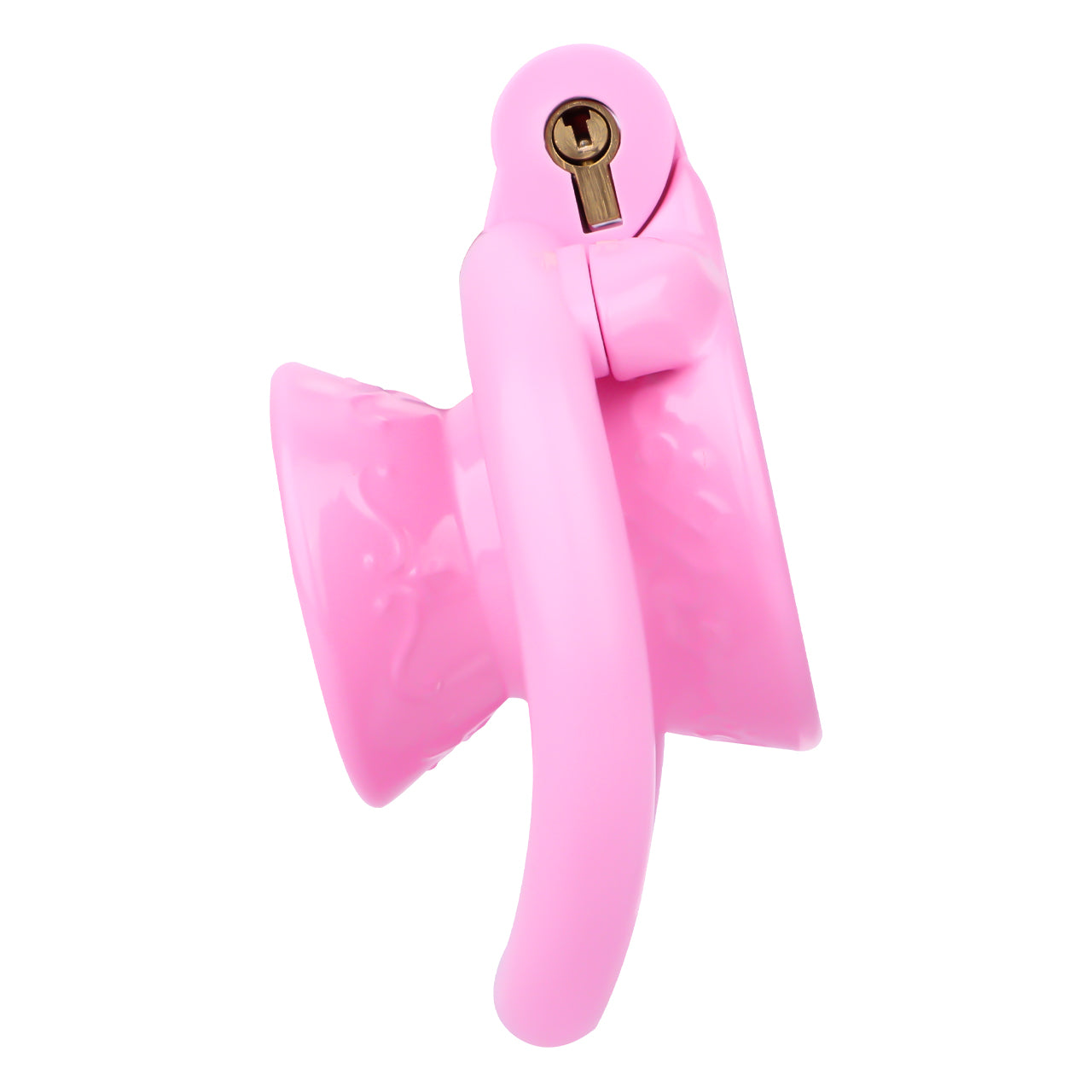
The inverted kit with its stated package — four rings, lock, keys, five plastic seals, belt optional: This Inverted Chastity Cage offers an ABS-resin design in Pink or Black, with four base rings, a lock with two keys and five plastic locks. Choose it when an inverted structure is the design you are comparing. Select the belt option only when you need that configuration.

What should the diagram make clear?
An inverted diagram earns its place by showing direction: the side view where the enclosure visibly points behind the body line, the ring’s angle relative to a standard design, and the internal length measured along the redirected path. A front-view render alone — however handsome — documents none of what makes this structure different, and a buyer deciding on inversion needs exactly those three facts.
Where the diagram is thin, the questions are specific: internal length along the curve, exit angle at the ring, and projected depth behind the body line. Those three numbers, in writing from the seller, substitute for everything the marketing render cannot show.
When is a category comparison more useful than one product?
Whenever the buyer’s real question is “which compact geometry suits me?” rather than “this product specifically.” Flat compresses forward; inverted relocates backward; micro shrinks the front box. The three geometries overlap in goal and diverge in structure, and a category comparison — flat versus inverted, each read on its own reference points — answers the underlying question better than any single product page can.
Compare on ring packages and stated dimensions across the families, and let a fit test decide the geometry. The kit with four rings and stated options makes that test affordable; the label on the front of the box is where the comparison starts, never where it ends.
Inversion is redirection, not exaggeration. Read the side-view geometry, respect the optional-belt package line, and test the structure against your measurements before trusting the category’s promises. Different structure, different fitting arithmetic — and now you know both.
This guide includes promotional links to ChastityCage.co. To browse the category, view inverted chastity cages at ChastityCage.co.