Want a chastity kit with fewer loose parts? Count the per-session touch count, compare integrated hardware, and keep the spare key non-negotiable.
This guide is not medical advice. Stop use if significant pain, numbness, swelling, discoloration or circulation concerns occur.
Every kit is a pile of small parts, and the pile is a daily interface: rings sorted, spacers counted, keys located, everything dried and re-bagged. Some buyers thrive on that ritual; others quietly stop cleaning properly because the pile wins. Buying for fewer parts is a legitimate design decision — made honestly, it is about your actual routine, not about minimalism as an aesthetic.
This guide counts the parts in each kit style, compares integrated versus separate hardware, and defines the simpler complete package that still does the job. The kit anatomy behind the count is in the kits guide.
Count the parts you handle separately
A four-ring kit handles like this per cleaning session: body, four rings (the one worn plus three stored), lock, two keys, safety pin. A two-body set handles: two bodies, three rings, belt, two keys. Count not the box contents but the touch count — what you actually pick up, wash, dry and re-bag each session. The kit with fewer touched parts per session is the simpler one for you, whatever the listing claims.
Then count the storage overhead: bags, labels, the drawer space, the five-second inventory before each wear. Simplicity is a maintenance cost paid weekly, and the count is how you compare it between kits before committing.
Compare integrated and separate hardware
Integrated hardware hides parts: an integrated lock lives inside the cage instead of hanging beside it, and a one-piece ring removes the hinge or split from the count. Separate hardware shows parts: a padlock, its post, spacer stacks. Integrated designs reduce the per-session pile and the profile at once — the reason they dominate beginner recommendations — while separate hardware buys a generic replacement market at the cost of two more objects on the shelf.
Neither is simpler in the abstract. Integrated is simpler per session; separate is simpler per year (replacement keys anywhere, spare padlocks generic). Count which timescale your patience actually lives on.
Keep necessary spare access
Simplicity has one hard limit: the spare key. Fewer-parts buyers are the most likely to skip spare planning because “there is less to lose” — but the one key a minimal kit uses is the one object whose loss ends the session badly. The spare stays: one labeled key in one boring place, whatever the part count. A lock with two keys included (as both example kits list) already gives you the pairing; storing the second is not optional.
Likewise, do not trim the ring set below your fitting needs in pursuit of simplicity — a kit with too few rings generates its own complexity in returns and second orders. Fewer parts means fewer parts that are still enough.
The Viper Chastity Cage V7.0 EVO
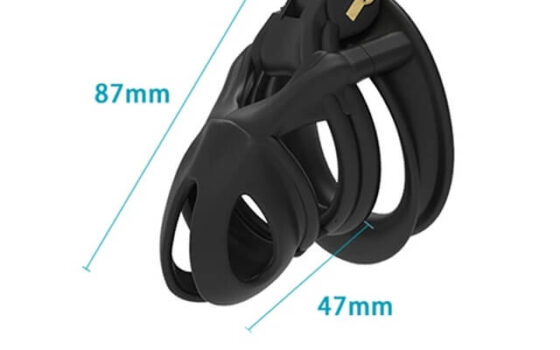
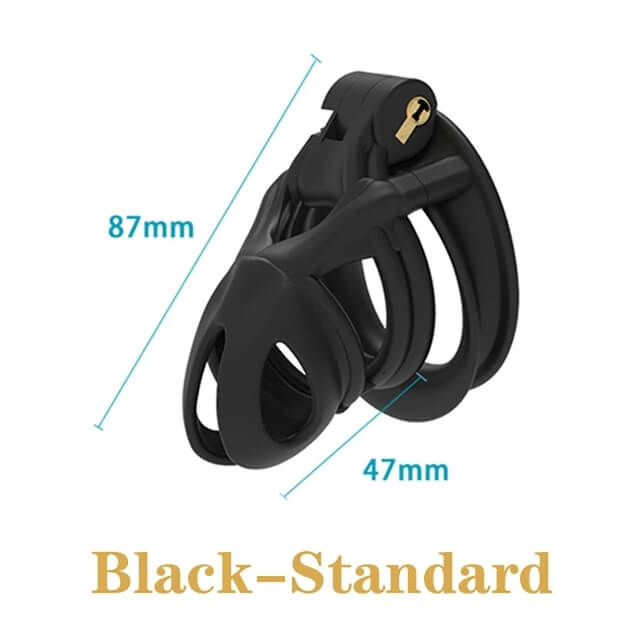
A complete kit with its lock built in: The Viper V7.0 EVO keeps the per-session count low: one resin body, four rings, an integrated lock with two flat keys and a safety pin — no hanging padlock, no post, nothing extra to wash around. Check: four rings means four items to store even though only one is worn at a time.

Choose a simpler complete package
The simpler complete package is the one whose parts count matches your routine without dropping below completeness: everything required to wear, lock, clean and remove, and nothing that needs studying. For some buyers that is the single-body four-ring kit with its integrated lock — one silhouette, fitting range included. For others it is the dual-body set where the belt is included rather than researched separately. Both arrive complete; the simpler one is whichever pile you will still respect in month three.
Decide with the count, not the marketing word “simple” — listings use it for everything from one-part kits to bundled everything.
Flat & Small Chastity Cage Set
And the set that bundles its support layer in: The Flat & Small Set folds the belt into the base package — no separate accessory order later — with two bodies, three rings and two keys. Check: two bodies double the washing surfaces per swap; simpler checkout, slightly fuller session.

Fewer loose parts is a routine decision: count the touch count, prefer integrated hardware where it suits, keep the spare key non-negotiable, and buy the complete package whose pile you will still maintain in month three. Simplicity is what you keep up with — everything else is a drawer.
This guide includes promotional links to ChastityCage.co. To compare simpler packages yourself, browse chastity cage kits at ChastityCage.co.
Related ChastityNow guides
- Chastity cage kits: what is included and which set to choose
- Choosing your first chastity cage