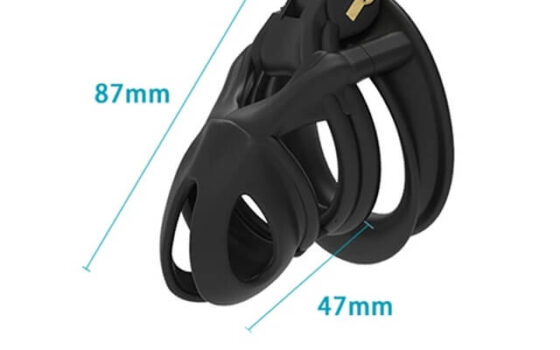
A balanced flat-versus-standard comparison focused on geometry, routine, cleaning and the fit evidence that matters before choosing.
This guide is not medical advice. Stop use if significant pain, numbness, swelling, discoloration or circulation concerns occur.
A category label is not a size. Compare the complete assembly and the tasks it must support: sitting, walking, clothing, urination, cleaning and rapid removal.
Flat vs Standard Chastity Cage at a Glance
| Criterion | Flat design | Standard design |
|---|---|---|
| Profile | Lower forward projection | Conventional forward body |
| Fit sensitivity | Often less tolerance for unused space | May offer more room but can still misfit |
| Clothing | Can reduce outline when fit is correct | May need more structured support |
| Cleaning | Depends on openings and access | Depends on open or enclosed construction |
Profile and Forward Projection
A flat design aims to keep the front closer to the body. The ring, connector, angle and lock still contribute to the outline.
Standard cages extend forward and may show more under fitted clothes, yet a measured standard design can remain stable. Neither guarantees invisibility.
Fit Geometry and Pressure Distribution
Less forward space can change pressure during expansion or sitting. More space can allow movement. Correct measurement matters more than assuming compact means tight or standard means forgiving.
Compare internal length and width, ring options, gap, angle and complete weight. Unknown dimensions are reasons to exclude a design.
Movement, Sitting and Clothing
Flat designs may reduce leverage but place hardware nearer seams. Standard designs may swing more if too long or unsupported. Test standing and seated posture.
Use supportive, non-constrictive underwear and actual trousers. A mirror cannot show noise or pressure after desk work.
Cleaning and Bathroom Access
Profile does not determine hygiene. Inspect openings, internal reach, drainage, lock recesses and ease of removal.
Test urination alignment privately and plan complete cleaning. Do not accept trapped moisture to preserve a low outline.
Who May Prefer a Flat Design?
A measured wearer whose main constraint is forward projection may shortlist a flat design after establishing ring and gap evidence.
Flat is not automatically beginner-friendly or suitable for sleep and long wear. Those are separate tests.
Who May Prefer a Standard Design?
A standard shape may suit someone who needs measured forward room, familiar assembly or finds compact pressure uncomfortable.
Longer is not automatically more comfortable; excess length and weight can increase movement and visibility.
Decision Checklist
- Compare verified internal dimensions, not labels.
- Include ring, gap, angle, lock and complete weight.
- Test sitting, walking, clothing and bathroom use.
- Confirm cleaning, drying and immediate removal.
- Reject any design that needs pain or aggressive compression to look discreet.
Compare Complete Variants, Not Category Photos
A useful shortlist records the exact internal dimensions, ring options, gap or connector, assembled weight, opening pattern and lock position for each candidate. Product-family images can hide differences between sizes, so evidence must match the variant being considered.
When one listing leaves a critical dimension or care method unresolved, mark it unknown instead of filling the gap with assumptions from another seller. A comparison is only as strong as its least documented requirement, especially when compact geometry leaves little tolerance for error.
Related ChastityNow guides
- Comparisons library
- the fit guide
- cage types explained
- the flat-cage overview
- material comparison
- discretion criteria
Choose the Geometry You Can Verify
Measure, compare the full assembly and test ordinary routines without forcing the outcome. The better choice is the one that remains uneventful and removable, not the one with the stronger label.