Build a chastity cage comparison worksheet: eight fields per kit, honest unknowns, and three elimination rules that turn the sheet into a decision.
This guide is not medical advice. Stop use if significant pain, numbness, swelling, discoloration or circulation concerns occur.
Comparing chastity cage kits from memory is how three open browser tabs turn into one wrong order. The fix is a worksheet: the same fields, filled for every candidate, from the listing’s own numbers — so the comparison happens between documented facts instead of impressions and product-photo vibes.
This guide defines the fields, shows how to mark gaps honestly, and ends with the narrowing rule that turns a completed sheet into a decision. The body-side inputs come from the measurement guide; the market-side framework lives in how to choose a chastity cage.
Which fields belong in a side-by-side comparison?
Eight fields cover every decision-relevant fact a kit listing can state: usable internal length; internal width or diameter at the narrowest point; included ring inner diameter(s); number of rings included; number of cage bodies; lock and key count; included extras (belt, plastic seals, spacers); and assembled or stated weight. Add a ninth row for material if you are comparing across families — resin, steel and silicone belong on the sheet when the shortlist mixes them.
Every value enters with its unit and its source label. “48 mm — description text” and “48 mm — chart arrow” are different evidence strengths, and the worksheet should show which you have. The sheet below is ready to copy for two candidates.
| Field | Kit A | Kit B |
|---|---|---|
| Usable internal length | ___ mm | ___ mm |
| Internal width (narrowest) | ___ mm | ___ mm |
| Included ring size(s) | ___ | ___ |
| Ring count | ___ | ___ |
| Cage bodies | ___ | ___ |
| Lock / keys | ___ | ___ |
| Extras included | ___ | ___ |
| Stated weight | ___ g | ___ g |
| Source noted for each value | text / chart | text / chart |
How should unknown specifications be marked?
Mark them “unknown” — never estimate, never average two conflicting figures, never borrow a number from a similar model. An unknown in a decision-critical field (ring diameter, usable length) is a question for the seller, not a blank to fill with hope. An unknown in a comfort field (weight, extras) is acceptable to carry into the decision as a known-unknown.
The discipline matters because a half-filled sheet tempts you to compare the filled cells only. A kit with three unknowns and three great numbers has not earned its place on the shortlist ahead of a kit with eight honest values. Unknowns count against confidence, and the worksheet exists to make that visible.
Which measurements cannot be compared directly?
Total assembled length cannot be compared against usable internal length — different reference points, different meanings. Ring inner diameter cannot be compared across shapes: a 45 mm round ring and a 45 mm oval ring hold different geometry, and the worksheet should note ring shape beside the size. And size-class names (Small, Nano) cannot be compared across brands at all; only their millimeter values can.
When two candidates state a dimension on different reference points, add a conversion row rather than rewriting their numbers: “Kit A total length 70 mm (usable not stated); Kit B usable length 52 mm.” The asymmetry is data — it tells you which seller documents the dimension you actually need.
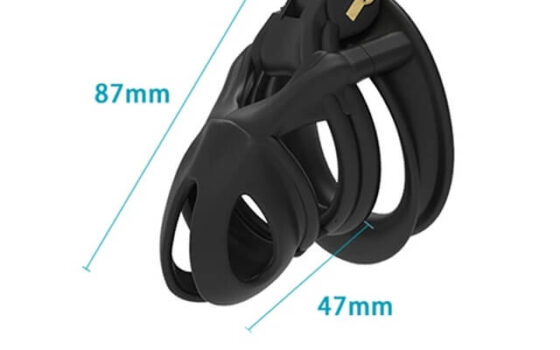
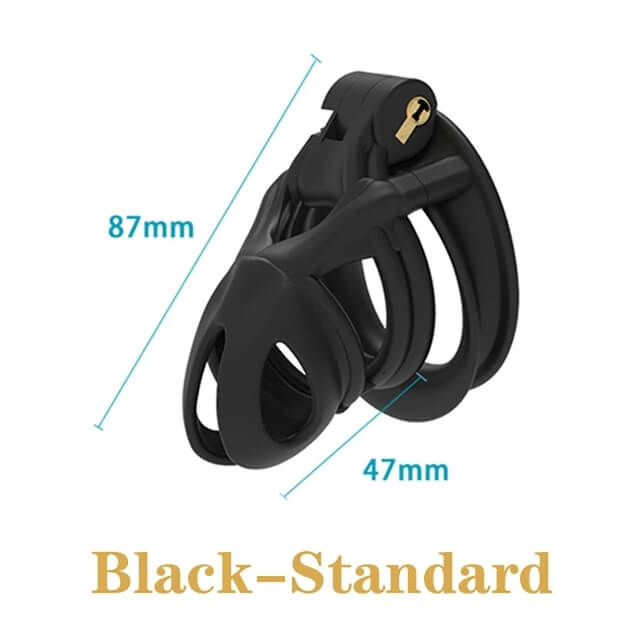
The Viper Chastity Cage V7.0 EVO
A strong worksheet row: four rings stated at 38/43/48/52 mm, one cage body, lock with two keys — every field documented: Choose the Viper V7.0 EVO for a nylon-resin kit with four base rings. One selected cage, a lock with two keys and a safety pin are included, giving you a clear starting set without buying each ring separately. Select the cage size on the product page.

How do you narrow the shortlist?
Three eliminations, in order. Fit elimination: any kit whose included ring range does not bracket your measured ring size, or whose usable length does not accommodate your measured length, leaves first — contents cannot rescue a wrong size. Evidence elimination: kits carrying unknowns in decision-critical fields leave unless the seller answered the question in writing. Preference elimination: among the survivors, let package contents and extras break ties — more included rings beats fewer at equal fit; a second cage body beats a single body when you wanted the comparison.
What remains is usually one or two kits whose fit is documented and whose package matches your goal. That is the moment product pages and prices genuinely help — the sheet has already done the work they cannot.
Flat & Small Chastity Cage Set
And the dual-shape row for buyers whose decision includes comparing two bodies: The Flat & Small Set includes two cage shapes, three rings, two keys and an adjustable support belt. Choose it when you would rather compare a flat and a small shape within one package than order two separate kits. Pink and Black are separate color choices.

Copy the worksheet, fill it from the listings’ own words, mark the gaps honestly, and eliminate by fit, then evidence, then preference. The kit that survives is not the one with the best photos — it is the one whose numbers fit your numbers, on paper, before you paid.
This guide includes promotional links to ChastityCage.co. To fill your worksheet with current kits, browse chastity cage kits at ChastityCage.co.