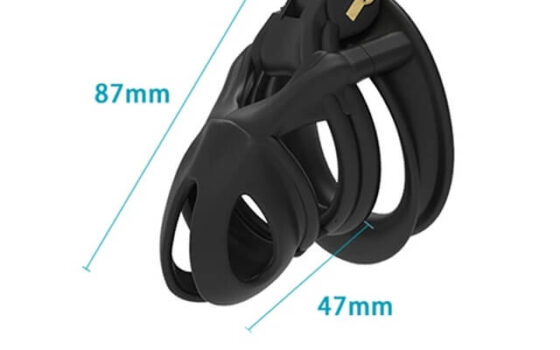
Spot a chastity cage dimension conflict, diagnose units vs reference points, ask the seller the right question, and know when to pause the order.
This guide is not medical advice. Stop use if significant pain, numbness, swelling, discoloration or circulation concerns occur.
Dimension conflicts are a real pattern in this category: the chart says one length, the description says another, and the variant menu implies a third. Sometimes the disagreement is a typo; sometimes it is two honest measurements of different things — total length versus usable length, inches printed as millimeters, or a diagram drawn for a different variant.
This guide gives you a process for the moment you spot one: isolate the disputed number, diagnose the cause, ask a precise question, and decide whether to proceed. The body-measurement side is covered in how to measure for a chastity cage.
Which measurement is actually in dispute?
Write down each stated number with its exact label and source: “chart arrow — 62 mm, labeled total length” and “description text — 48 mm, labeled internal length.” Many apparent conflicts dissolve at this step, because the two numbers were never measuring the same thing. Only when two sources claim different values for the same labeled dimension is there a genuine dispute.
Watch the ring numbers too. A listing may state ring inner diameters in one place and show a size chart in another with slightly different values. That is a real dispute when both claim to be inner diameter — and it matters more than a length conflict, because ring fit carries the safety margin.
Does the conflict come from units or reference points?
Two mechanical causes explain most conflicts. Unit drift: a value converted between inches and millimeters and rounded differently in two places — 1.9 inches becomes 48 mm in the text and 50 mm on the chart, and neither is “wrong,” they are just different roundings of an imprecise original. Reference-point drift: one number measures total assembled length including the lock, another stops at the cage body. Both are honest measurements that cannot be compared directly.
Diagnose before contacting anyone. If the numbers differ by exactly the lock/connector height, it is a reference-point issue and the usable-internal-length question resolves it. If they differ by a rounding-sized amount across a unit boundary, ask which unit the original specification uses. If neither pattern fits, treat it as an unreconciled conflict.
What evidence should you send the seller?
One message, one dimension, quoted sources. A workable template: “On [product URL], the size chart lists [X mm] for [dimension], while the description says [Y mm]. Which figure is the [usable internal length / ring inner diameter] for the [variant] I plan to order? I’d like the answer in millimeters please.” Quoting both sources forces a specific answer instead of a brochure reply.
Keep the reply. If it arrives with a number that matches one of the listing’s figures, order with that figure and save the message as your reference. If it introduces a third number, you have learned something important about the listing’s reliability — which is the next section’s subject.
When should you pause the purchase?
Pause when the disputed dimension is one your body depends on — ring inner diameter or usable internal length — and the seller’s answer does not reconcile the sources. A 3 mm disagreement on ring size is not a rounding story; it is the difference between a ring that fits and one that does not. No cage design is unique enough to justify ordering against unresolved numbers.
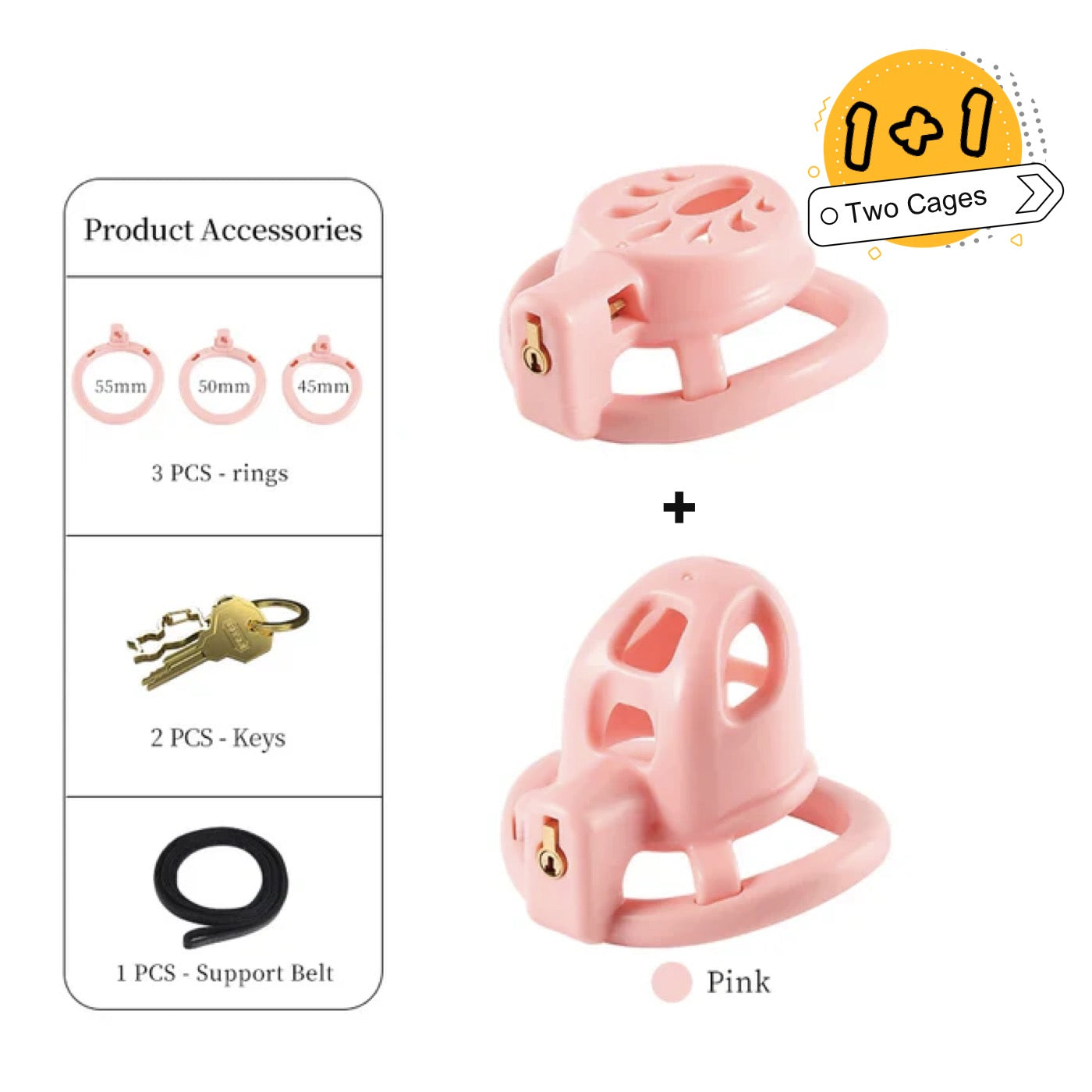
Pausing is not losing the product. The same store usually carries equivalent kits whose listings agree with themselves — for example, a dual-shape set where each cage body’s chart matches its description. Buy the listing whose numbers stand up to reading; skip the one that required a support ticket to interpret. The length guide explains which reference point each of your decisions should use.
Flat & Small Chastity Cage Set
A listing type that avoids the problem: two cage bodies, one consistent chart per body, rings counted in the package list: The Flat & Small Set includes two cage shapes, three rings, two keys and an adjustable support belt. Choose it when you would rather compare a flat and a small shape within one package than order two separate kits. Pink and Black are separate color choices.

Conflicting dimensions are a filter, not an obstacle. Isolate the disputed number, diagnose units versus reference points, ask one precise question, and walk away from listings that cannot answer. The product you want exists in a version whose numbers agree with themselves — buy that one.
This guide includes promotional links to ChastityCage.co. To compare listings whose charts hold up, browse chastity cage kits at ChastityCage.co.