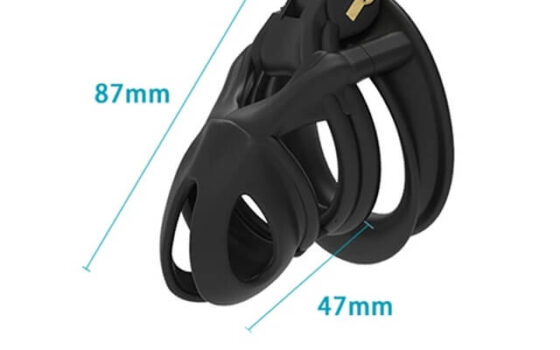
A whole-device guide for unwanted movement that keeps base-ring sizing separate from cage length, width and gap.
This guide is not medical advice. Stop use if significant pain, numbness, swelling, discoloration or circulation concerns occur.
Loose does not always mean painless. Extra movement can increase rubbing, leverage and pinching, while an overly tight correction can create a more serious problem.
Read the pattern before changing the size
Observe whether the movement begins at the base ring or inside the cage. A stable ring with forward pull points toward cage length, weight or gap; a rotating entire assembly points toward the ring, shape or support.
Common causes and the first check
| Possible cause | What to inspect |
|---|---|
| Base ring movement | Check ring diameter and shape without changing the cage. |
| Excess cage length | Look for unused space and forward leverage. |
| Excess internal width | Check side-to-side movement and alignment. |
| Large gap | Check whole-device stability and testicle slippage. |
Use a one-change troubleshooting sequence
- Record the exact configuration and movement pattern.
- Test the base ring alone if practical.
- Change one dimension toward stability, conservatively.
- Repeat standing, walking, sitting and bathroom checks.
- Reject any correction that creates pressure or warning signs.
Record the exact ring, cage, spacer or gap, clothing and activity. Change one variable, then repeat a short waking test. If several dimensions change together, the result cannot tell you which change helped.
What not to treat as an adjustment period
Do not solve movement by choosing a constricting ring or compressed cage. Numbness, swelling, coldness, colour change, sharp pain and urinary difficulty mean the correction is unsafe.
Retest in the position that exposed the problem
Use normal clothing and movement at home. A suitable setup should remain aligned without constant manual repositioning or excessive garment pressure.
Check the neighboring variables
A ring, cage body, gap and lock operate as one assembly. A symptom at one point may be amplified by weight, length, posture or clothing elsewhere. Before buying another size, confirm which component moved and which component carried pressure. Testing the ring alone, assembling the device off the body and comparing standing with seated posture can prevent a correction aimed at the wrong part.
Know when the design is the wrong match
Repeatedly adding tighter clothing, more lubricant or smaller hardware can hide rather than solve a geometry problem. If the same issue returns after one careful correction, or if safe stability would require constriction, stop using that configuration. A different ring shape, connector, cage profile or complete device may be more appropriate than continued adjustment. Keep the decision evidence-based: note what was worn, what happened, what changed and whether the result repeated.
Describe the issue clearly if you need help
Useful notes include the exact location, onset, posture, device configuration and what changed after removal. Separate what you observed from what you think caused it. A seller can clarify dimensions or hardware, while a qualified health professional is the appropriate person for persistent symptoms or uncertainty about an injury. Neither should be asked to approve continued wear while a warning sign is active.
Continue with the relevant ChastityNow guides
The bottom line
A loose cage is a system problem, not a command to downsize every part. Locate the movement, change one relevant dimension and keep the safer, less restrictive correction.
This article belongs to the Fit Comfort library, where the surrounding guides cover the wider topic.