A clear explanation of the physical mechanism, the role of the lock and keyholder, and why fit and consent matter more than apparent security.
This guide is not medical advice. Stop use if significant pain, numbness, swelling, discoloration or circulation concerns occur.
The mechanism is simple enough to describe in one sentence, yet a safe explanation needs more than “put it on and lock it.” A cage works only when several forces balance: the ring supports rather than constricts, the cage contains without crushing, and the gap prevents both escape and pinching.
If you need a parts glossary first, read what a chastity cage is. Here the focus is how those parts interact during normal movement and arousal.
The anchor-and-enclosure mechanism
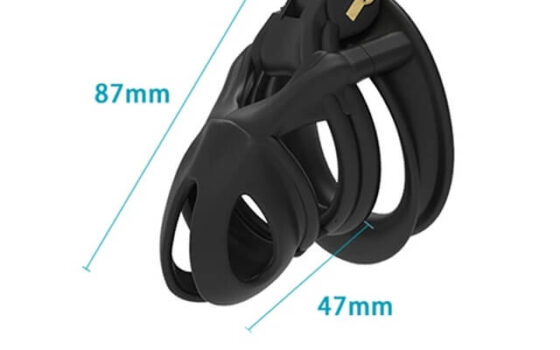
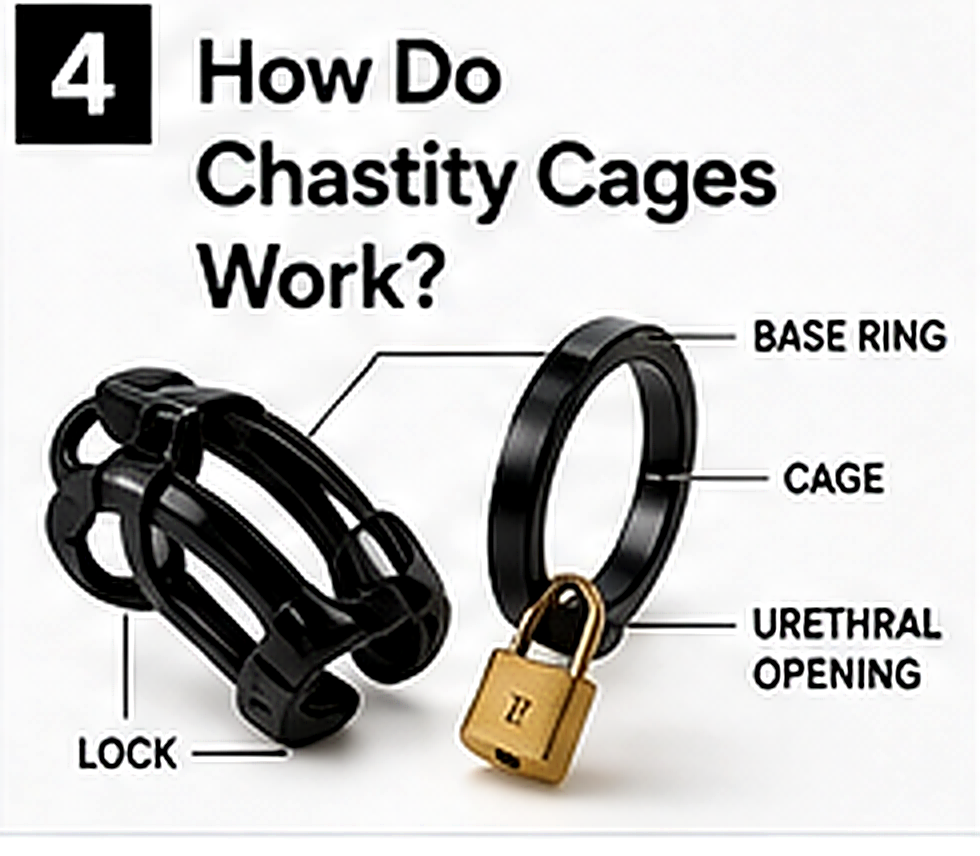
On a common ring-based cage, the base ring sits behind the genitals. The cage body rests in front and connects to the ring with pins, a post or an integrated joint. Once secured, the ring prevents the cage from simply sliding forward while the enclosure limits expansion and touch.
This is not an unbreakable security system. Many devices are symbolic restraints, and some bodies can pull out of a poorly fitted design. Increasing tightness to chase absolute security can create risk. For most adult play, predictable comfort and responsible removal matter more than defeating every possible escape.
What happens during arousal
When arousal begins, the penis may press against the available internal space. A correctly chosen cage distributes that pressure without a sharp hotspot. A device that is too long may allow more movement and then pull forward. One that is too short or narrow may fold tissue or concentrate pressure.
Awareness is common; pain is not an objective. Arousal that repeatedly wakes the wearer, creates strong pressure or changes circulation is information about the setup, not a challenge to overcome.
Why the ring, length and gap must work together
Changing one measurement affects the others. A smaller ring may hold the cage closer but also increase pressure. A longer cage can create leverage that tugs the ring. A wider gap may reduce pinching yet allow more movement. That is why “my ring size is correct” does not prove the full assembly fits.
Evaluate the configuration while standing, sitting, bending and walking. The useful question is not whether the device stays on for a photograph; it is whether the whole system remains stable through the intended routine.
What the lock actually adds
The lock turns removal into a deliberate action. In solo chastity, it may support a personal rule. With a partner, it can make delegated control tangible. A keyholder may decide normal unlock timing, but emergency access must remain available and bodily consent remains with the wearer.
Integrated locks reduce bulk, padlocks make operation obvious, and numbered plastic locks can document that a device was opened. None changes the basic ethical structure: specific agreements, ongoing consent and a clear stop process.
Hygiene and bathroom use are part of the mechanism
A front opening allows urination, while bars or ventilation holes allow rinsing and airflow. Alignment matters. If urine cannot pass cleanly or residue cannot be removed, the design is not working for the intended wear pattern. An open cage can still trap moisture around the ring and lock.
Regular full removal provides the best access for washing, drying and skin inspection. A lock schedule should never make cleaning or urgent care difficult.
How to tell whether it is working well
- The device stays generally stable without needing painful tightness.
- You can sit, walk and bend without a sharp pinch.
- Skin color and temperature remain normal.
- You can urinate without obstruction and clean the area.
- The device can be removed promptly with the planned method.
- The wearer and any partner can pause without conflict.
These checks matter more than how restrictive the cage looks.
From mechanism to responsible use
First understand the system, then choose a forgiving design and test it unlocked. Build wear time only after ordinary movement feels uneventful. If you are deciding among materials or profiles, use fit, material, profile and routine as the four-part filter.
For a complete beginner sequence, male chastity explained covers motivation and consent before hardware.
Stop condition: Unlock promptly for sharp or increasing pain, numbness, marked swelling, unusual color or temperature, broken skin or difficulty urinating. Do not tighten the device to solve insecurity. Seek medical care for severe symptoms or symptoms that persist after removal. Not medical advice.
Symbolic security versus physical tightness
Many adult chastity arrangements rely on agreement as much as hardware. The cage makes access inconvenient and visible; the rule gives that inconvenience meaning. Trying to turn a symbolic device into an inescapable restraint by shrinking the ring or enclosure can create more risk without solving the underlying fit.
Numbered plastic locks, shared key storage or a simple check-in can provide accountability without increasing pressure on the body. Choose the level of security that matches the consensual purpose.
Why a device can feel different tomorrow
Temperature, posture, activity, hydration and arousal can change how the same configuration sits. That variability is why one successful fitting does not prove suitability for every setting. Repeat short tests and keep removal available.
The Getting Started collection separates orientation, device knowledge and action plans so each question has one clear answer.
What makes the mechanism responsible
Chastity cages work through a balanced physical system and a voluntary human agreement. The ring anchors, the cage limits access and the lock makes removal intentional. When fit, cleaning or consent fails, the mechanism is not doing its job—regardless of whether it remains locked.