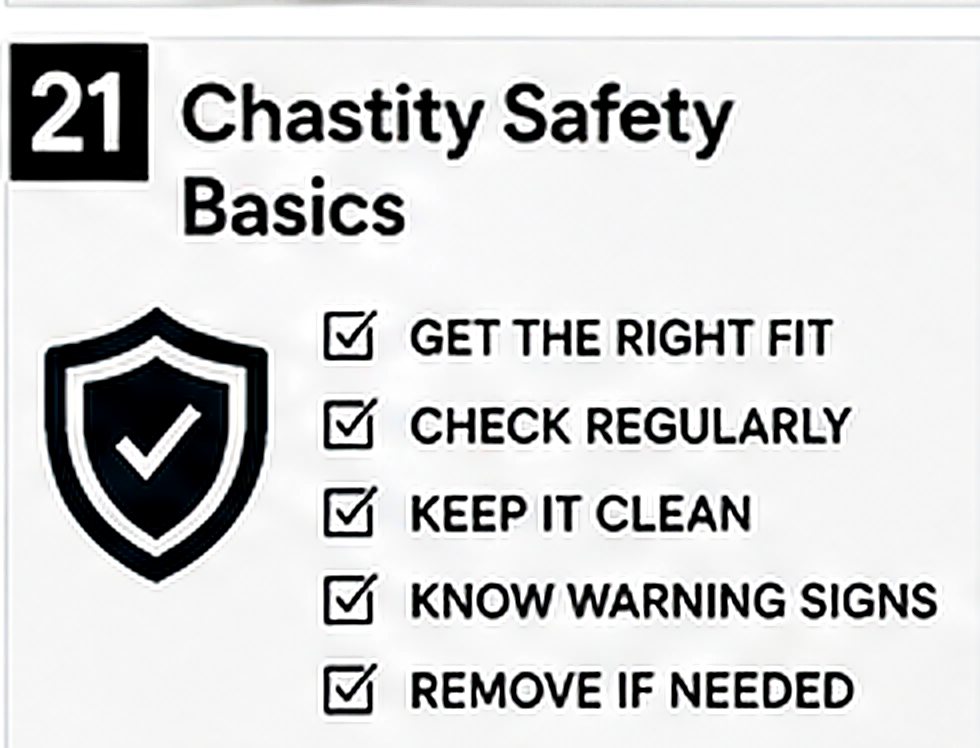
A concise safety framework for adult chastity use, including stop conditions that always override a schedule, rule or keyholder agreement.
This guide is not medical advice. Stop use if significant pain, numbness, swelling, discoloration or circulation concerns occur.
No online article can certify that a device is medically safe for a particular body. What an educational guide can do is define conservative practices and make stop conditions unmistakable.
Begin with the consent-led definition, then apply the safety hierarchy below every time hardware is used.
Consent is specific, ongoing and reversible
Agree what is being tried, for how long, who holds which key, what privacy applies and what ends the session. Consent to wear a device once is not consent to future wear, photography, public exposure, humiliation or any other activity.
Either person can pause. A wearer does not need to prove distress, and a keyholder can decline responsibility. Emergency removal never requires permission.
Fit before duration
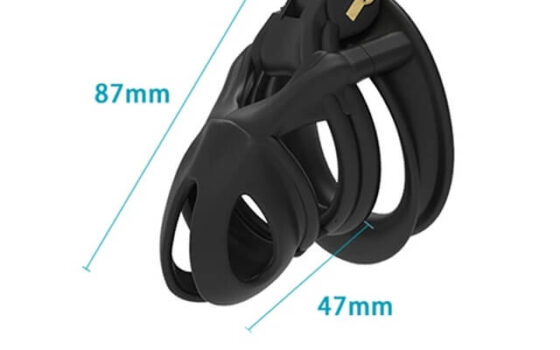
Measure the ring path, relaxed length, width and relevant gap. Test the ring and complete cage unlocked. Sit, walk, bend and use the bathroom. A secure fit should not depend on constriction.
Use the complete fit guide and change one component at a time.
Hygiene and skin inspection
Wash the device according to material instructions, rinse away soap and dry it fully. Regular full removal gives the best access to both device and skin. Check contact areas, vents, hinges and the base ring for redness, abrasion or trapped moisture.
Odor, residue or irritation is a reason to clean and rest, not to mask the problem with fragrance or more lubricant.
Emergency removal planning
Test every key before wear. Keep an emergency key or maker-approved removal method accessible to the wearer or a reliably reachable adult. Electronic and timed devices need an offline contingency. Travel and workplace plans must not leave the release method behind.
If a device cannot be removed normally during a serious problem, contact emergency services rather than improvising dangerous tools near the body.
Warning signs that override every rule
- Sharp, severe or increasing pain.
- Numbness, tingling or loss of normal sensation.
- Marked swelling.
- Unusual pale, blue, dark or persistent red discoloration.
- Skin that feels unusually cold.
- Broken skin, bleeding, blisters or trapped tissue.
- Difficulty or inability to urinate normally.
- A lock, ring or cage that is damaged or jammed.
Unlock first. Seek medical care when symptoms are severe, urgent or do not improve after removal.
Build duration gradually
Start awake and at home. Complete short sessions, remove, inspect and review. Add longer daytime wear before sleep, and private routine before work or travel. A calendar challenge should never determine progression.
The first-day structure in the beginner guide is deliberately conservative.
Keep safety separate from the erotic rule
A keyholder may control normal unlock timing inside the agreed play. They should not control emergency access, urgent medical decisions or the wearer’s right to revoke consent. Treating distress as disobedience creates coercion and delays care.
Clear boundaries make the dynamic more dependable because everyone knows which rules are part of play and which conditions end it.
A pre-lock checklist
| Check | Required answer |
|---|---|
| All adults freely agree? | Yes, with a clear stop process |
| Fit tested unlocked? | Yes, through movement and bathroom use |
| Device clean and intact? | Yes |
| Removal tested? | Yes, normal and emergency |
| Warning signs understood? | Yes, by wearer and keyholder |
Risk rises when monitoring falls
Sleep, intoxication, long travel, remote keyholding and demanding work all reduce the ability to inspect or remove a device. A configuration suitable for a short home session is not automatically suitable for those settings. Add them only after separate planning.
Medical imaging, surgery, security screening and other institutional situations may require removal. Never hide a device from healthcare professionals when it is relevant to care.
After removal
Continue to observe sensation, color, swelling and urination. If a serious symptom remains, worsens or returns, seek qualified medical care. Do not relock to test whether the symptom happens again.
For definitions, equipment basics and first-session planning, use the Getting Started hub as the wider reading path.
A safety checklist before every new variable
| Check | Ready means | Not ready means |
|---|---|---|
| Consent | Specific, current and reversible agreement | Pressure, uncertainty or fear of stopping |
| Fit | Short awake tests with normal sensation, color and function | Pain, numbness, swelling, discoloration or urinary difficulty |
| Hygiene | Device and skin can be washed, dried and inspected | Moisture, odor, broken skin or inaccessible areas |
| Removal | Correct key/tool works and is reachable | One remote key, unfamiliar lock or improvised cutting plan |
| Monitoring | Wearer can notice changes and act promptly | Sleep, intoxication, travel or work removes that ability |
Add only one variable—time, activity, clothing, sleep or key distance—after the previous setup is repeatable. If a warning sign appears, the next step is removal and assessment, not a smaller adjustment while still locked.
Sources and editorial review note
- Planned Parenthood: sexual consent — supports consent that is freely given, reversible, informed, enthusiastic and specific.
- NHS: contact dermatitis symptoms — supports cautious attention to redness, burning, cracking, blistering, discharge and increasing pain.
- Cleveland Clinic: cyanosis — supports treating unusual blue, purple, gray or white discoloration, especially with numbness or tingling, as a warning.
- Planned Parenthood: sex-toy care — supports mild soap and water plus exact manufacturer care instructions.
Safety outranks the plan
Chastity safety is not complicated, but it must be allowed to interrupt the fantasy: consent, fit, hygiene, removal and review. A safe practice never asks someone to prove commitment by ignoring the body.