Nub, Nano, Micro and Small are brand-specific names, not standard sizes. Learn which millimeter dimensions replace them when comparing cages.
This guide is not medical advice. Stop use if significant pain, numbness, swelling, discoloration or circulation concerns occur.
Size names feel like measurements, which is exactly the problem. One brand’s “Small” can be shorter than another’s “Nano”; “Micro” has no agreed definition anywhere in the market. Buyers who order by name across brands collect a drawer of surprises — each cage a different real length than the label implied.
This guide explains what the names actually are, which numbers to write down instead, and how to compare two model charts honestly. For how cage length interacts with fit, see the length guide; for the profile trade-offs, the short-versus-long comparison covers the practical differences.
Are Nub and Nano standard measurements?
They are length-class names individual makers use to order their own product range. Within one product line they mean something consistent — on the Viper V7.0 EVO, Nub, Nano, Small and Standard are four ordered variants of the same cage body, so the names carry real information inside that listing. Across brands they carry none: another maker’s “Nano” can be longer than this maker’s “Small.”
Think of the names as rungs on a ladder that each manufacturer builds separately. The ladder order is trustworthy; the absolute height of each rung is not, until you read its millimeter value. That is why a size name is a fine way to choose within a product line you already wear, and a terrible way to choose a new product from a new maker.
Which actual dimensions should replace the size name?
Three numbers define a cage’s real size: usable internal length (the space available to you), internal width or diameter at the narrowest point, and the base-ring inner diameter that ships with or attaches to that cage. Length gets the attention, but width decides whether a short cage is wearable at all — compact classes leave less tolerance for measurement error in every direction.
Write the numbers next to the names when you shop: “Nano — usable internal length XX mm, width XX mm.” Do this for every candidate, whatever its label says. A size record built from millimeters travels between brands; a record built from names does not.
The Viper Chastity Cage V7.0 EVO
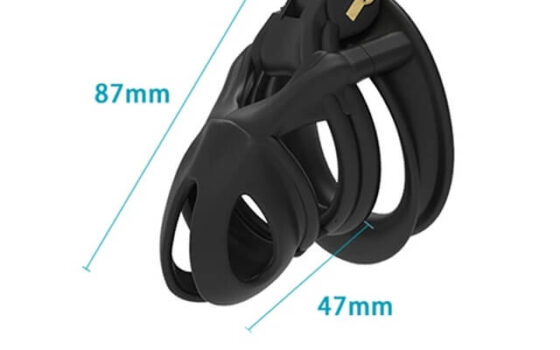
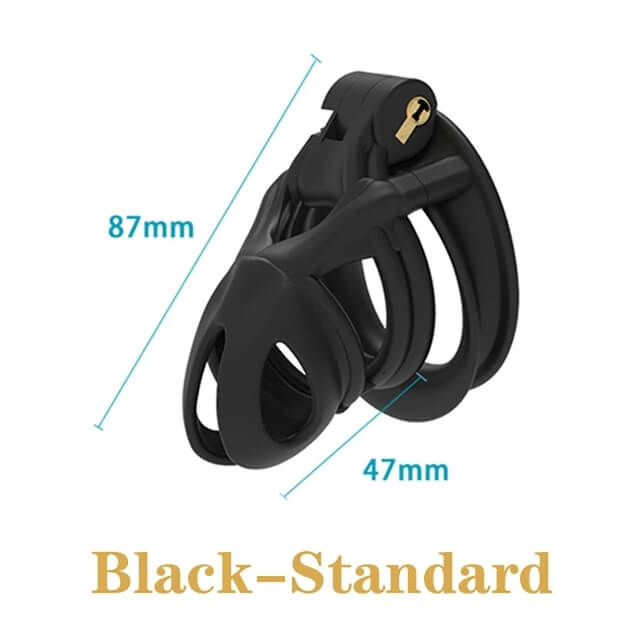
An example of names used correctly — as ordered variants inside one product line, with the millimeter chart underneath: Choose the Viper V7.0 EVO for a nylon-resin kit with four base rings. One selected cage, a lock with two keys and a safety pin are included, giving you a clear starting set without buying each ring separately. Select the cage size on the product page.

How do you compare two different model charts?
Compare like rows only: usable internal length against usable internal length, not against total length. Check each chart’s arrow endpoints, because one maker’s number starts at the ring while another’s starts at the cage rear — the same two cages can show a 10 mm “difference” that is really just a different reference point. Convert everything to millimeters, and mark any dimension a chart does not state as unknown rather than estimating it.
When both listings publish clean numbers, the comparison becomes arithmetic: does each cage’s usable length sit at or just above your measured length, and does its width clear your measurement without compression? When one listing only offers names, you are not comparing — you are guessing, and the honest move is to ask the seller for the millimeters or drop that candidate.
What does a useful size record look like?
One line per device you own or considered: model, variant name, usable internal length, internal width, ring size worn, and a note on how it actually fit (“tip pressure after 40 min seated,” “stable, no issues”). Keep it in millimeters. After two devices, this record predicts the third purchase better than any review or any size name.
The record also keeps you honest about upgrades. If your current cage’s real length is 60 mm and comfortable, a “Small” that charts at 45 mm is a genuine change in character — visible in the numbers, not just the label. Names sell the fantasy of progression; the record shows what actually changed.
Use size names to navigate a single product line; use millimeters to cross between them. Replace every Nub, Nano, Micro and Small on your shortlist with its stated internal length, and let the numbers — not the marketing ladder — decide which cage is actually the size you wear.
This guide includes promotional links to ChastityCage.co. To compare compact models by their stated dimensions, browse small chastity cages at ChastityCage.co.