Flat cages compress forward profile; inverted designs redirect space backward. Compare the two structures on their own charts before choosing.
This guide is not medical advice. Stop use if significant pain, numbness, swelling, discoloration or circulation concerns occur.
Flat and inverted cages get used interchangeably in conversation, and the overlap is real: both aim to minimize what shows under clothing. But they solve the problem differently — flat reduces, inverted relocates — and the difference decides which one your measurements can actually wear.
This guide compares the two structures, the dimensions that need separate reading for each, and how to browse the categories without confusing them. Background reading: the flat-cage guide and the flat-versus-standard comparison.
What makes a cage flat?
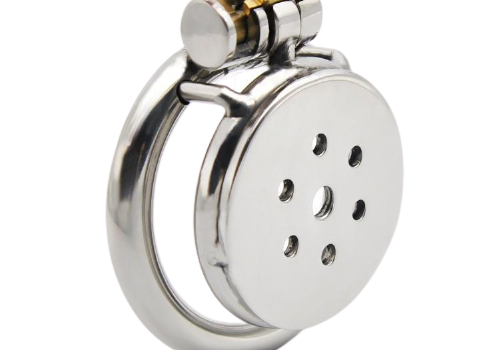
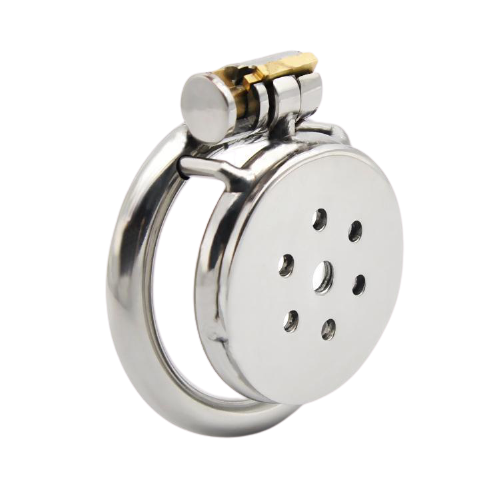
A flat cage keeps the enclosure in front of the body but compresses its depth: a wide, shallow front plate sits close to the pubic line, and the internal length is short. The Flat Gatling is a clear example — a circular perforated front plate in stainless steel, with cage and ring options selected on the product page. Flat designs trade internal room for a lower forward silhouette; the fitting margin lives in internal width and how the plate meets the ring.
“Flat” does not describe one geometry. Some flat cages are simply short and wide; others angle the enclosure downward. What they share is compression of the front-to-back dimension — which is why fit checks for flat designs concentrate on width, curvature and where the plate’s lower edge lands when seated.
What makes a design inverted?
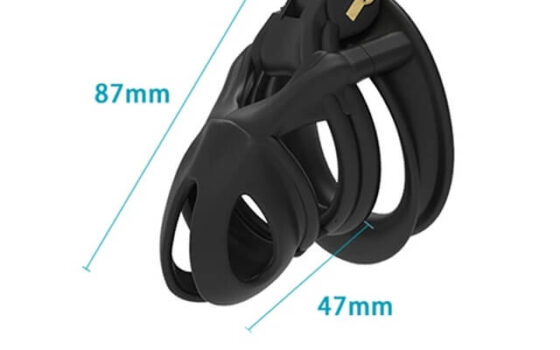
An inverted design points the enclosure backward: instead of compressing the space in front, it redirects it behind the body’s natural line, so the device’s bulk sits where a flat cage’s bulk never goes. The Inverted Chastity Cage line is the direct example — an ABS-resin body in Pink or Black, shipped as a kit with four base rings, a lock with two keys and five plastic locks, with the belt as an optional configuration rather than part of the basic package.
Inversion changes the fitting conversation. The relevant questions become where the redirected space sits relative to the body, how the ring angle changes to meet it, and what the seated posture does to the new geometry. Inverted designs are a genuine category, not an extreme flat — treat them as their own structure with their own chart.
The Flat Gatling Chastity Cage
The flat example — stainless circular front plate, compact forward profile: The Flat Gatling is a stainless-steel option with a circular front plate and a compact flat profile. Choose it for this particular shape rather than treating every flat cage as the same design. Open the product page to select the cage and ring options.

Inverted Chastity Cage
The inverted example — ABS kit with four rings and five plastic locks in the basic configuration, belt optional: This Inverted Chastity Cage offers an ABS-resin design in Pink or Black, with four base rings, a lock with two keys and five plastic locks. Choose it when an inverted structure is the design you are comparing. Select the belt option only when you need that configuration.

Which dimensions need separate comparison?
For flat designs, read usable internal length (short by design), internal width at the widest plate point, and the distance from plate bottom to ring. For inverted designs, read the internal length along the redirected curve, the exit angle relative to the ring, and the projected depth behind the body line. Neither product’s “total length” compares to the other’s, because the reference directions differ — this is the one comparison where charts must be read per-category, never cross-category.
Ring range brackets both: a flat kit with four included rings and an inverted kit with four included rings offer the same fitting-room benefit despite different geometries. If both structures interest you, compare ring range and package contents across the two kits, but compare geometry only within each category. Related structural questions — like how ringless designs differ — are covered in the ringless-versus-ring comparison.
How can you browse the two categories without confusing them?
Use the store’s own category split: flat collections and inverted collections exist separately for exactly this reason. Inside a flat collection, expect front plates and compressed profiles; inside an inverted collection, expect redirected bodies and steeper ring angles. If a listing appears in both, read its diagram to decide which structure it actually is — labels follow marketing, diagrams follow engineering.
When you shortlist one of each, keep two separate comparison rows rather than one blended list. The flat candidate answers “lowest forward profile with front-mounted hardware”; the inverted candidate answers “minimum front presence through redirection.” Same goal, different machines — and the right choice depends on which geometry your measurements and routine tolerate, which only a fit test reveals.
Flat compresses, inverted redirects. Read each category’s chart on its own reference points, compare ring packages across categories if you like, and let a fit test decide which structure your body agrees with. The silhouette you want under clothing is achievable either way — the difference is which geometry gets you there.
This guide includes promotional links to ChastityCage.co. To browse both structures, see the inverted chastity cage collection at ChastityCage.co.