A measured beginner pathway for exploring male chastity without turning the first attempt into an endurance challenge.
This guide is not medical advice. Stop use if significant pain, numbness, swelling, discoloration or circulation concerns occur.
The easiest beginner mistake is to treat excitement as preparation. A cage arrives, the lock clicks, and only then do practical questions appear: Does the ring pinch when sitting? Can the device be cleaned? Who has the spare key? What happens if either person wants to stop?
A better start answers those questions before duration becomes part of the challenge. If the whole subject is still unfamiliar, begin with what male chastity means; this guide focuses on turning interest into a cautious first experiment.
Start with the experience you actually want
“Trying chastity” can mean several things. You might be curious about wearing a cage for an evening, interested in a solo rule, or hoping to build a keyholder dynamic with a partner. Write the goal in one sentence. A concrete goal prevents mismatched assumptions, such as one person imagining playful weekend use while the other imagines a strict long-term arrangement.
Keep the first goal small enough to reverse. “We will test this for two hours and talk afterward” is more useful than “I want to be locked indefinitely.” The first statement creates information; the second creates pressure before either person knows what the setup is like.
Have the consent conversation before shopping
If a partner is involved, introduce the idea as an invitation. Explain what appeals to you without assigning them a role. Ask what feels interesting, neutral or uncomfortable to them. A partner may be open to the idea but not to being responsible for a key, rules or daily monitoring.
Agree that consent is ongoing. Either person can pause the experiment, and a physical or emotional stop does not require a debate. Decide how you will handle privacy, messages, keys, photos and any rules. Specific agreements are kinder than assuming a shared fantasy.
Learn the device before you wear it
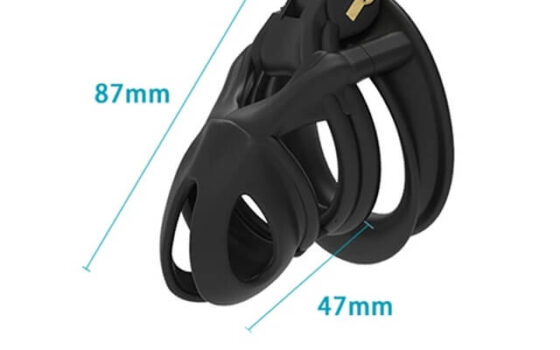
Most cages have a ring that sits at the base, a forward enclosure and a connector or lock. Designs vary, so read the manufacturer’s instructions and inspect every edge, seam, hinge and locking point. The guide to chastity cage parts and basic use explains the common layout.
Practice assembling and unlocking it off the body. Confirm which key works, how a recessed lock releases and whether a spare exists. If removal feels confusing on a table, it will not become easier during a stressful fit problem.
Choose forgiving first-device features
A beginner-friendly cage is not necessarily the smallest or most secure. Look for several ring options, smooth surfaces, clear usable dimensions, enough ventilation to clean, and a lock you can operate reliably. Lighter weight often makes it easier to notice whether a problem comes from sizing rather than from the device pulling during movement.
Fit still matters more than material. Use the criteria in how to choose a chastity cage before treating reviews or dramatic product names as evidence.
Use an unlocked fitting session
Put the clean device on without committing to the lock. Stand, sit, walk, bend and use the bathroom. Check whether skin catches at a hinge, the ring rotates sharply, the cage pulls away from the body or the front opening makes urination difficult. Then remove it and inspect the skin in good light.
An unlocked trial is not a lesser version of chastity. It is a fitting test. Changing a ring, gap or cage length after that test is normal and often more productive than trying to “get used to” a bad configuration.
Plan the first locked session
- Choose a quiet period with no travel, alcohol or demanding schedule.
- Wash and dry the device and skin.
- Keep the primary and spare removal methods accessible.
- Lock for a short, agreed window while awake.
- Check comfort after sitting, walking and using the bathroom.
- Unlock, clean, inspect and discuss what should change.
Do not make sleep, work or an all-day session the first test. Each adds variables that are easier to evaluate after basic daytime wear feels uneventful.
Review more than physical comfort
After removal, ask two sets of questions. Physically: Where did it move? Were there pressure points? Could you clean and urinate normally? Emotionally: Did the structure feel exciting, distracting, reassuring or stressful? Did the partner role feel chosen or burdensome?
A good review may lead to a different ring, a shorter session, a new agreement or a decision that cages are not appealing. All four outcomes are useful. A beginner plan succeeds when it produces honest information.
How to recognize useful confidence
Confidence does not mean ignoring the cage. It means you know how to assemble it, read pressure, clean it, unlock it and explain the agreement. When those skills are routine, the experience can become less anxious without becoming less careful.
The Getting Started collection separates orientation, device knowledge and action plans so each question has one clear answer.
Are you ready to try it?
- You can explain what interests you without promising a role, duration or outcome.
- Every participant can say no, pause or change the plan without punishment.
- You understand the parts, the lock and the removal method before fitting.
- You have time for an awake, private first fitting and an honest review afterward.
- You are willing to stop if the experience is emotionally wrong or physically uncomfortable.
Readiness does not mean confidence about every detail. It means you can run a small, reversible experiment and learn from it. When these conditions are in place, use the step-by-step start plan for the ordered workflow rather than inventing one in the moment.
Beginner assumptions worth dropping
| Assumption | More useful expectation |
|---|---|
| The first cage should fit perfectly | First sizing often produces questions and may require another configuration. |
| A longer session proves commitment | A clean removal and accurate review produce better evidence. |
| A keyholder must enjoy a fixed role | Roles can be declined, limited or revised. |
| Strong sensation means the device is working | Stability, normal function and reversibility are the practical standards. |
Your next decision
Male chastity for beginners works best as a series of small tests: intention, conversation, fit, short wear and review. Rushing skips the only stages that tell you whether the practice is comfortable and mutually wanted. Build from uneventful sessions, not from a deadline.