Offline timers store the countdown in the box, not the app — test the behavior, plan around failures, and keep the emergency key outside any timer.
This guide is not medical advice. Stop use if significant pain, numbness, swelling, discoloration or circulation concerns occur.
The offline timer is the smart key box’s most misunderstood feature: marketed as autonomy, understood by few, and trusted by fewer than should be. Done right, it is the feature that makes a Bluetooth box work without a phone in the house. Done wrong, it is a countdown standing between you and a key with no appeal process.
This guide explains the feature honestly — what offline means, where the countdown lives, what stays undocumented — and draws the line the timer must never cross. The system context is in the smart key box guide.
What does offline mean for this model?
That the box executes its countdown without a connected phone. On the QIUI Metal Key Pod, the listed offline timer is a stated feature: a duration set through the app, enforced by the box’s own electronics after the phone leaves. Offline does not mean dumb — it means self-governing for the window the timer defines.
What offline cannot mean, on any honest reading: a box that opens on demand without its phone, app or timer expiry. The offline mode’s entire value is that it keeps the rules while disconnected — which is also exactly its risk, and the reason the next two sections exist.
When is the countdown stored?
In the box, from the moment it is set — that is the architecture’s point. The app proposes; the box disposes: once the timer starts, the countdown continues on the box’s own clock and battery, unaffected by the phone going offline, the app being deleted, or the managing user changing their mind. Treat the stored countdown as physically real: it is closer to a mechanical timer than to a notification.
Verify the storage behavior on your specific unit before trusting it: set a short timer, close the box with nothing inside, remove the phone’s battery if you want theater, and watch what the box actually does. Ten minutes of testing converts marketing language into observed behavior — the only kind that belongs in an access plan.
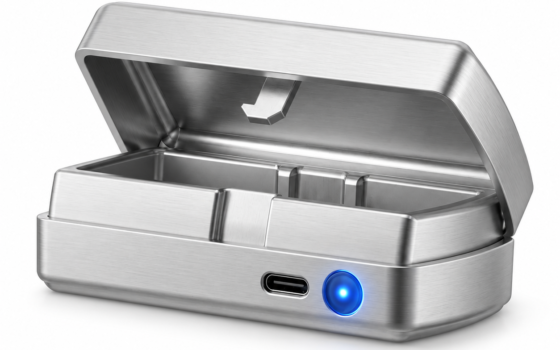
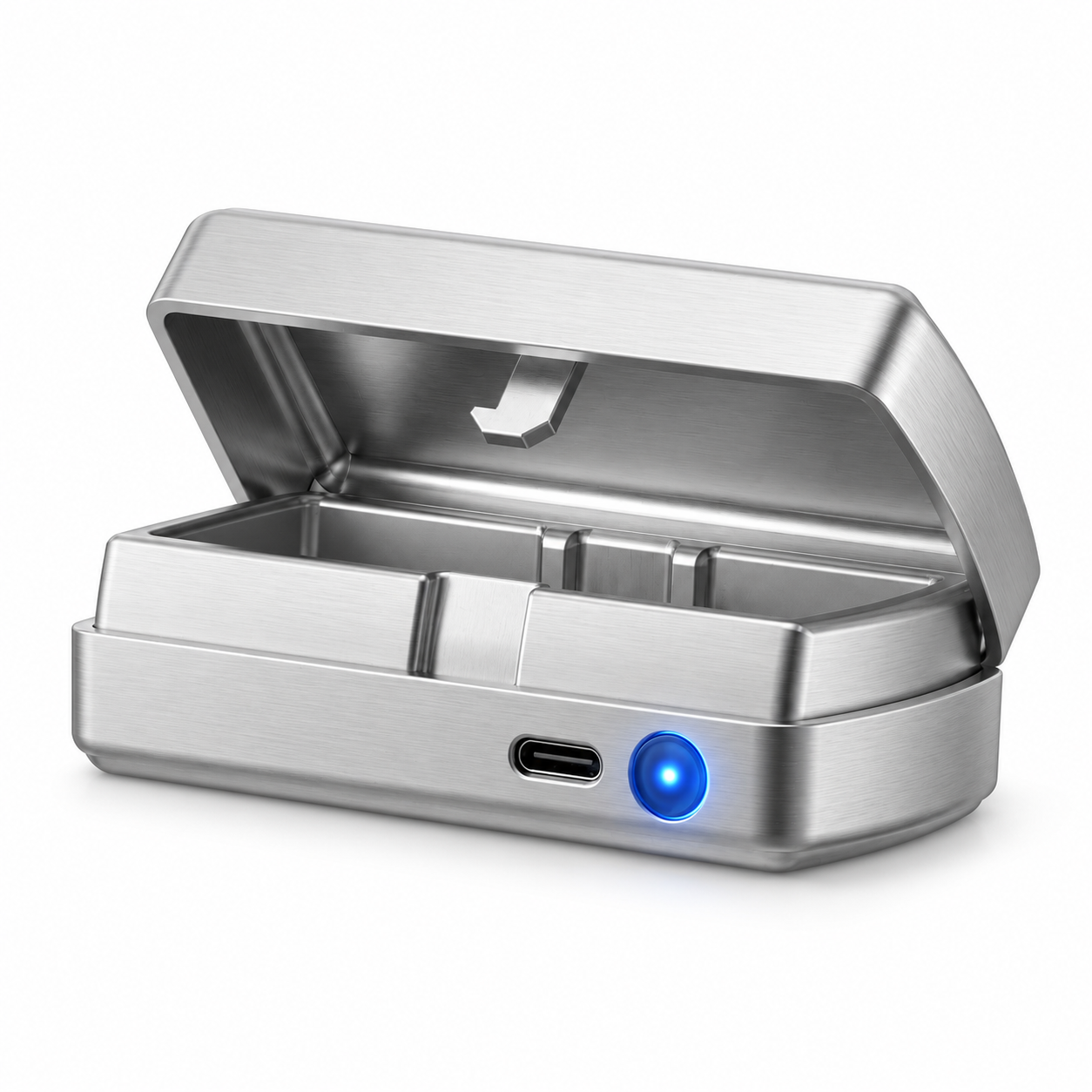
QIUI Smart Key Holder – App-Controlled Metal Key Pod
The box whose listed timer this guide reads — Bluetooth, offline countdown, USB-C: The QIUI Metal Key Pod adds a dedicated metal box for physical keys, with listed Bluetooth/app control, an offline timer and USB-C charging. Choose it for managing the key rather than replacing the cage itself. Keep an independent emergency-access arrangement outside any timed box.

What failure cases remain undocumented?
The edges the listings don’t narrate: battery death mid-countdown, firmware faults, the box’s behavior when its clock drifts, and what a manufacturer service event does to a running timer. None of these are accusations — they are the ordinary failure surface of any electronic timer, documented or not. Your planning treats them as live possibilities, because the box treats them as possible too.
The mitigation is not deeper trust; it is architecture. A countdown that must end for access to return is a countdown you schedule around — with the timer window matching periods when an emergency is unlikely, and the standing spare-key rule covering the moments it isn’t.
How should independent access be kept separate?
Absolutely, structurally, forever: the emergency key is a different physical key, in a different place, with no timer, no app and no dependency on the box’s electronics. The pod holds the ritual; the boring location holds the guarantee. If your setup has only one key, the timer holds nothing — the spare gets cut first, the countdown second.
This is the line the timer never crosses, whatever its marketing: convenience manages the ceremony, never the exit. Timers make the practice richer precisely because the exit stayed boring — keep it that way and every feature on the box is a toy instead of a threat.
Offline timers are real, stored in the box, and entirely subject to electronics’ honest failure modes. Test yours on empty, schedule around its windows, and keep the emergency key in the boring place no countdown governs. The timer is a fine feature for as long as it is never load-bearing.
This guide includes promotional links to ChastityCage.co. To review the timer-equipped models, browse QIUI wireless products at ChastityCage.co.